Making of Flower Shelter
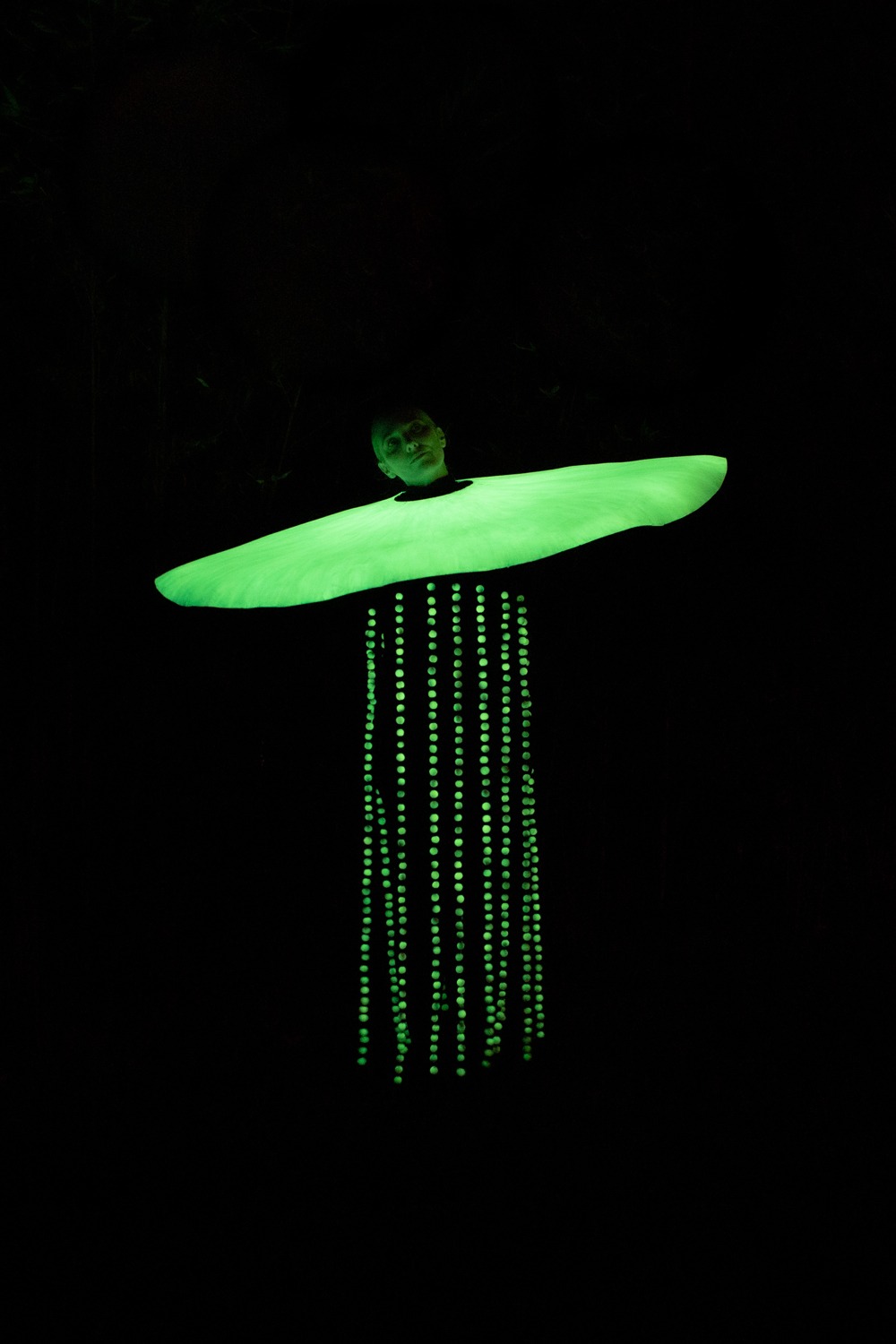
Night Body is a video performance work combining spoken word, costume design, sound, and movement. The final outcome is a single-channel video (3:07 minutes looped) with a score by Elijah Huckel. The work was supported by The Regional Arts Development Fund and developed over the course of ten months, below is the progress documentation.
04/09/23
The initial idea came from a recently completed work, Nature Shelter. I loved everything about that work except its weight – over 100 kilos and requiring help to set up. During my morning walk on the 4th of September, I thought about Nature Shelter being constructed from fabric flowers. That same day I started collecting fabric for thrift stores. I move quickly when an idea hits that I love 🙂
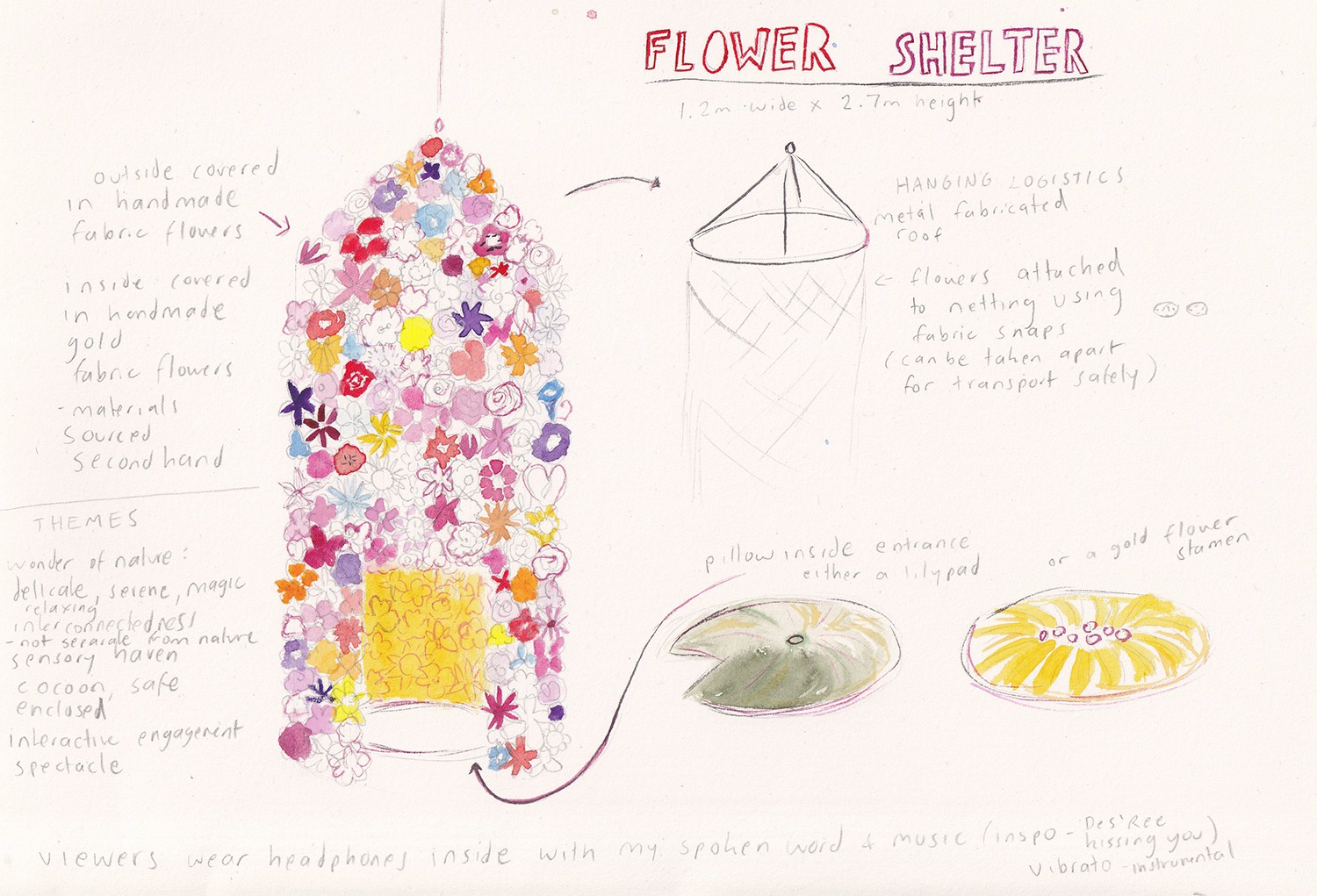
Installation Sketches
18/12/23
The original concept sketch for flower shelter
Thrifted Materials
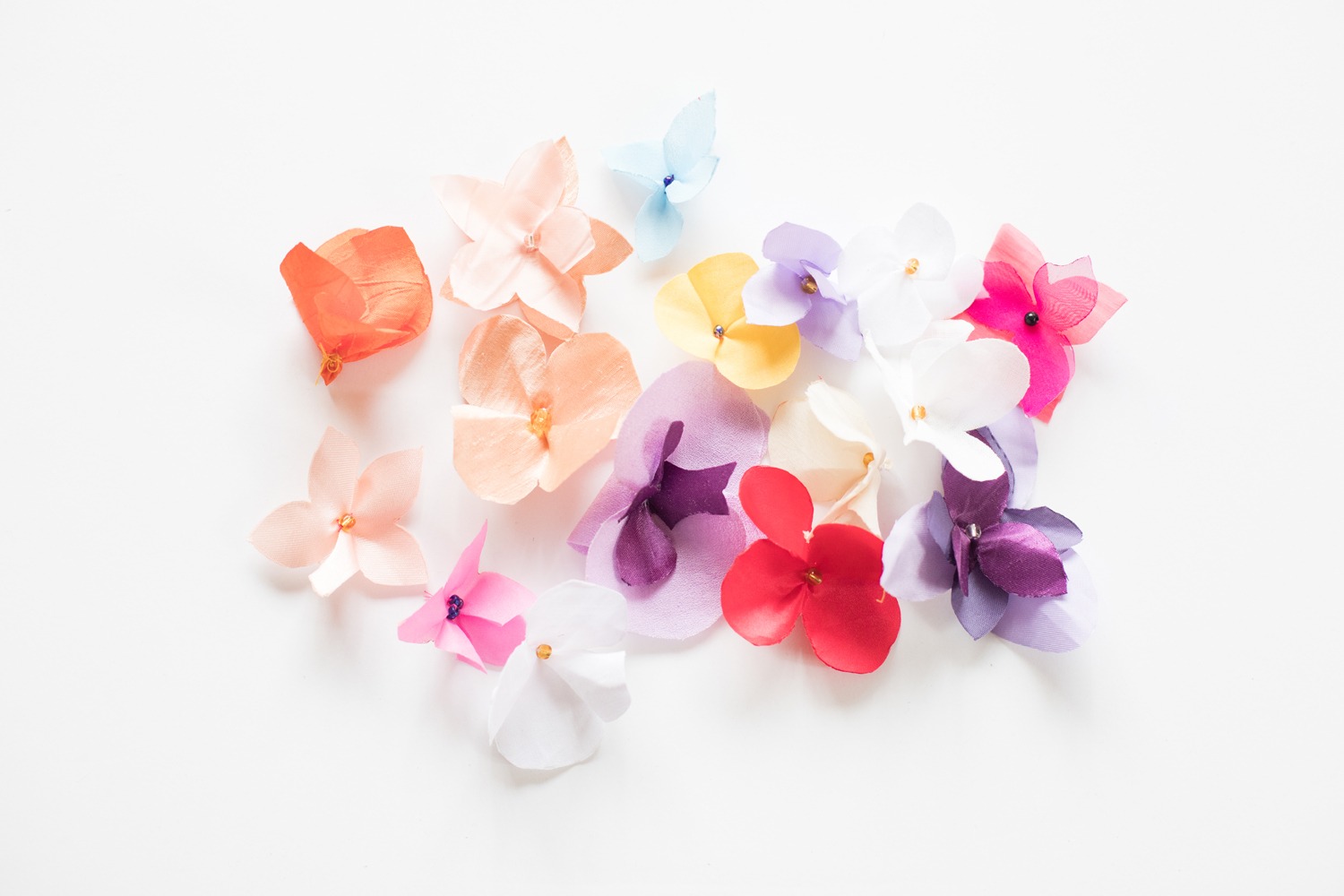
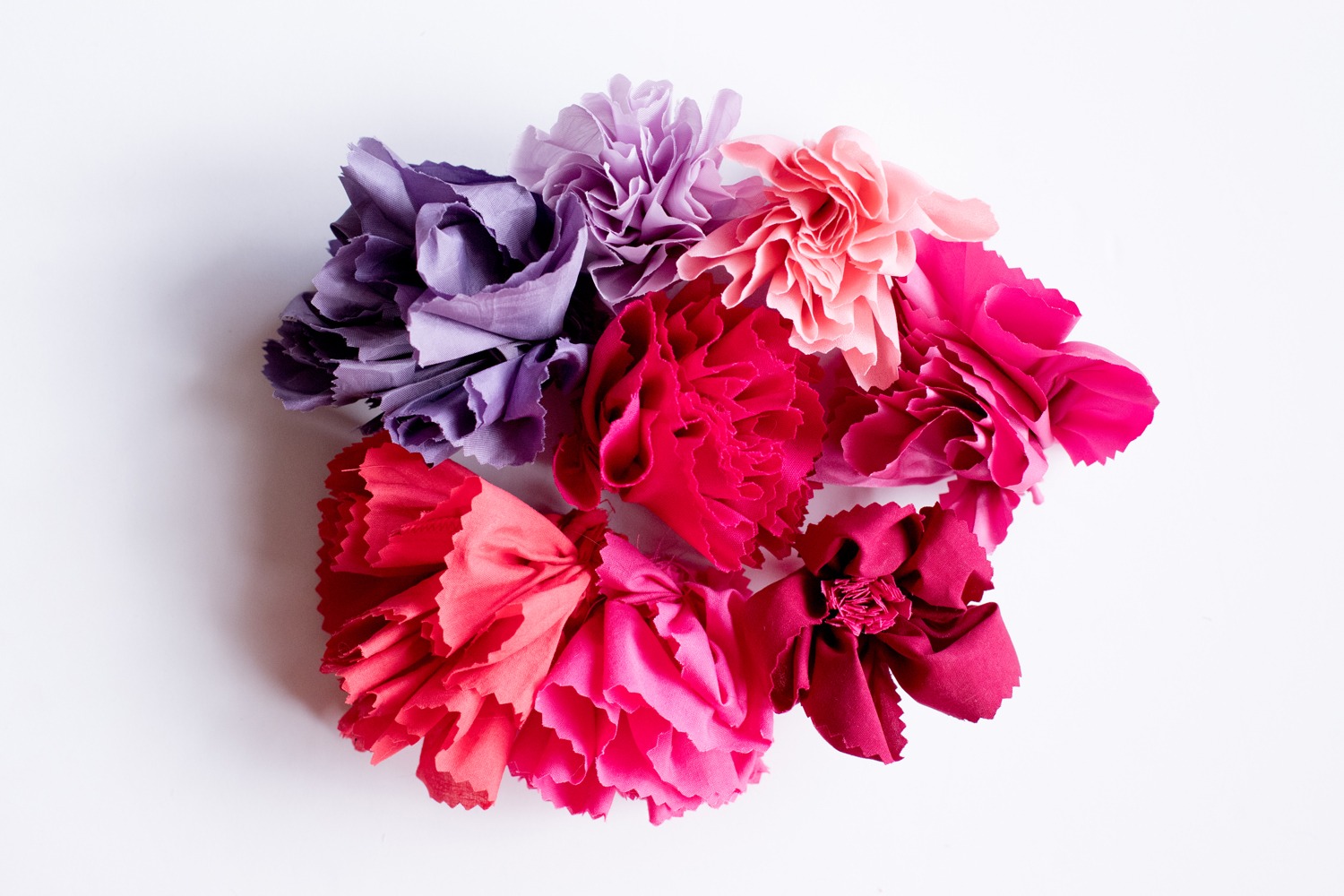
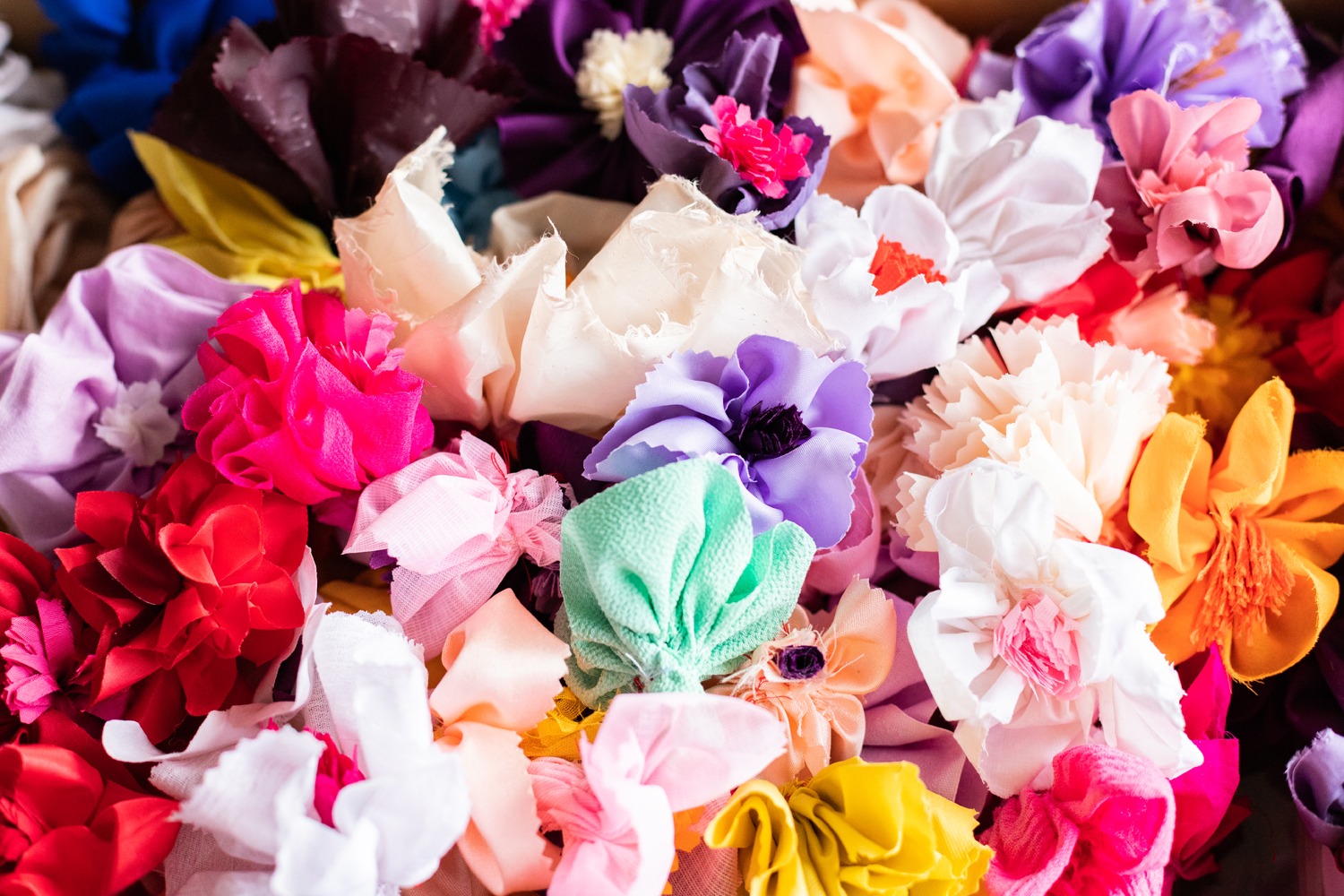
All flowers were hand-constructed from thrifted materials. Thrifting materials made the artwork financially viable and aligned with a core concept of the work – a reverence for nature – causing minimal harm, re-using resources.
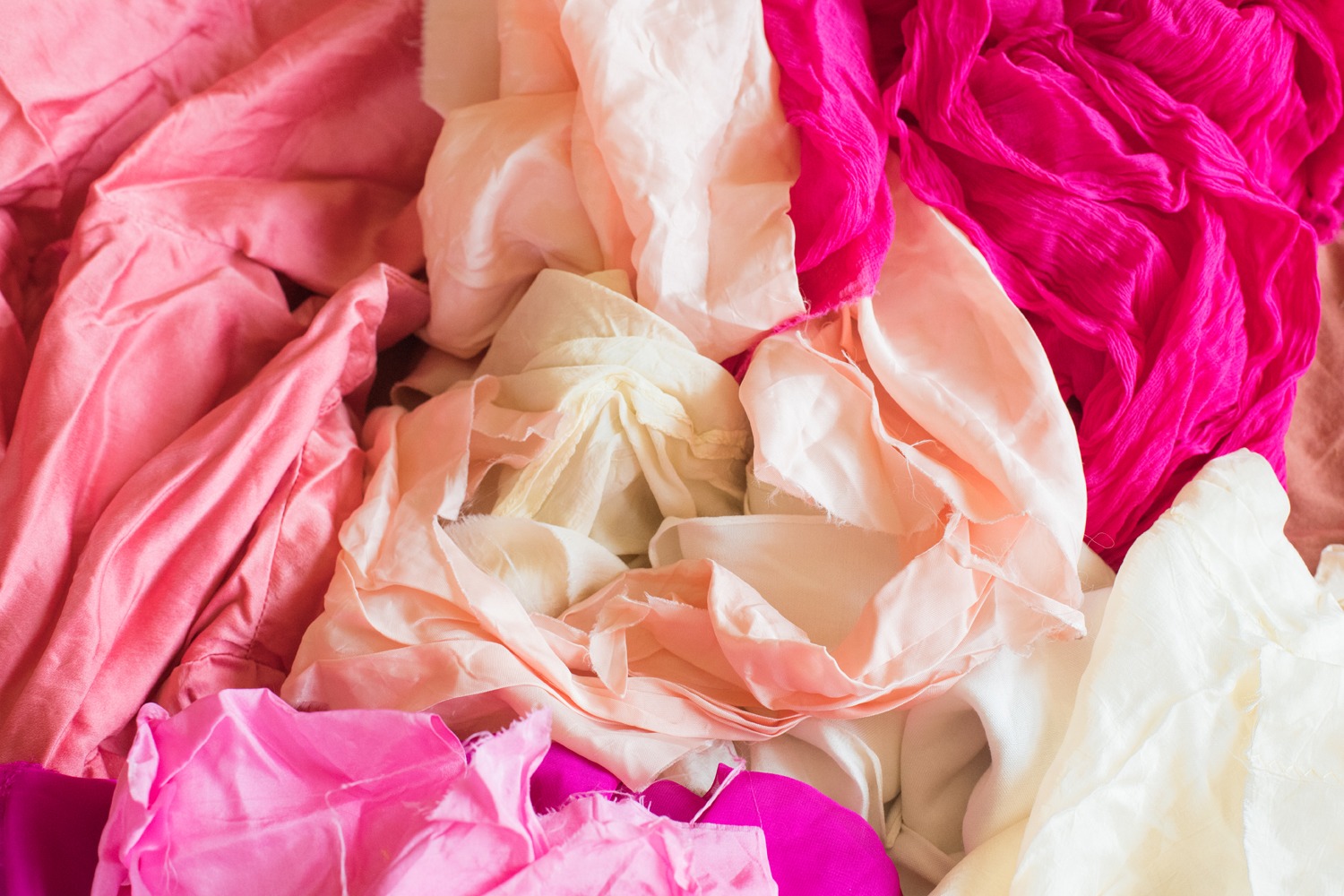
thrifted fabrics
TIME LINE
September – October 2023
Initial idea and commenced sourcing fabrics from thrift stores.
November 2023
Many hours were spent researching how to make fabric flowers. I wanted the flowers to be elevated over mass-produced artificial flowers. This led me to research the last remaining couture flower makers – M&S Schmalberg’s in New York and Parisian Atelier, La Maison Legeron. Watching their technique I realised I needed moulds and heat tools, both prohibitively expensive. I then researched more and discovered artist Mariko Kusumoto, who utilises shibori techniques to create fabric sculptures. Mariko occasionally creates her own moulds, which inspired me to create my own flower moulds out of ceramics. I gathered masses of flower images from online and collated them down to 2 pages covering different petal shapes and petal amounts. I then hand-sculptured 25 ceramic flower moulds.
TOTAL MONTH TIME: 17 hours
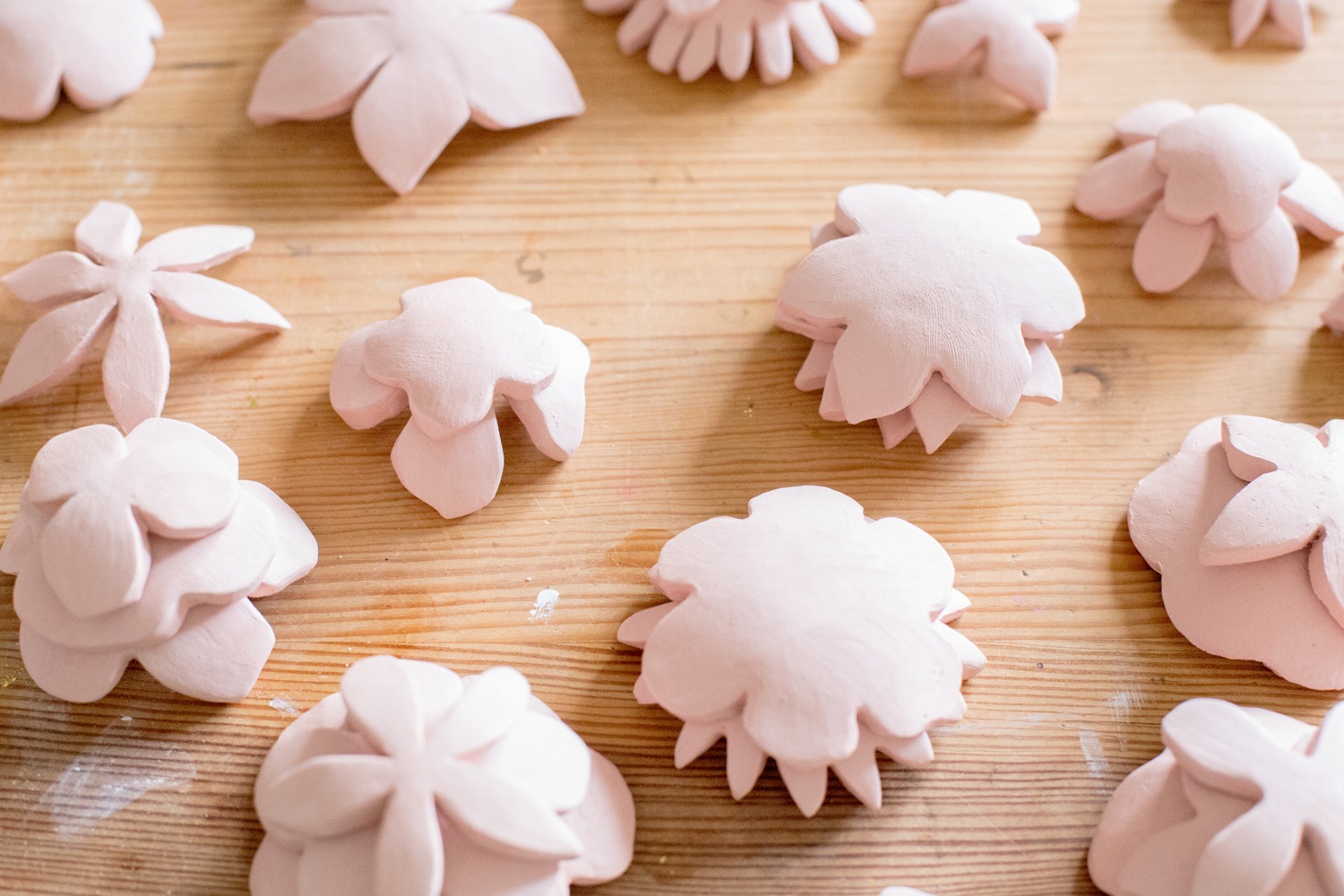
ceramic flower moulds
December 2023
Whilst waiting for the ceramic process (clay drying and firing) I started researching more flower-making processes which led me to the local library. I reserved five flower-making books from the library and started following the steps laid out. The first step was starching the fabrics, following the recipe from the book Adornments.
Adornments by Myra Callan is a beautiful book but all of the techniques require heat tools. I thought I could bypass the tool buying using items I had at home (spoons and a candle flame) but my experiments failed and I decided to move on.
Creating Couture Embellishment by Ellen Miller was my top pick flower-making book. The techniques laid out in the book involved stitching to create flower shapes over using heat. I spent a week starching fabrics, hanging them on the fence to dry, cutting up strips, and trying out almost every flower technique listed in the flower-making chapter of the book.
During December I also finished my ceramic mould experiments. I wrapped the fabric around five of the moulds and boiled them in a starch mix. I found either my moulds didn’t have enough impressions or my shibori technique failed. Decided from here on, I’d stick with the stitching method over using heat.
TOTAL MONTH TIME: 47.5 hours (64.5 total)
FLOWER TOTAL: 72
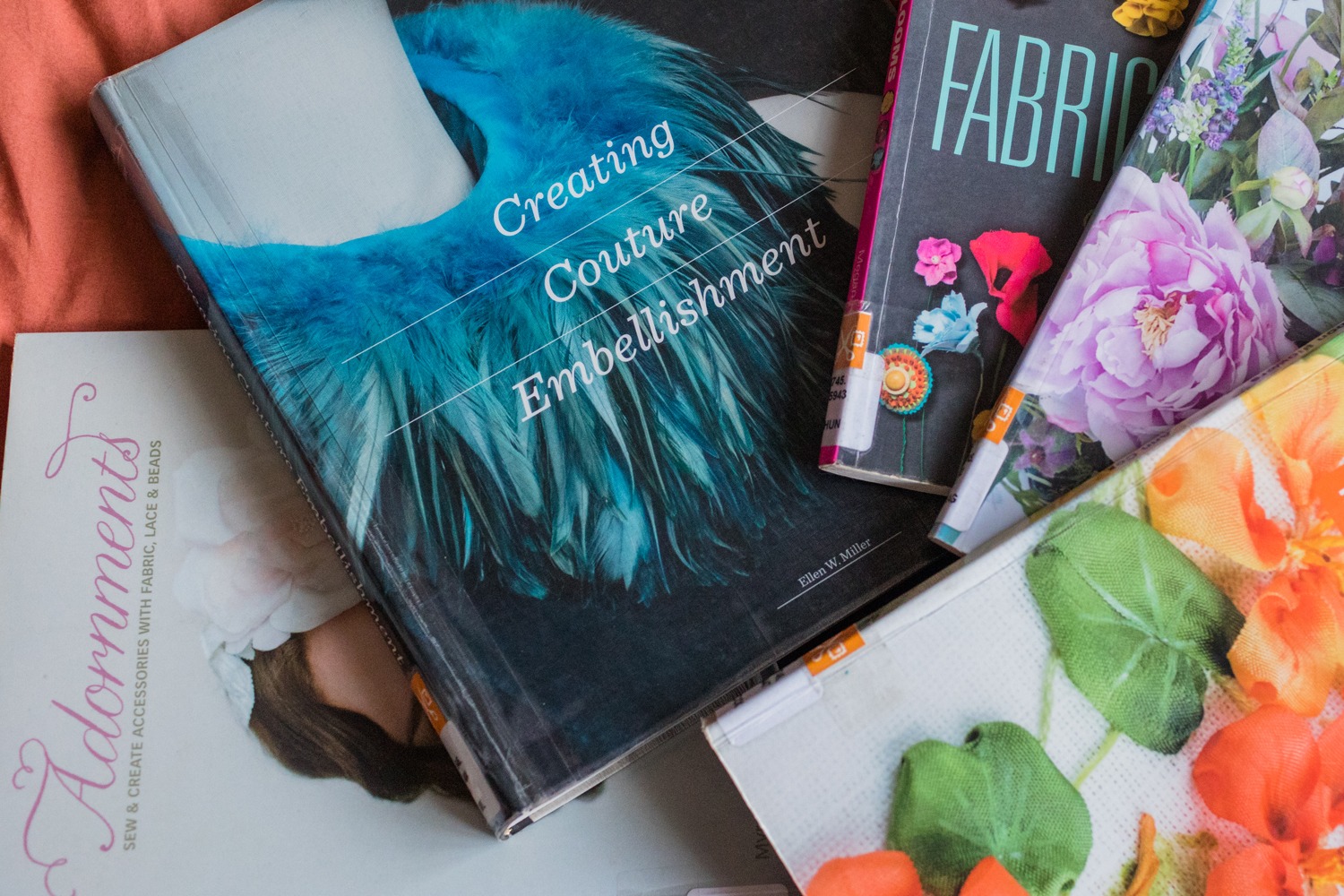
library books
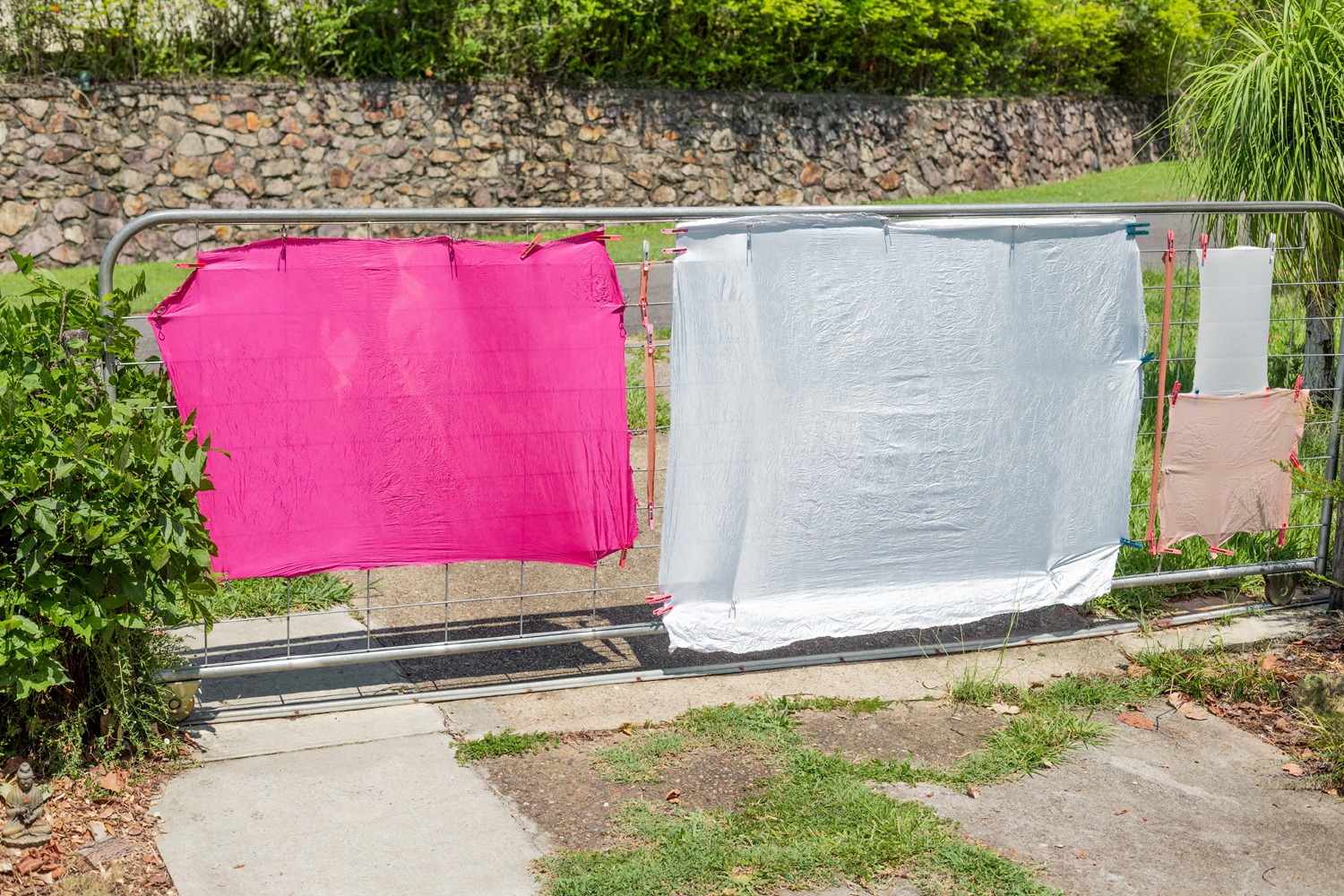
starching then drying out the fabrics
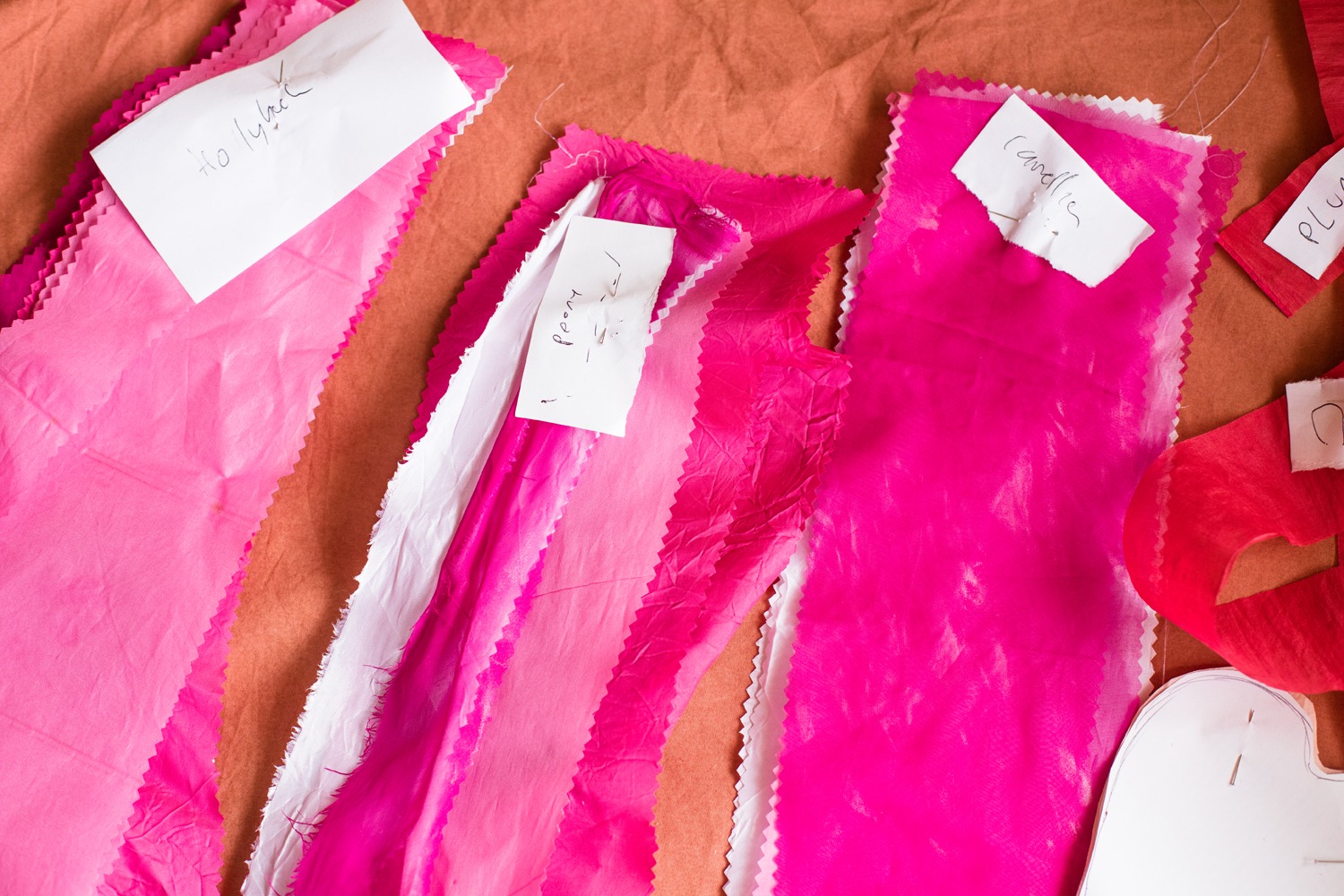
fabric strips cut
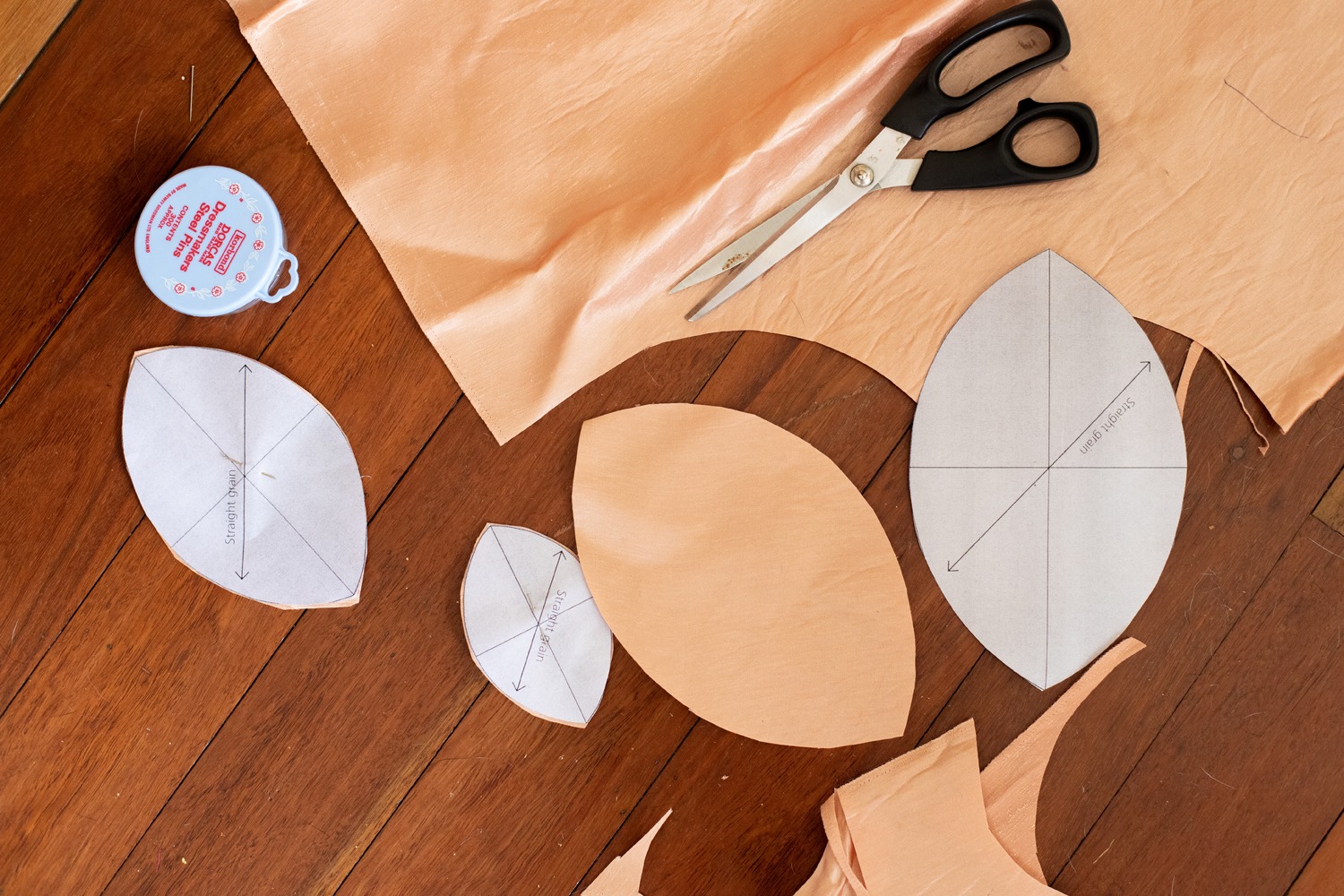
rose pattern
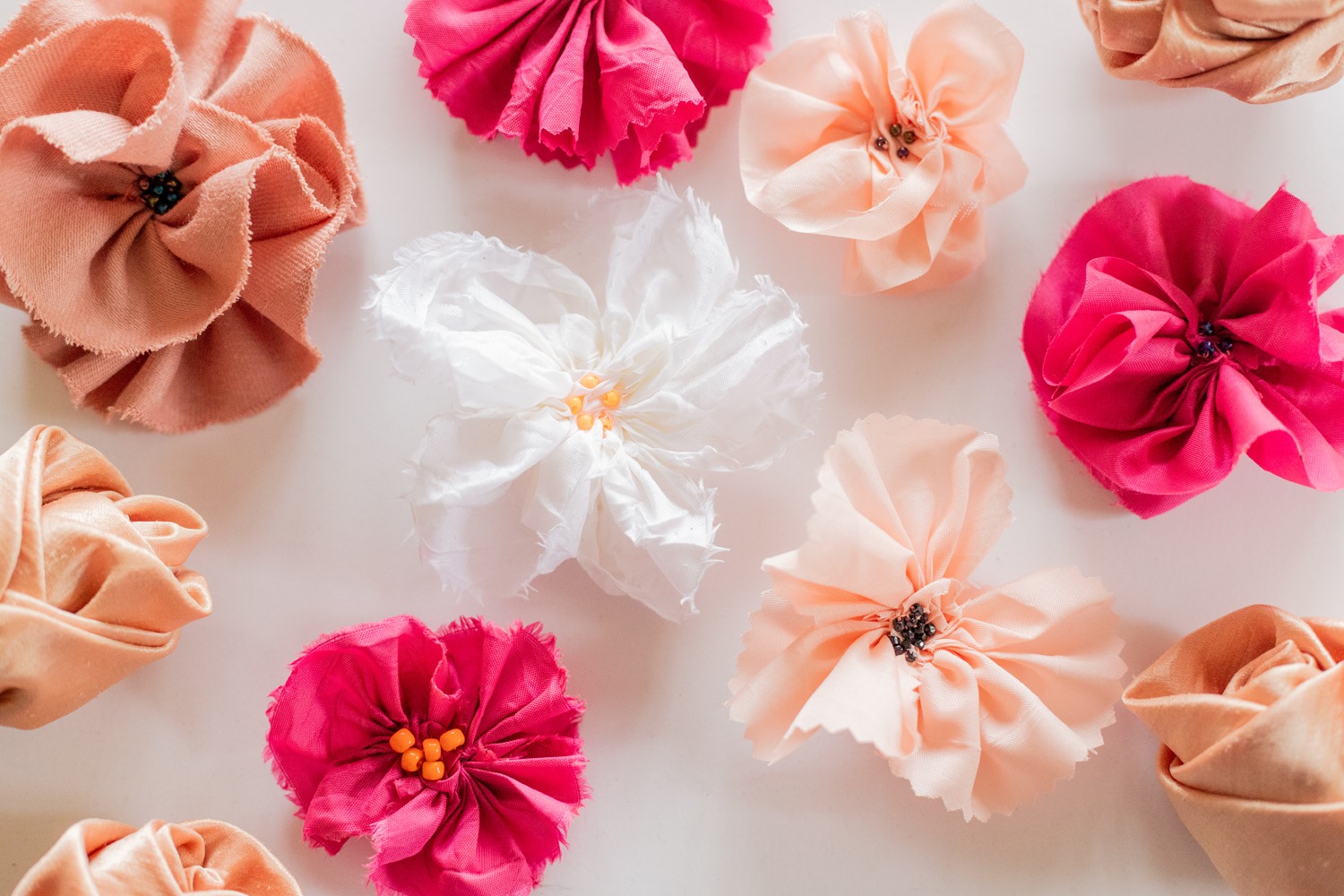
first flower attempts
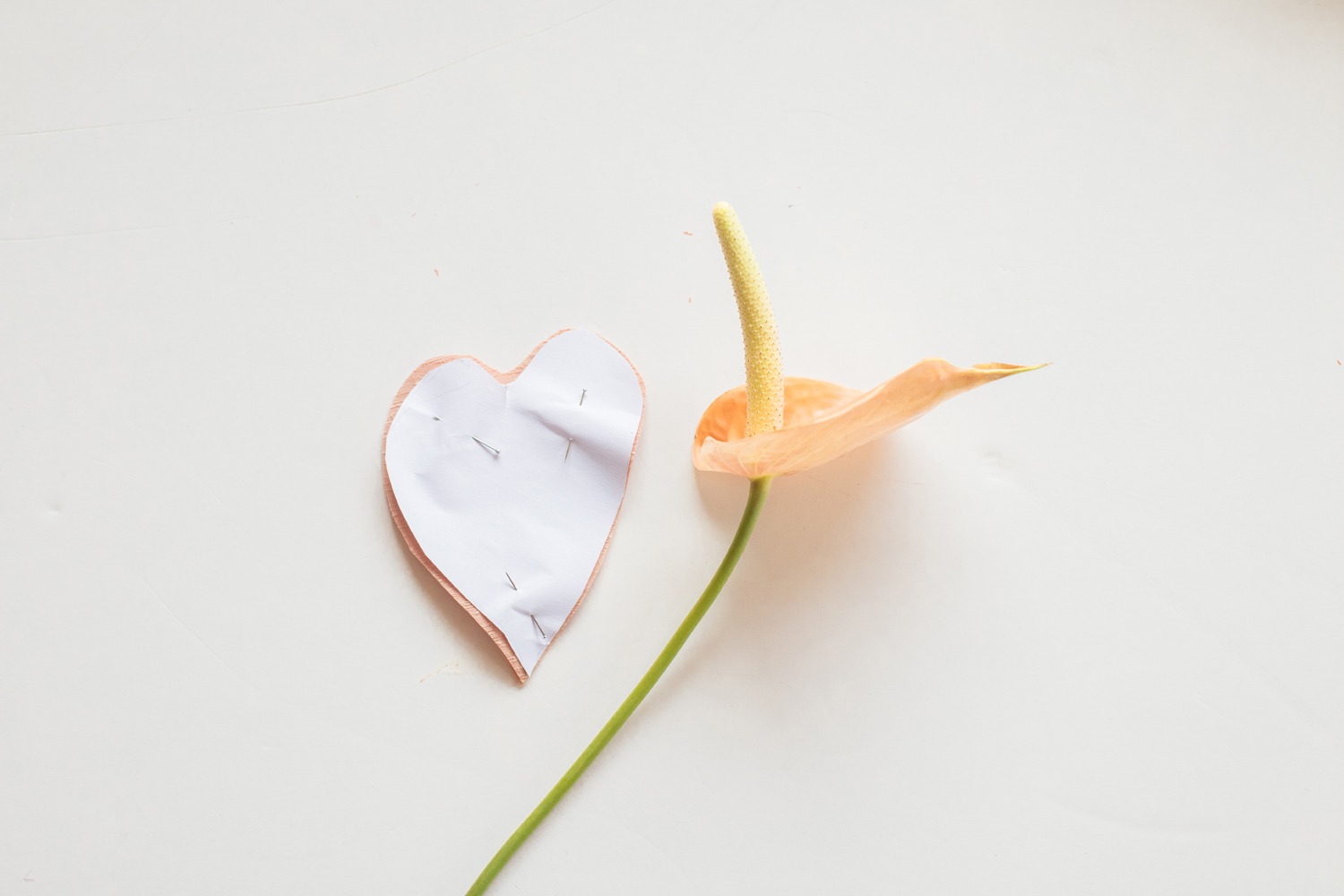
creating my own pattern off an anthurium from the garden
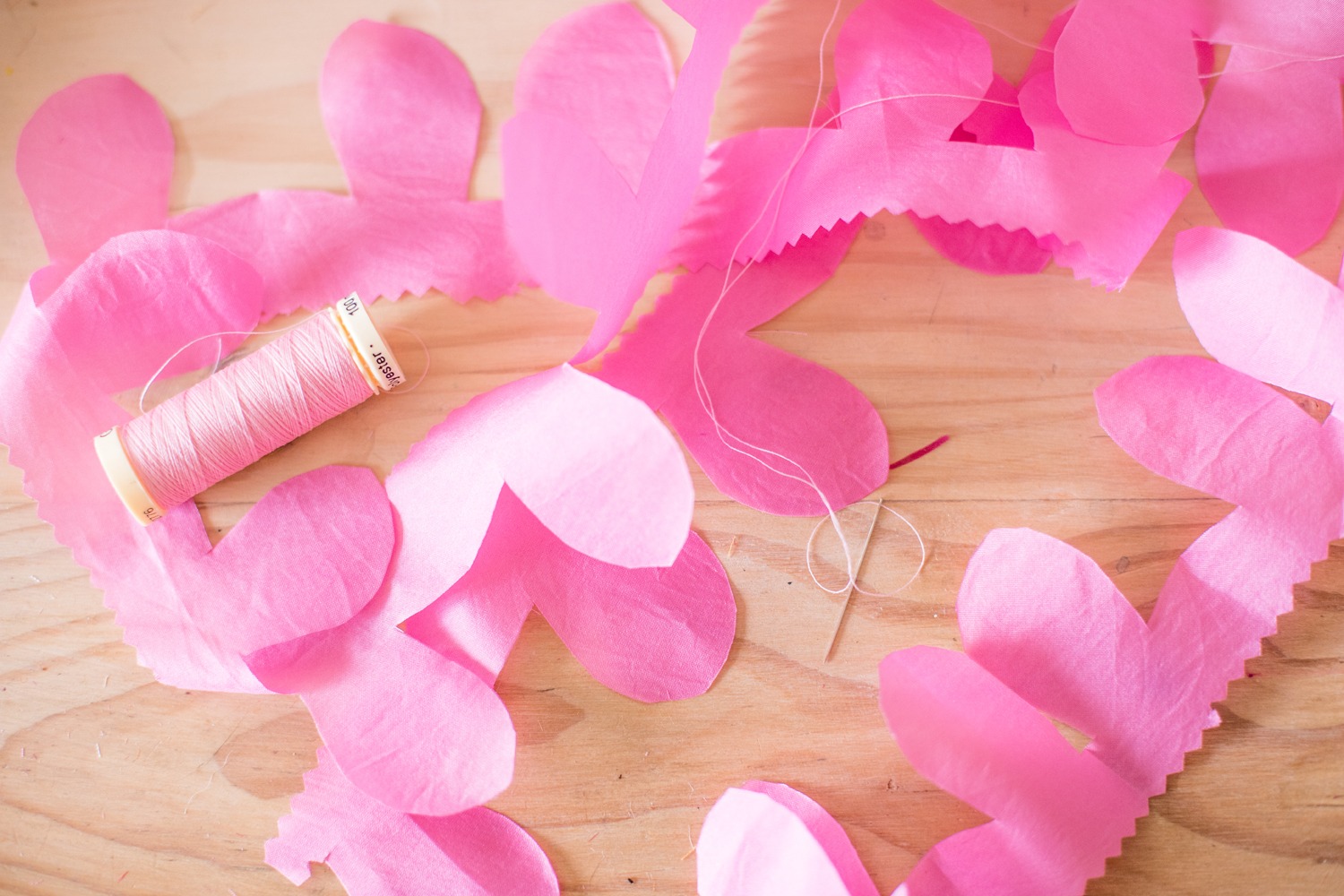
cut petal flower
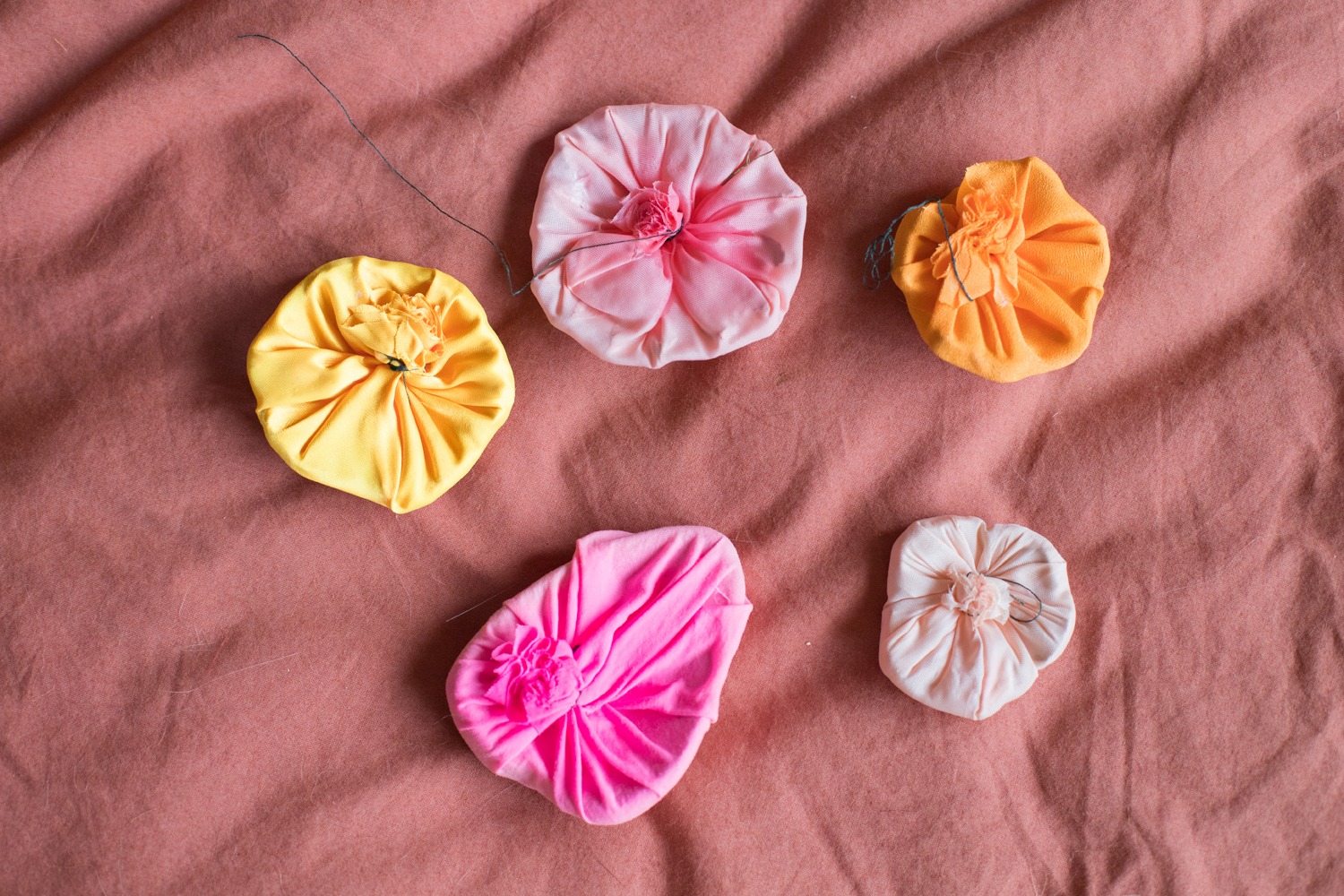
failed shibori technique
January 2024
/Created a flowchart system to streamline flower-making.
/Continued collecting materials from thrift stores, starching and cutting fabrics.
/Experimented with new flower variants and researched flower inspiration online.
/Experimented with flower centres, including failed tassel techniques.
/Poked my fingers excessively this month; tried using a plastic thimble, but it wasn’t successful.
/Bought a second-hand fishing net (which was too short, but allowed me to make a start) and constructed a temporary hoop from pipe and bamboo. Starting to sew the flowers onto the net early was important for gauging what was and wasn’t working (flower shapes and colours), while also breaking down the mammoth task of sewing thousands of flowers onto the netting.
/Worked out how to hang the shelter from my living room light, the only space in the house large enough to fit the flower shelter.
/Initially, I was worried about the overall look once I started sewing the flowers on, but after a few days I could see the final vision coming together. At this point, I also mistakenly thought I wouldn’t need as many flowers as I had originally calculated.
/Thrifted a soldering iron to experiment with cutting out flower shapes. Found that the templated flowers were much smaller and were visually lost among the sewn flowers, and also took substantial time to make. The smell of burning polyester fabrics was also a major concern.
/Returned to the sewing method and increased my flower-making speed by the end of the month, from around 5 to 10 flowers per day.
/Established a consistent flower-making rhythm by the end of January: cutting flowers the evening before, making 10 flowers and enough centres during the day, then sewing them onto the netting.
TOTAL MONTH TIME: 125.5 hours (190 total)
FLOWER TOTAL: 254 (326 total)
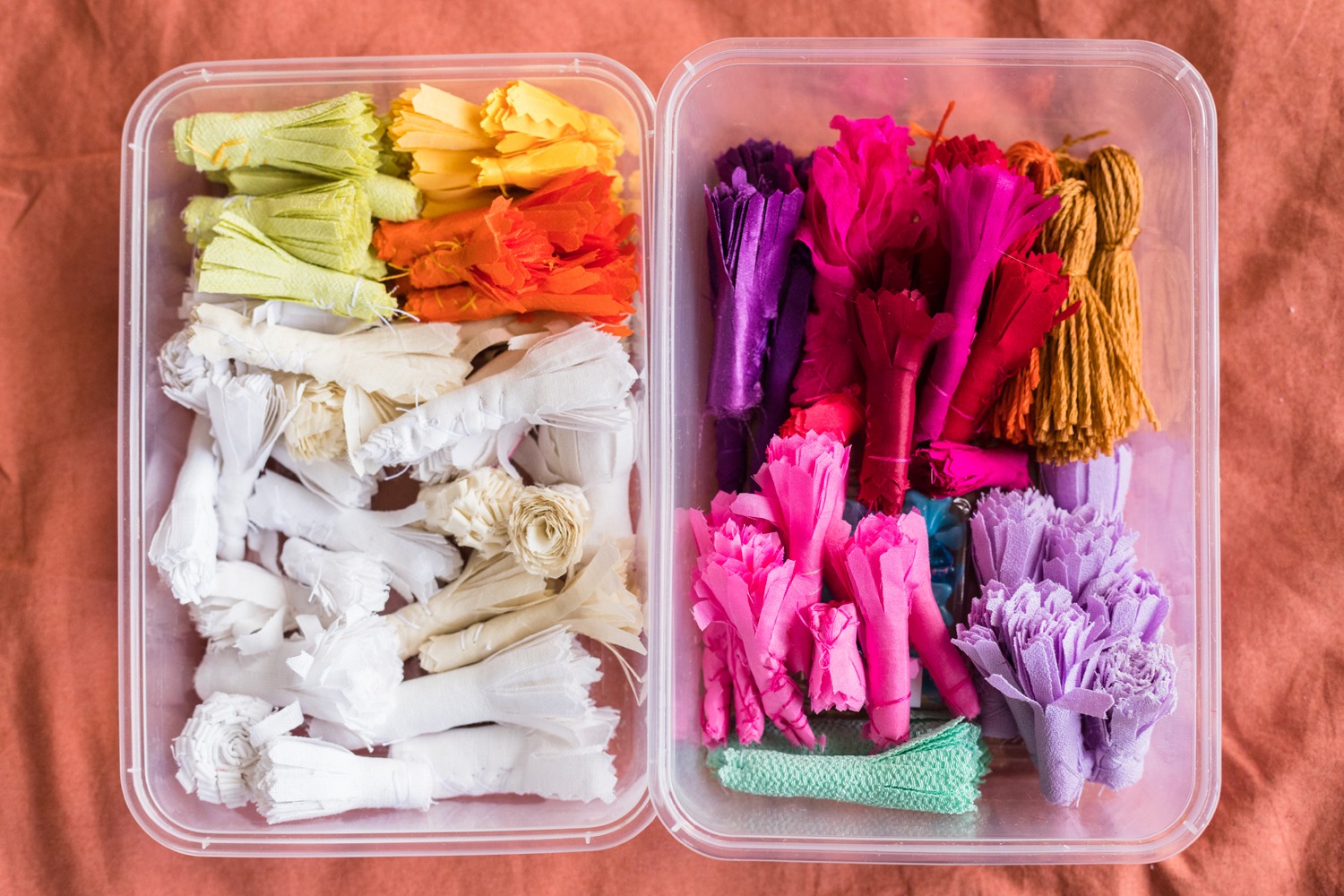
Flower centers using fabrics
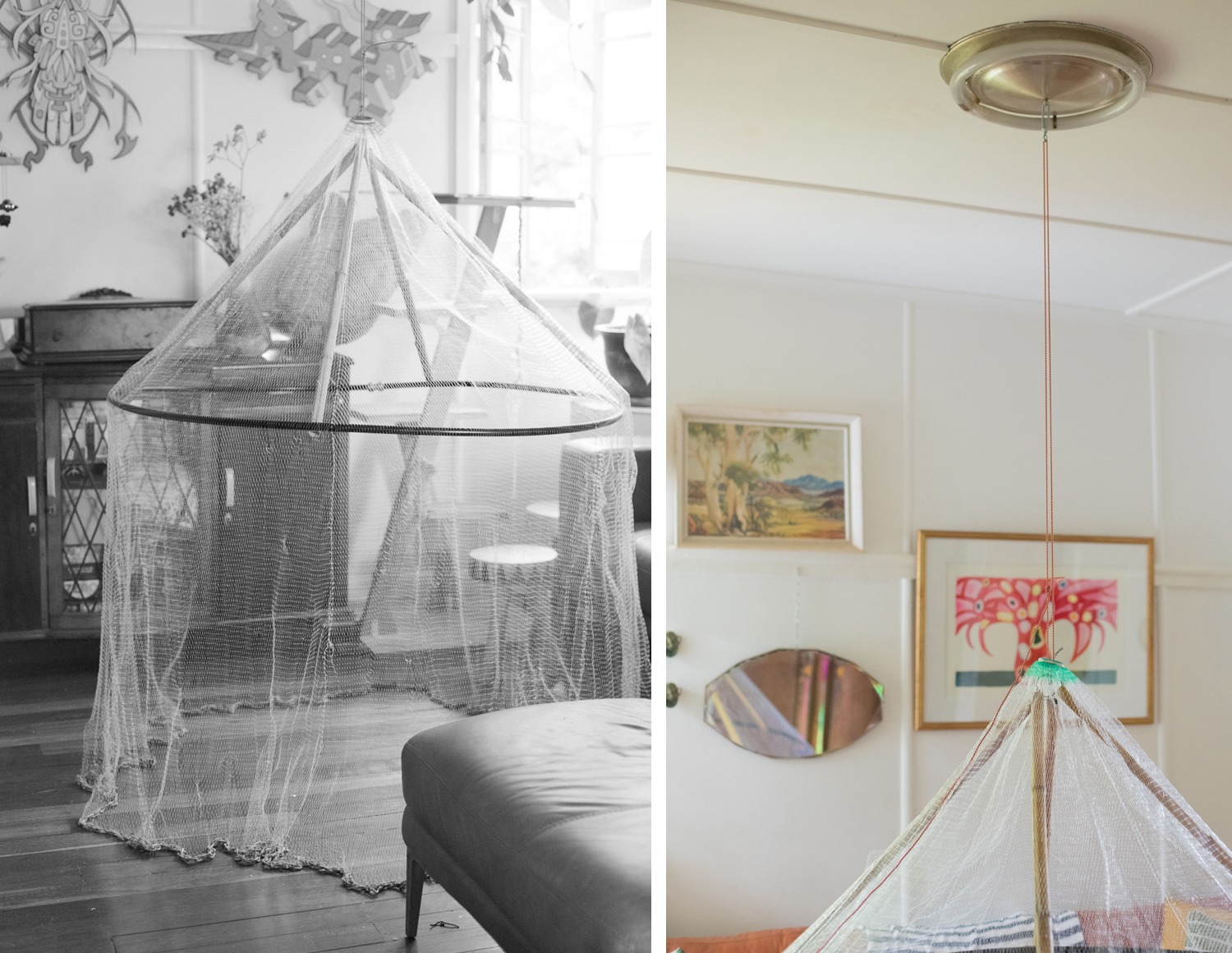
Base of flower shelter – with a temporary bamboo/pipe top and second-hand fishing net over the top.
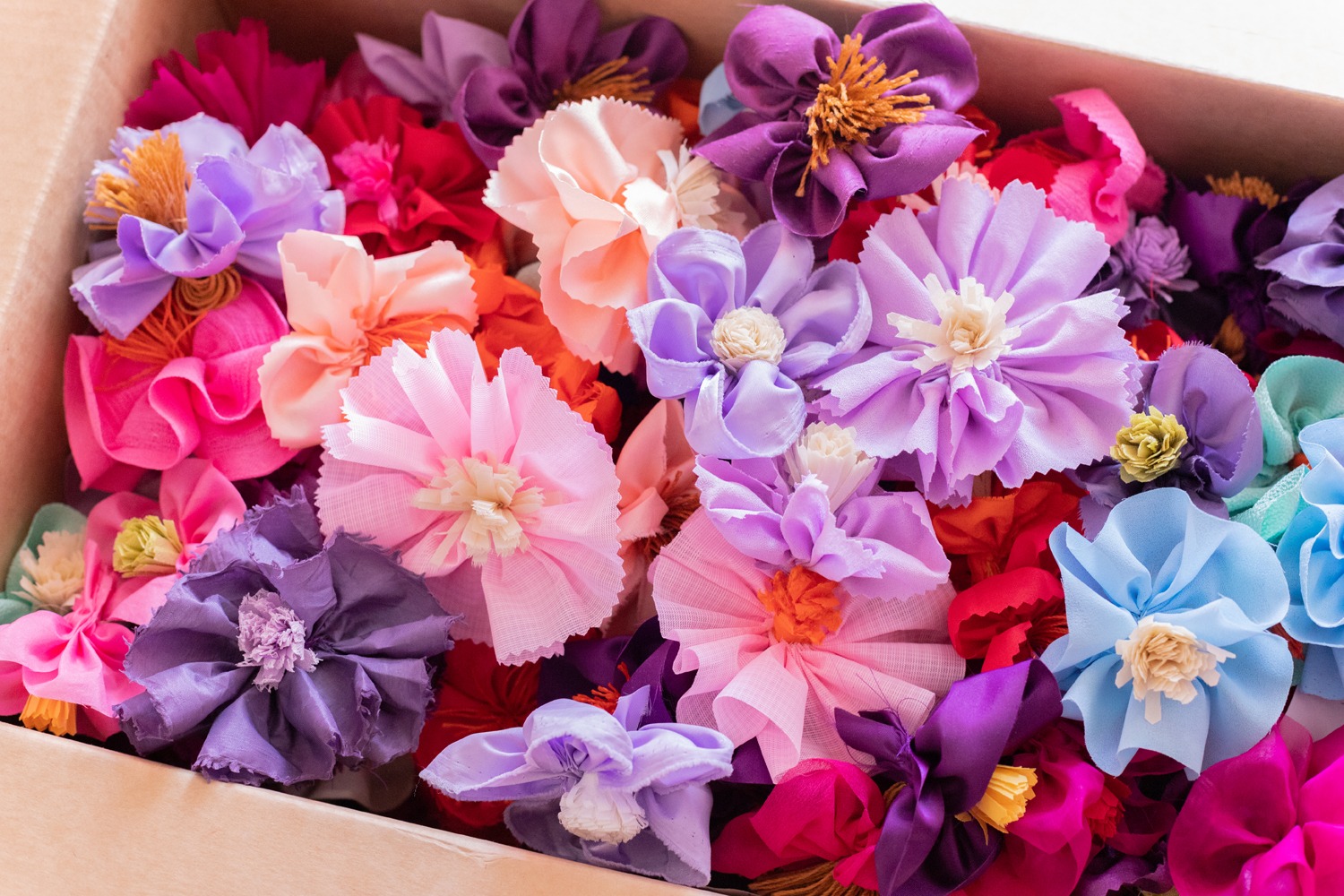
Box of flowers made at the start of January, before the net structure had been hung
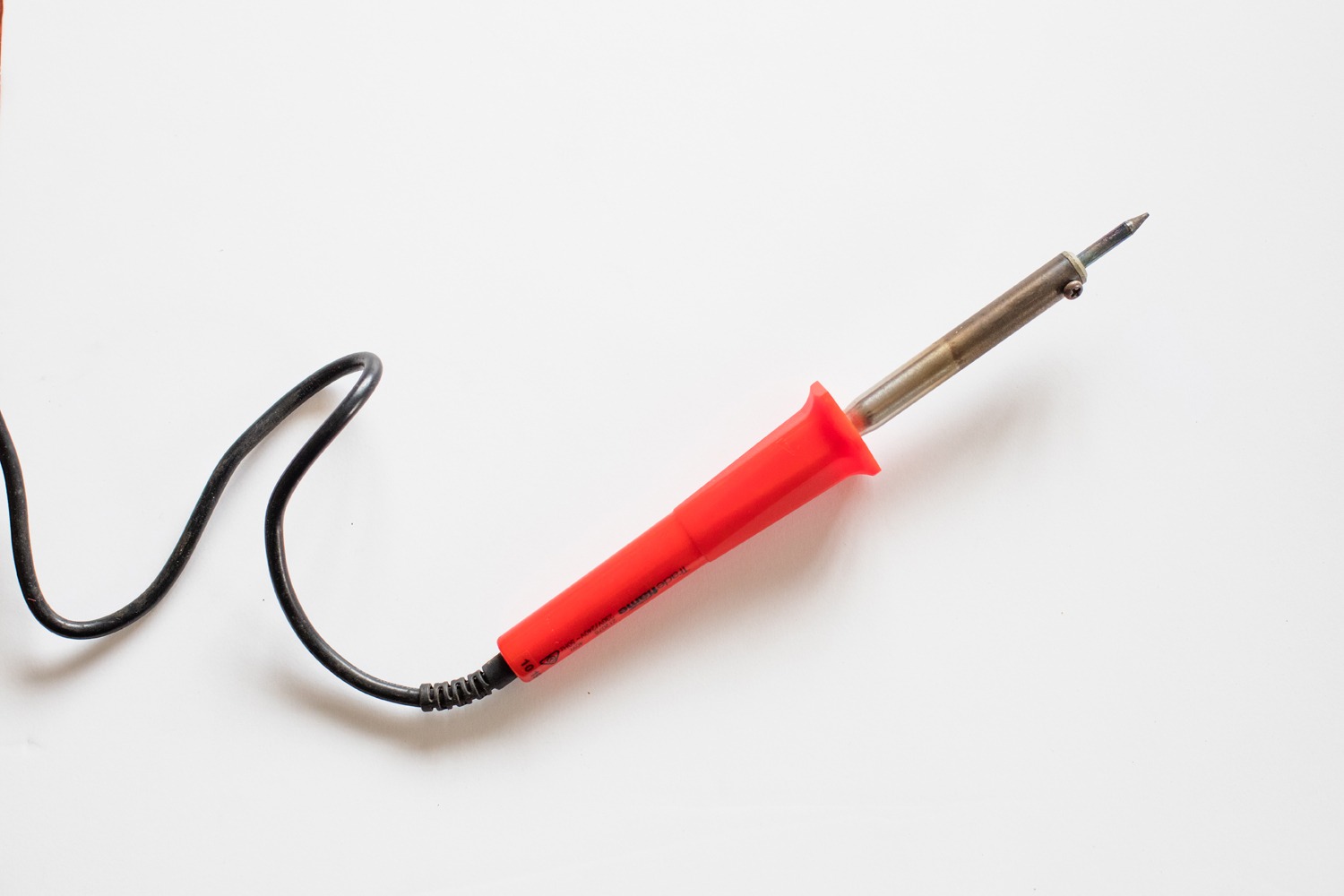
Solder Iron
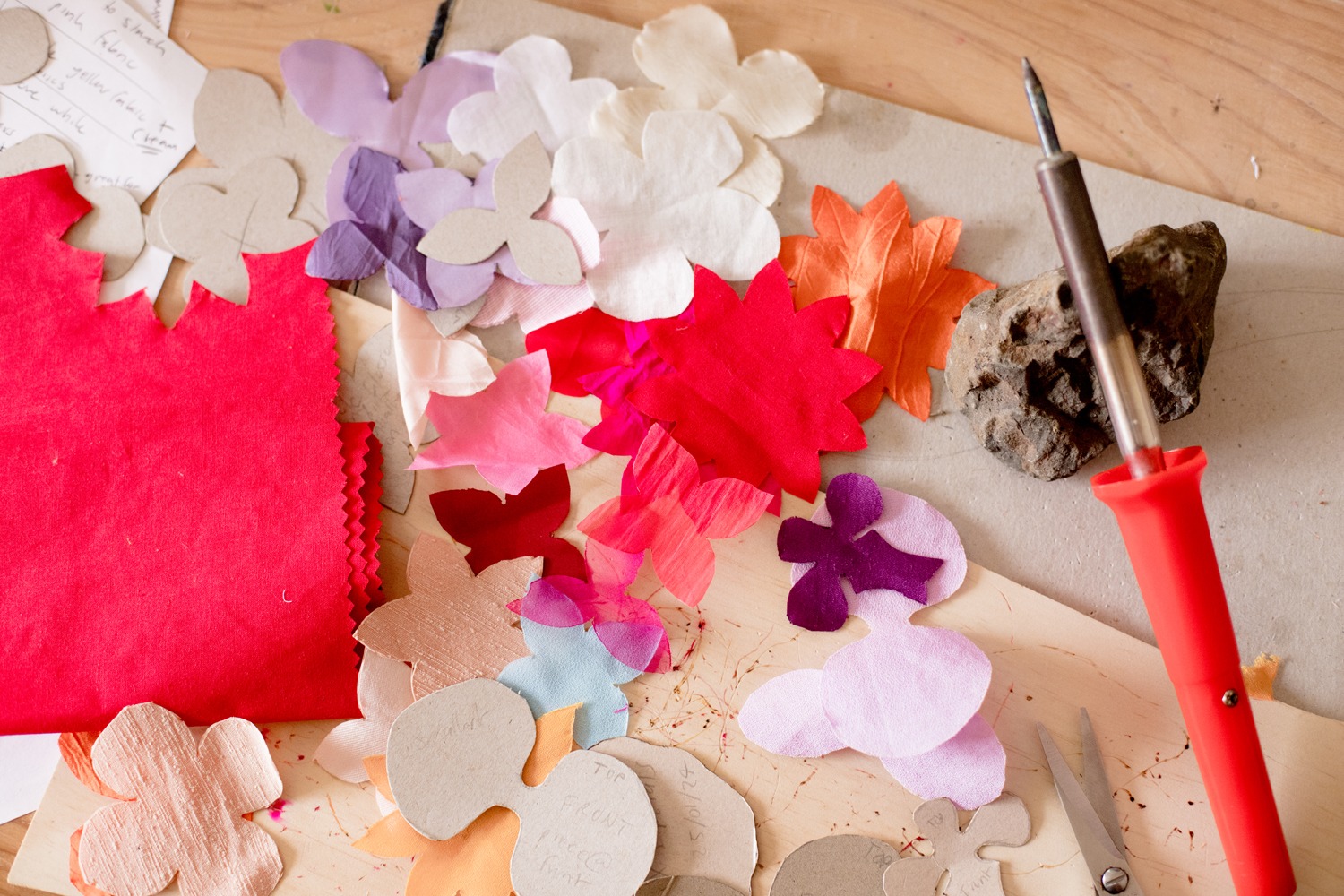
fabric flowers cut using solder iron
completed solder iron flowers
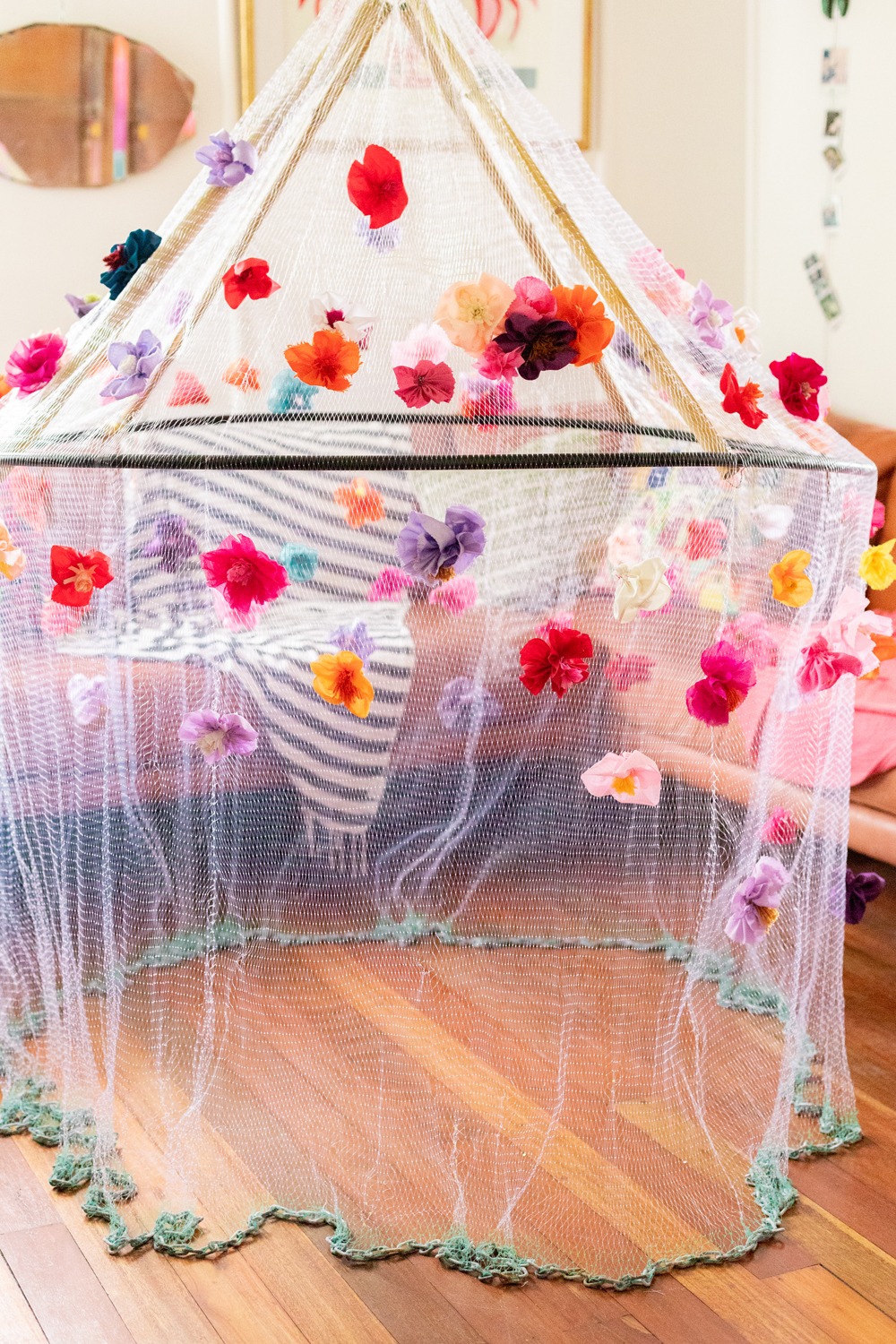
adding flowers to the netting
/For the first nine days of February, I consistently made 10 flowers a day.
/I had wanted to incorporate feature flowers into Flower Shelter, but had been hesitant due to the time required to learn and make new flower types. An upcoming exhibition in March (requiring new work) provided an opportunity to step away from the fast-paced productivity mode and experiment with making intricate flowers for a small one-off sculpture that could be repurposed for Flower Shelter.
/I was able to make the following intricate flower varieties: bird of paradise, bluebell, rose, wattle, grevillea, daffodil, trumpet flower, calla lily, frangipani, baby’s breath, hibiscus, orchid, tulip, morning glory, star lily, foxglove, anthurium, peony, hydrangea and petunia.
/The flowers were constructed from a range of online templates, with the majority sourced from Handmade Flowers from Paper and Fabric by Steve and Megumi Biddle. Not all flowers were successful, and each took at least a day to make, with some taking two days.
TOTAL MONTH TIME: 77.75 hours (267.75 total)
FLOWER TOTAL: 124 (450 altogether)
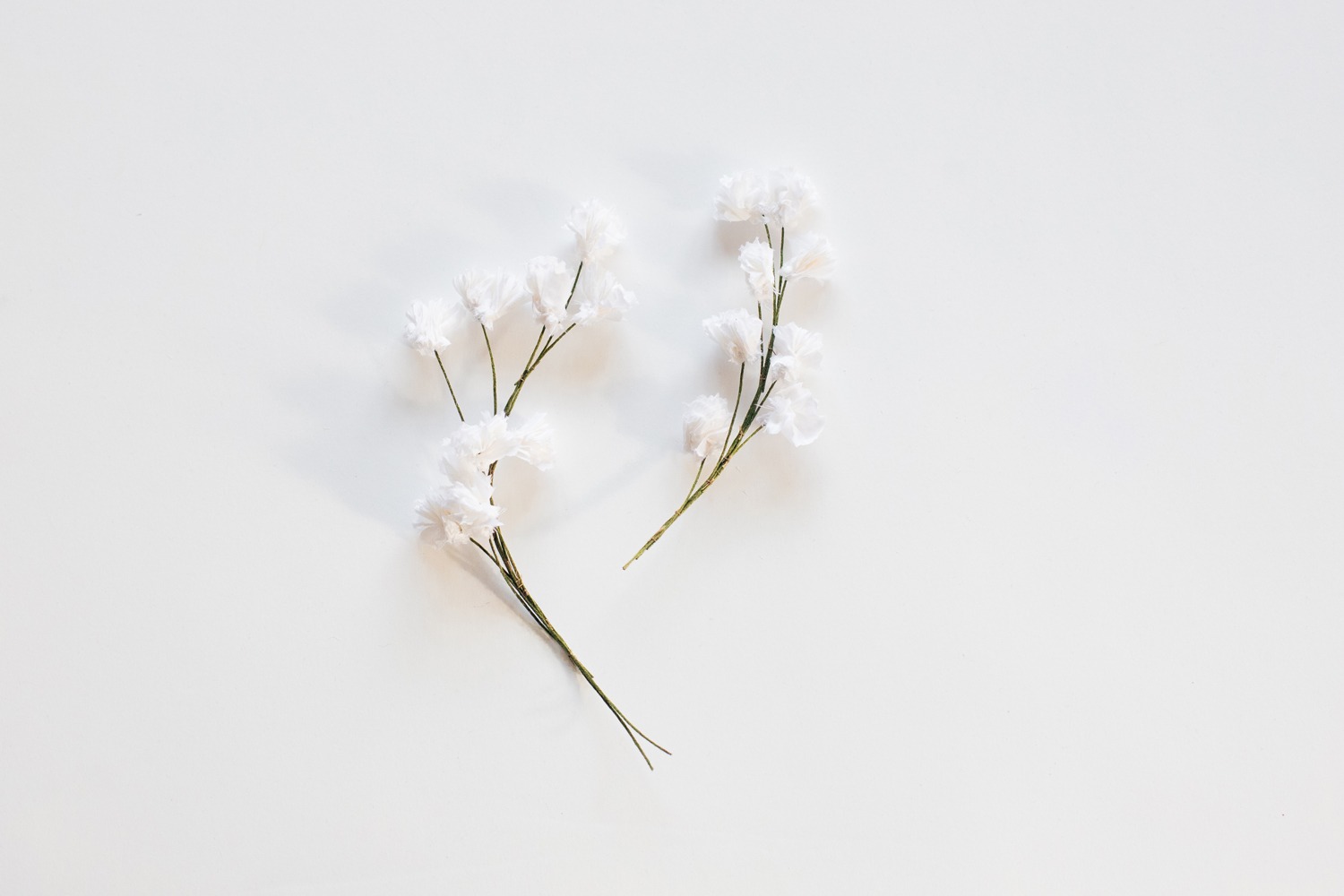
baby’s breath made from white fabric and embroidery thread
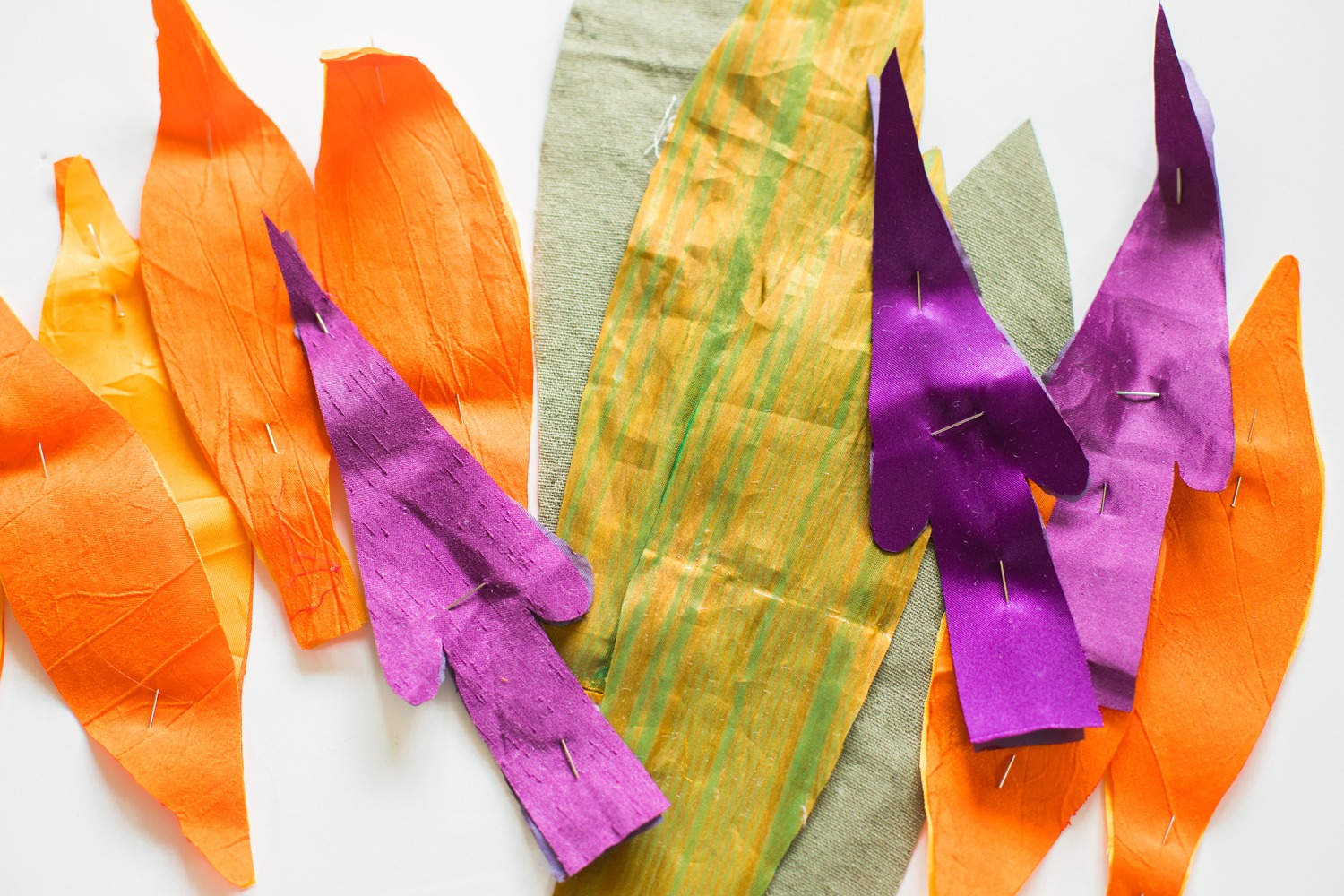
bird of paradise pattern pieces
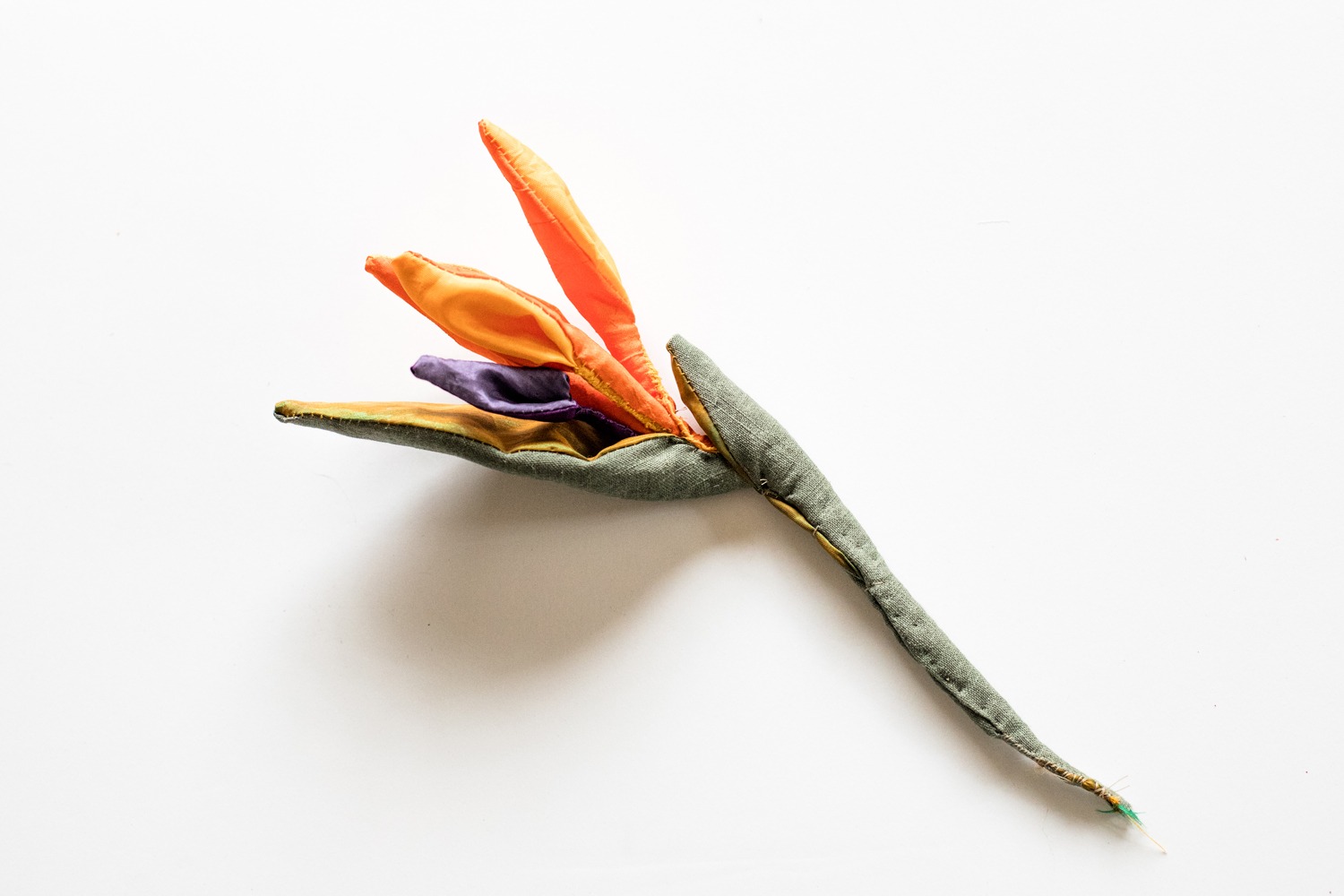
bird of paradise
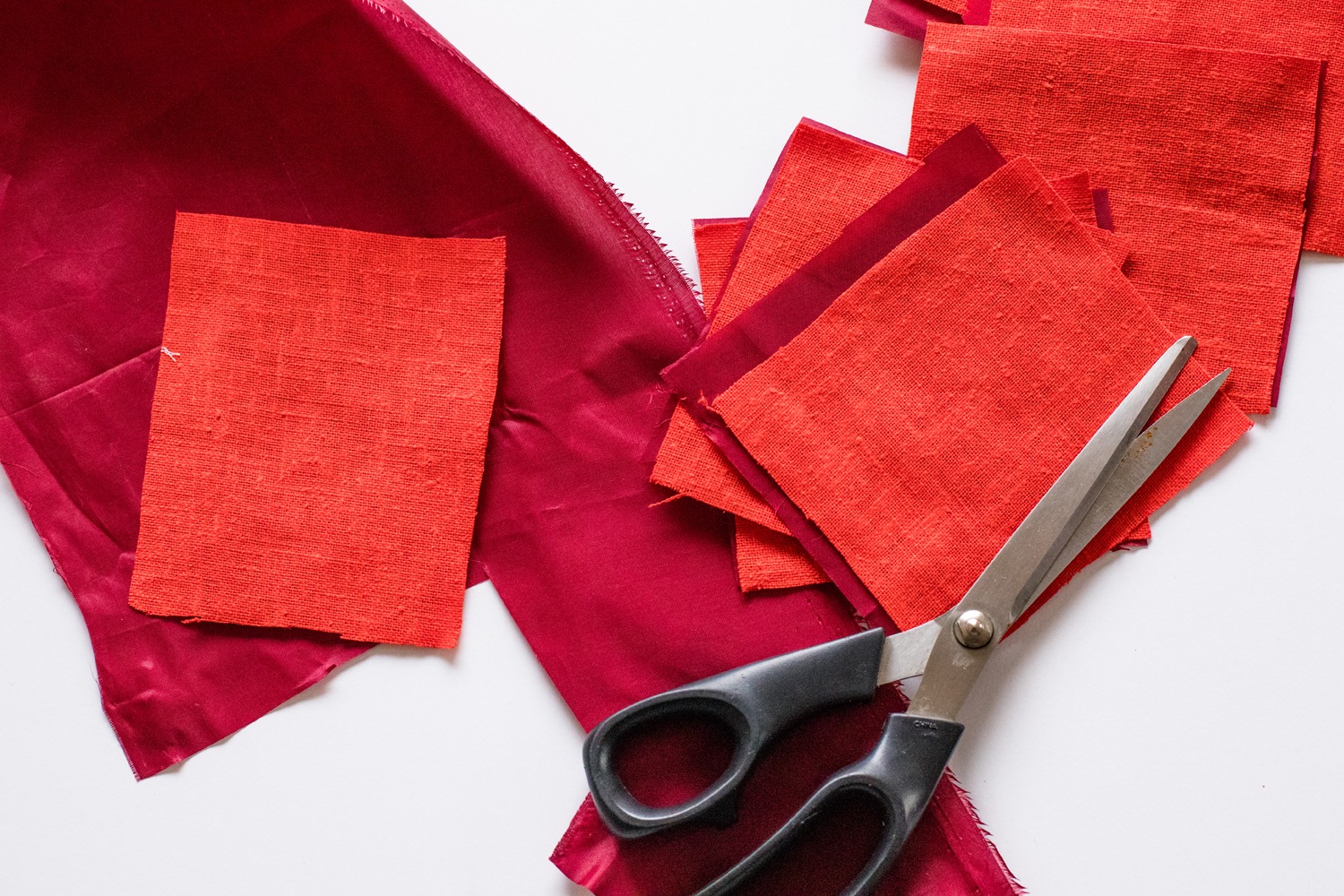
cutting out a rose
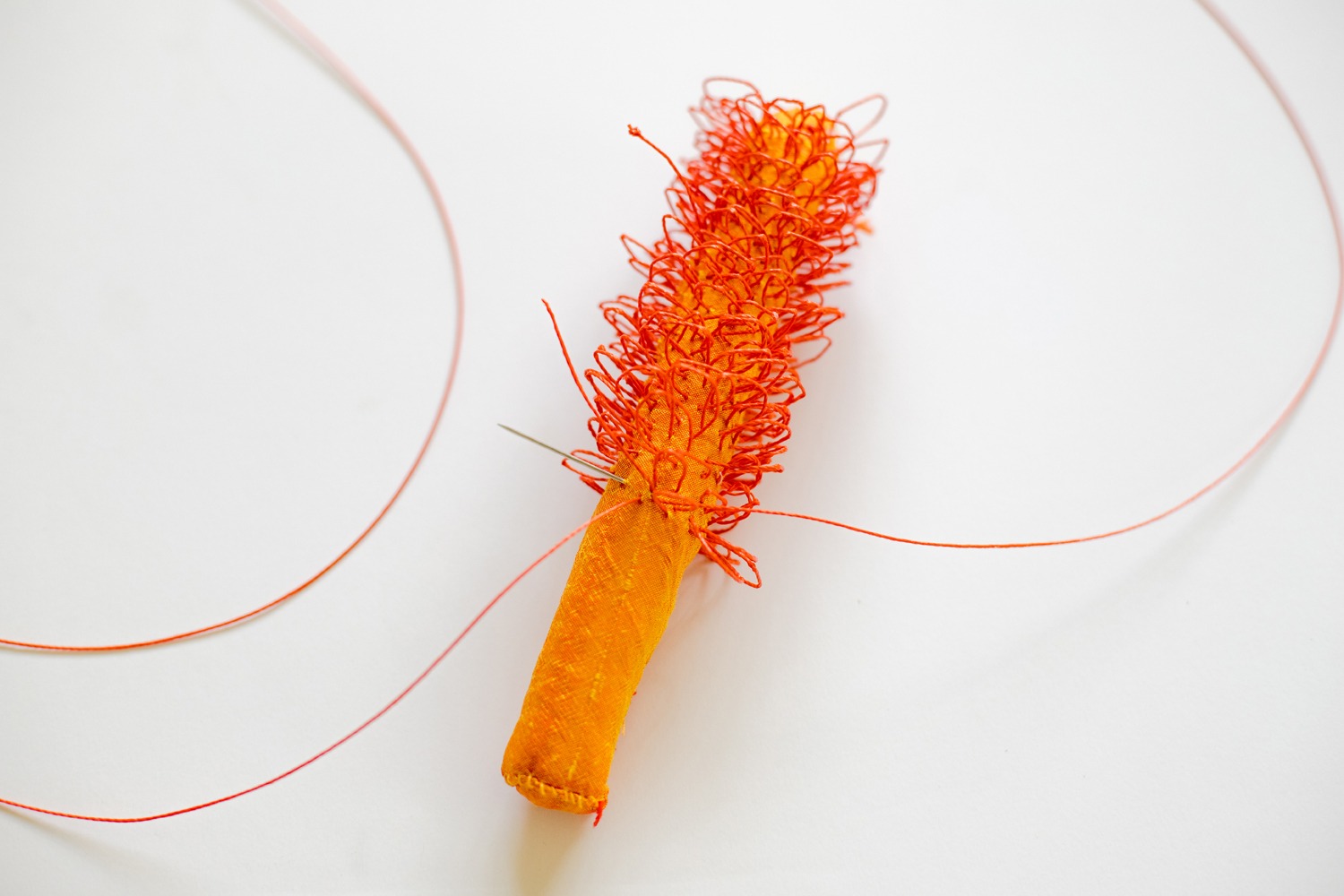
grevillea flower
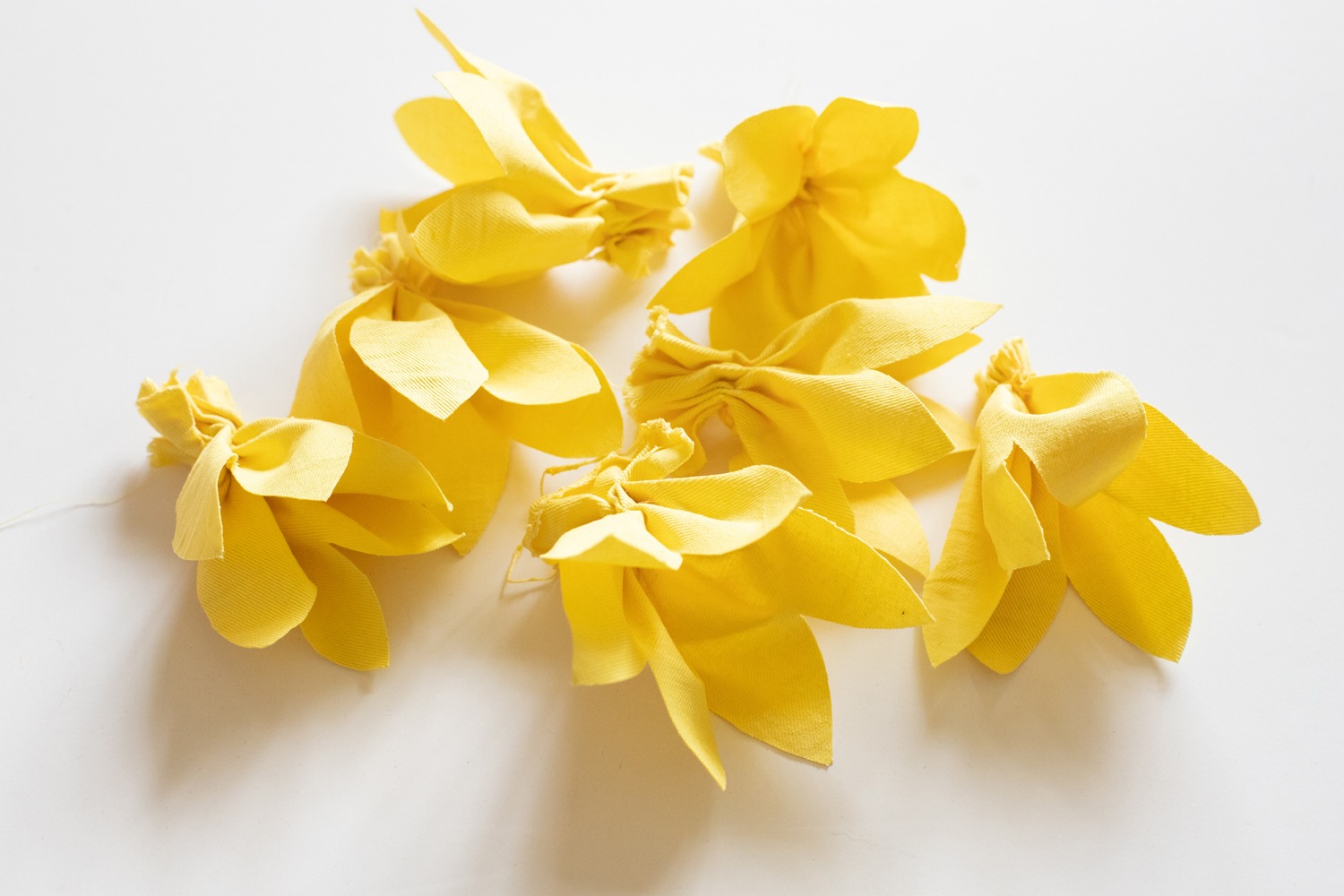
trumpet flowers
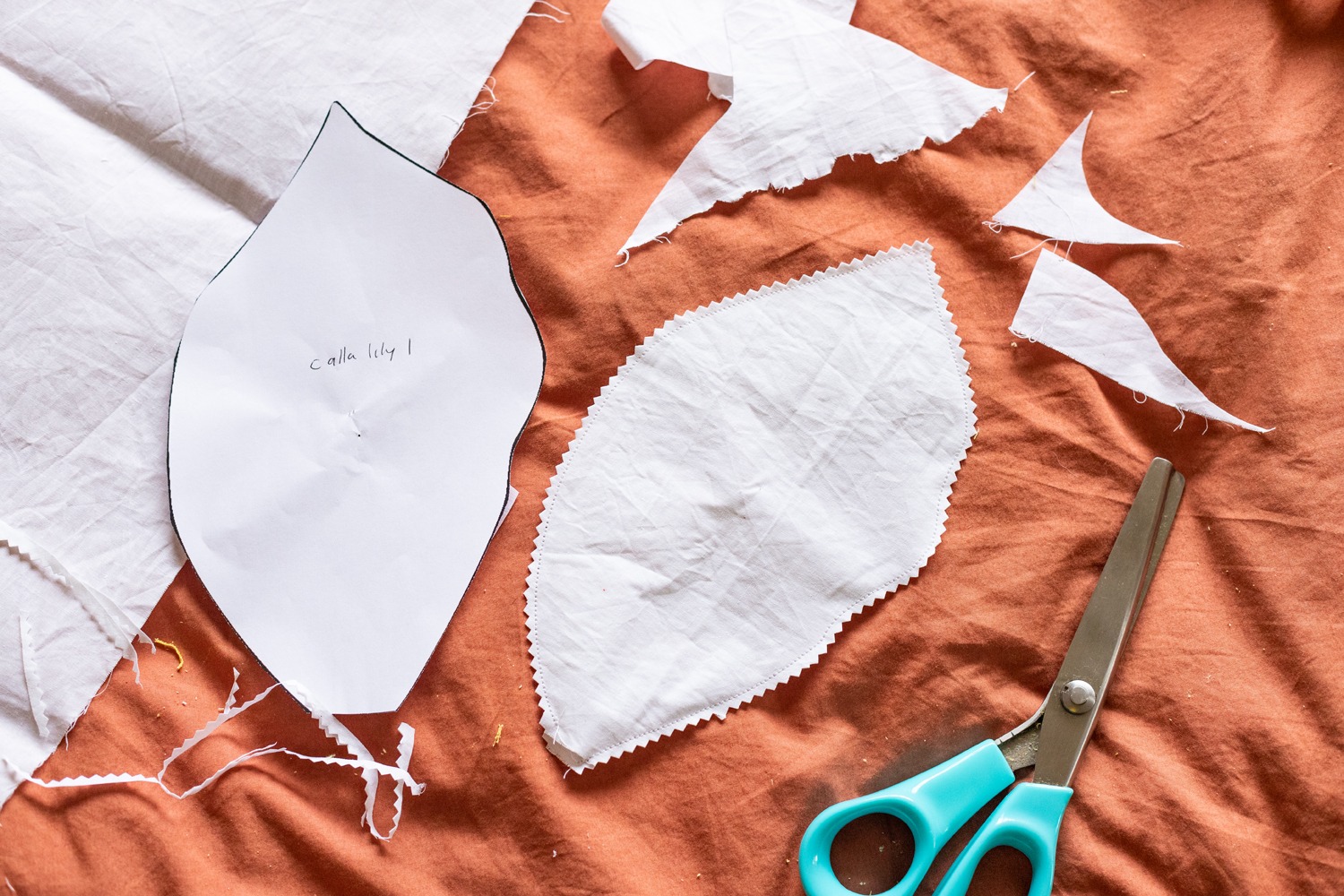
calla lilly progress
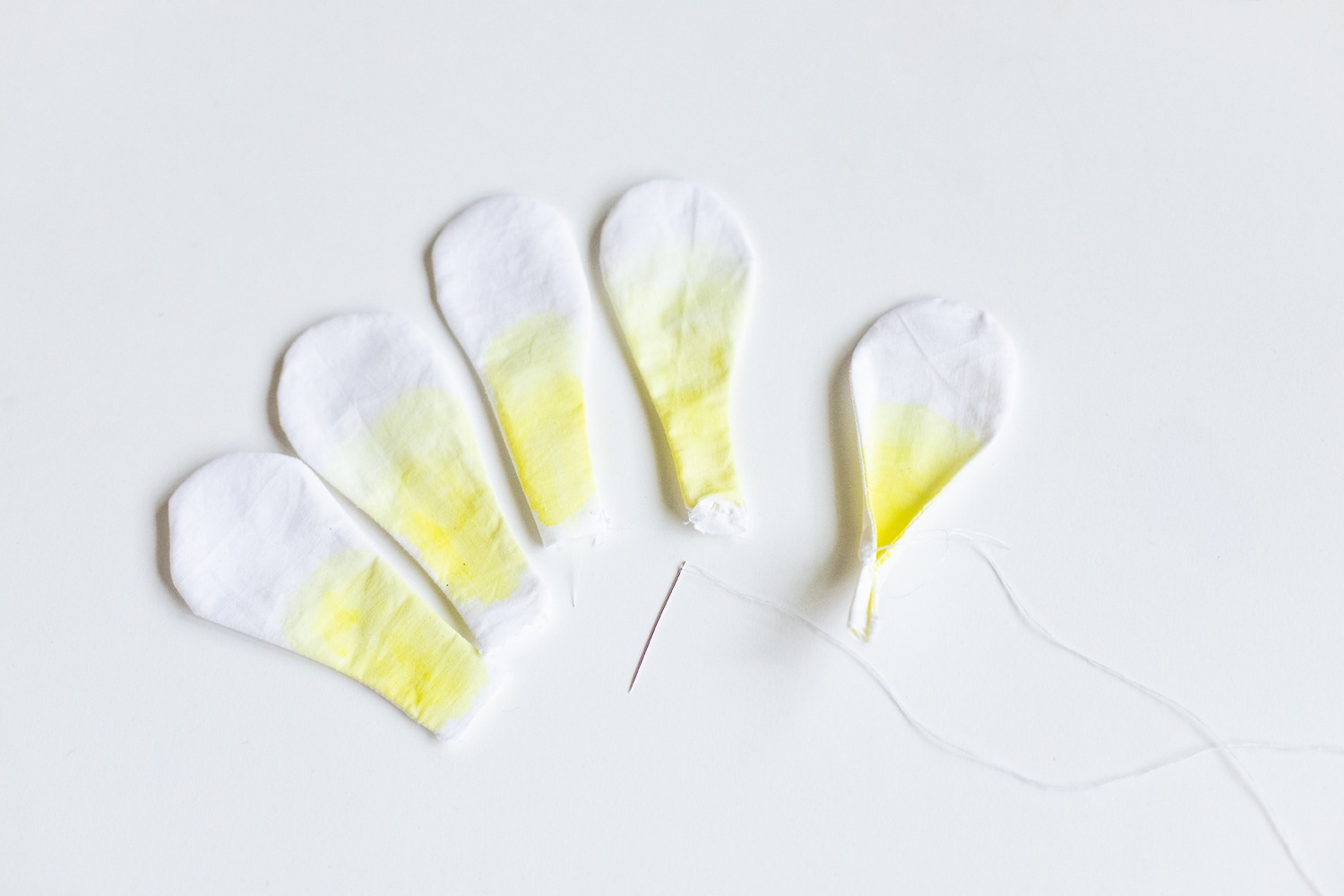
frangipani progress
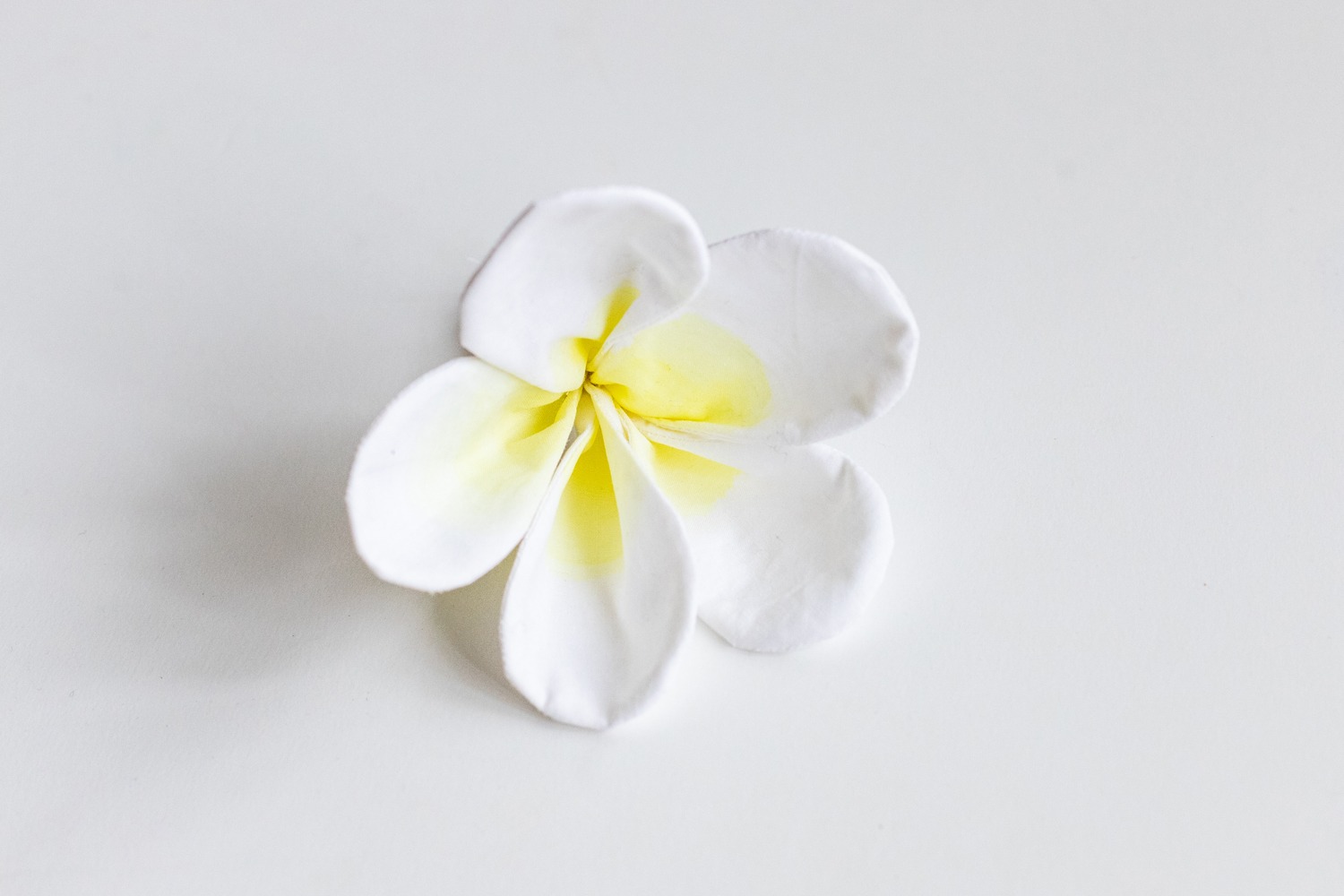
frangipani
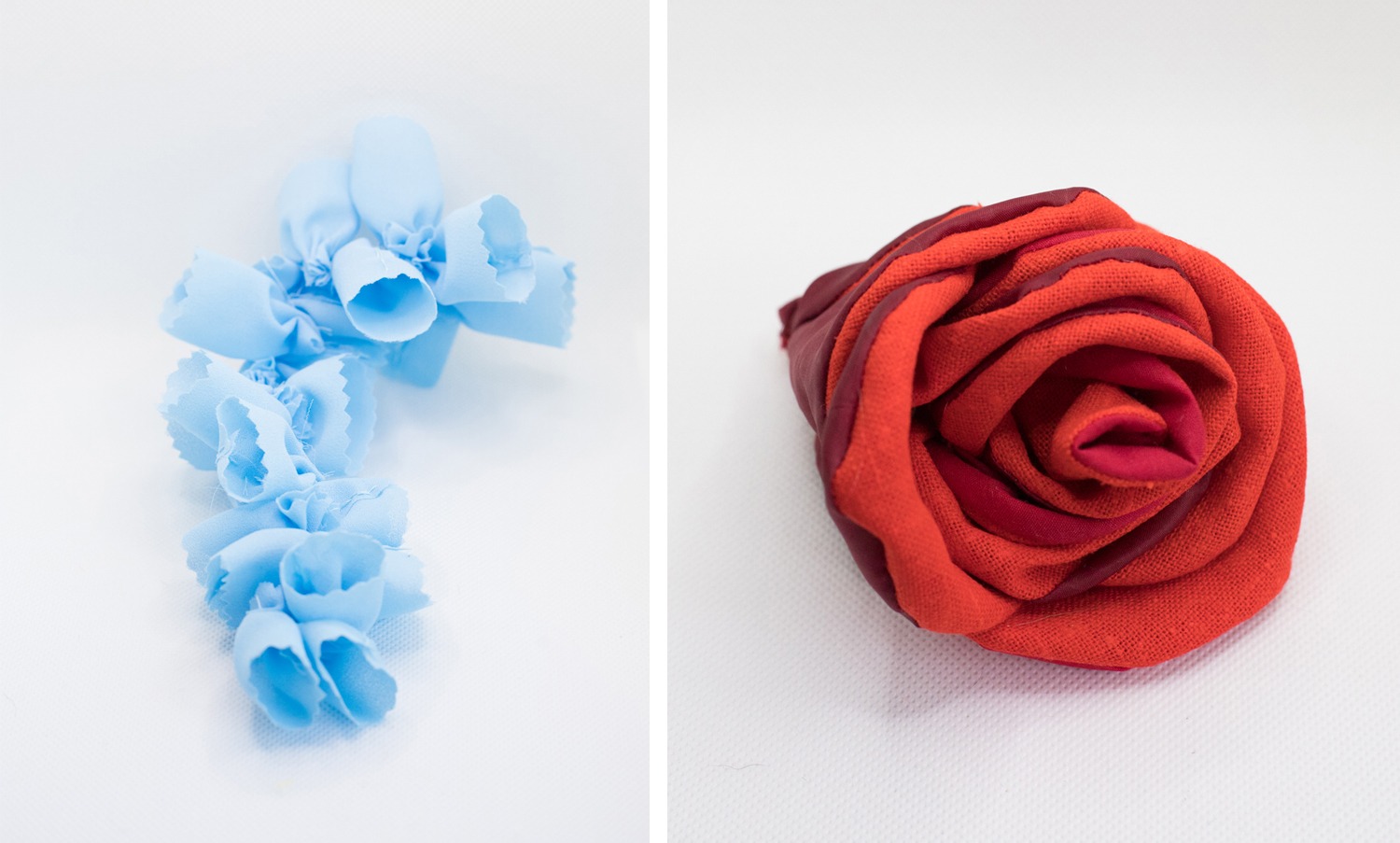
bluebells and red rose
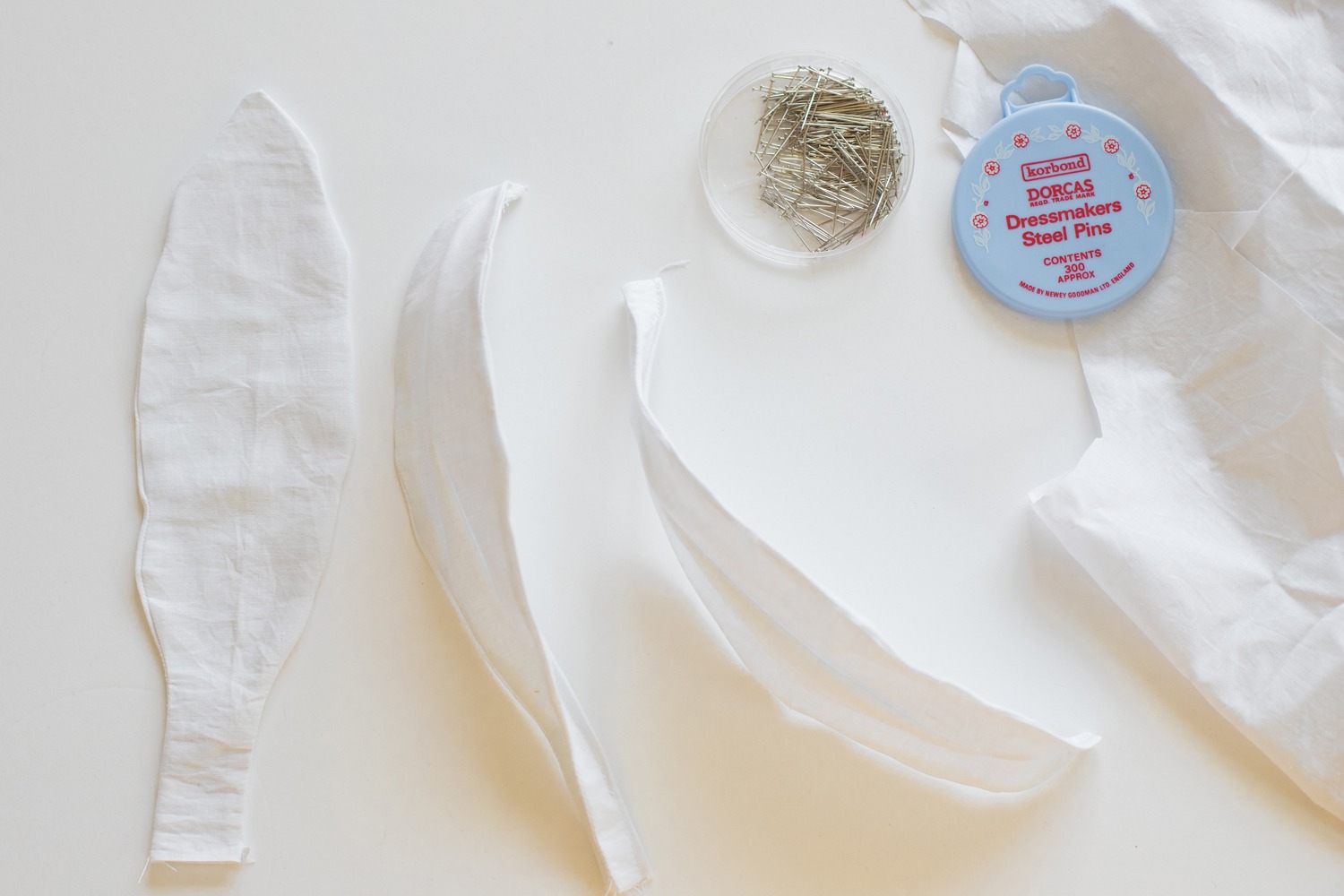
making of lily flower
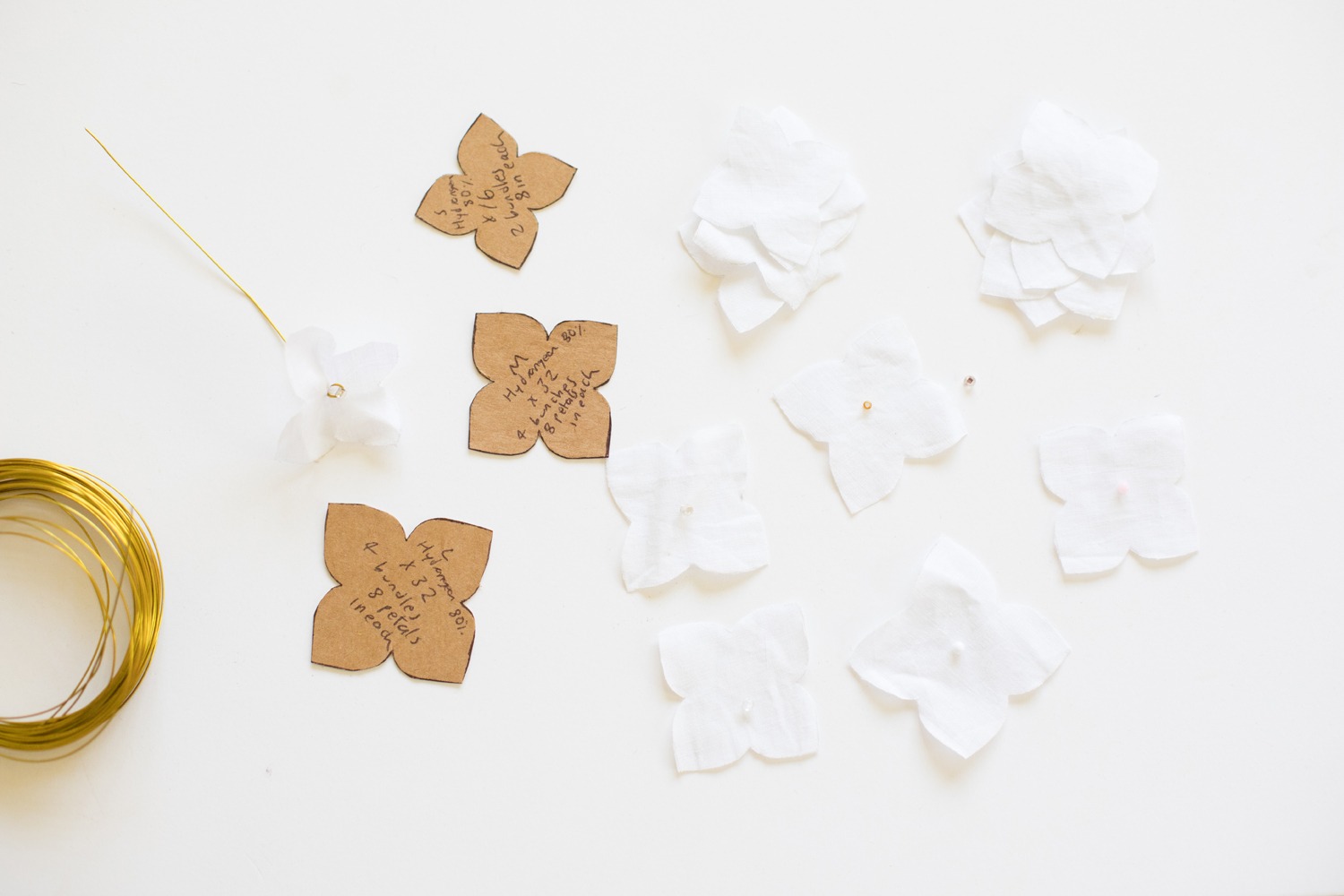
making of hydrangea
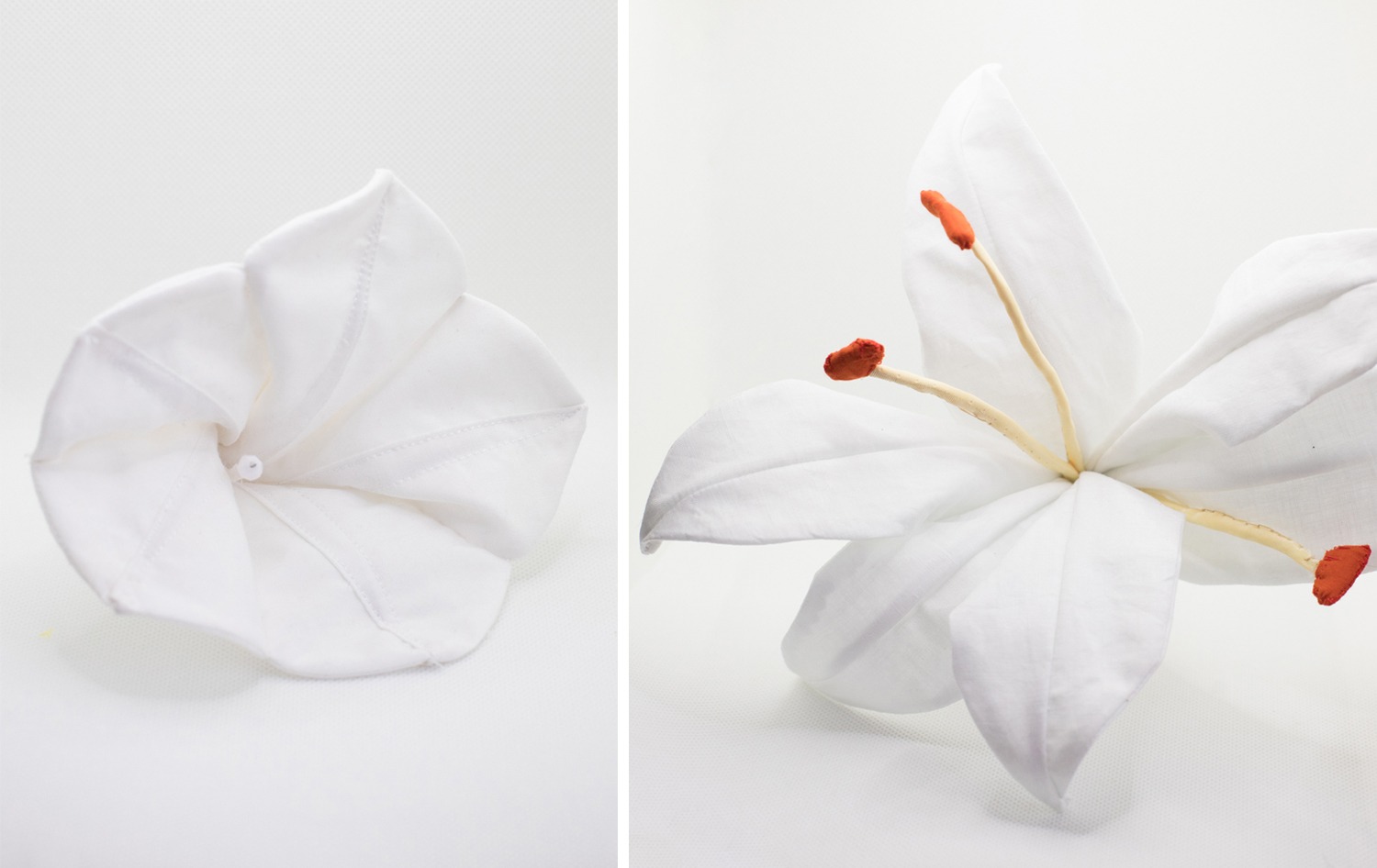
morning glory and star lily
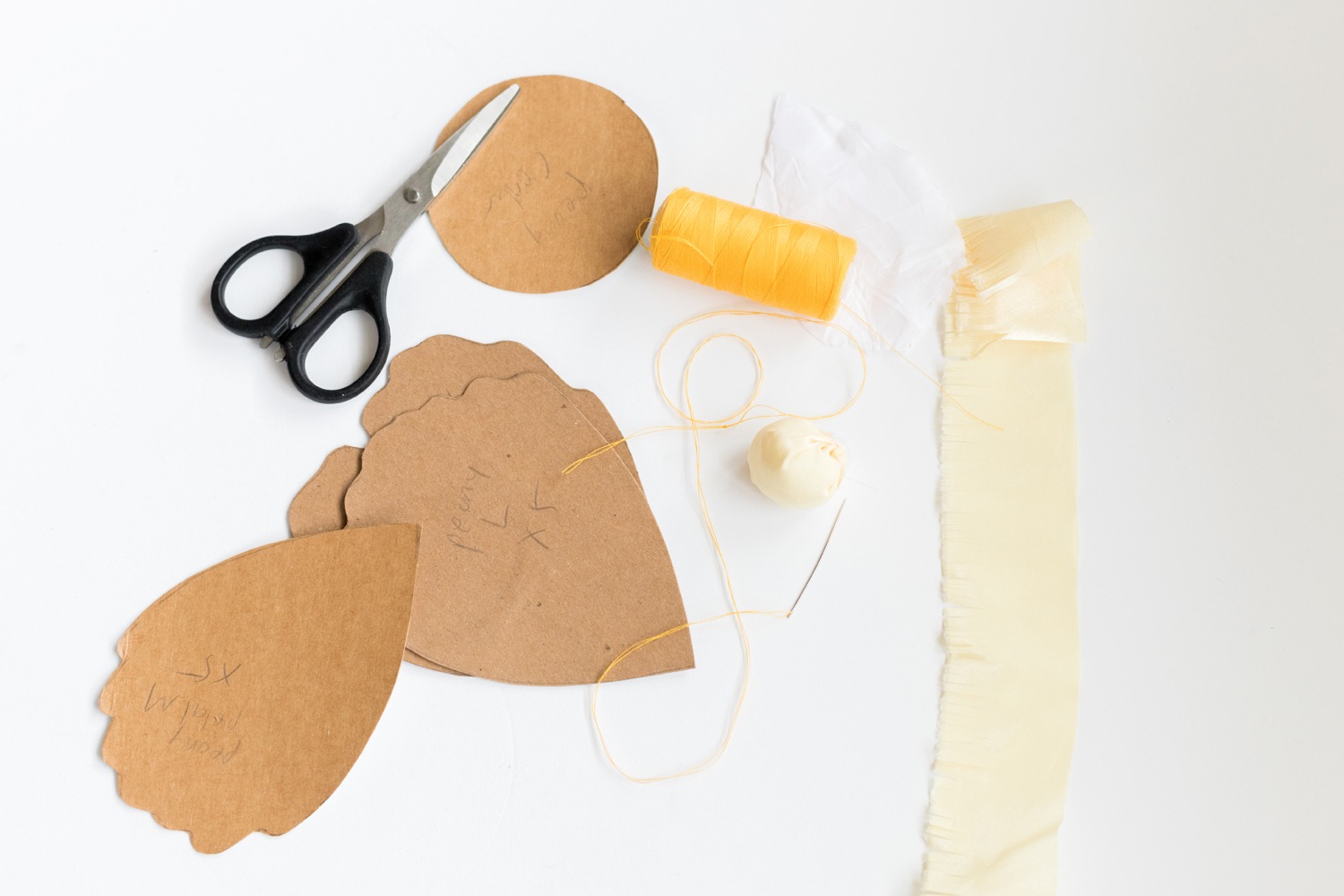
peony making of
March 2024
/Continued developing intricate flowers, focusing mainly on white flowers.
/Learned and made: daisies, lily (with French-knotted stamen), magnolia, bougainvillea, anemones, snowdrop, tulip, poppy seed balls, gerbera, kanzashi (various types), allamanda, orchid, peony (with French-knotted centre), oriental lily, calla lily, water lily and bell flowers.
/Didn’t reach my usual flower-making goal due to exhibition preparation, but was happy to invest time in developing intricate flowers that will ultimately be repurposed for Flower Shelter.
/Experimented with an online technique using tweezers heated with a soldering iron to shape petals. The method worked immediately and produced great results, but the petals didn’t retain their shape long-term.
TOTAL MONTH TIME: 53 hours (320.75)
FLOWER TOTAL: 78 (528 altogether)
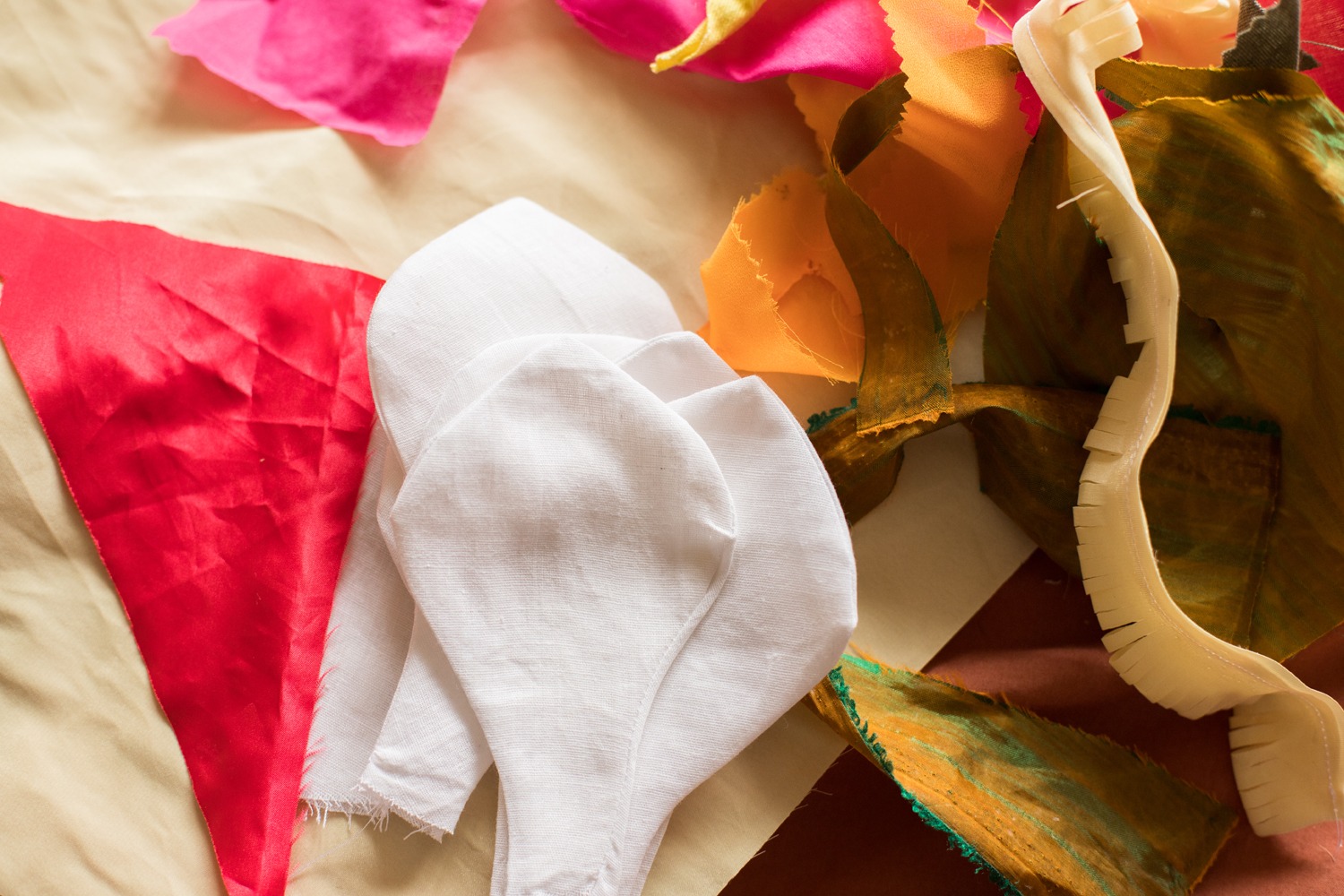
magnolia making of
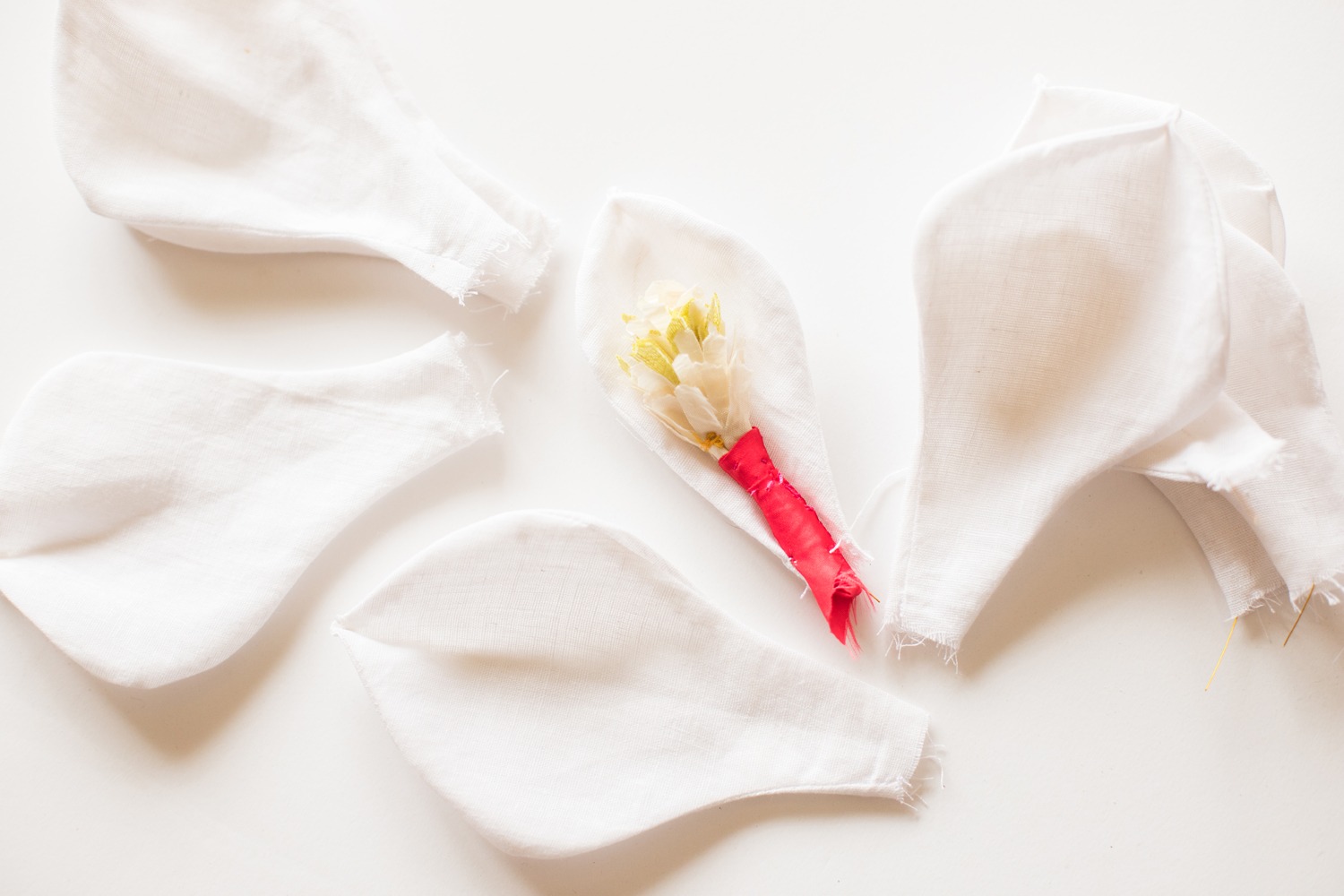
magnolia making of
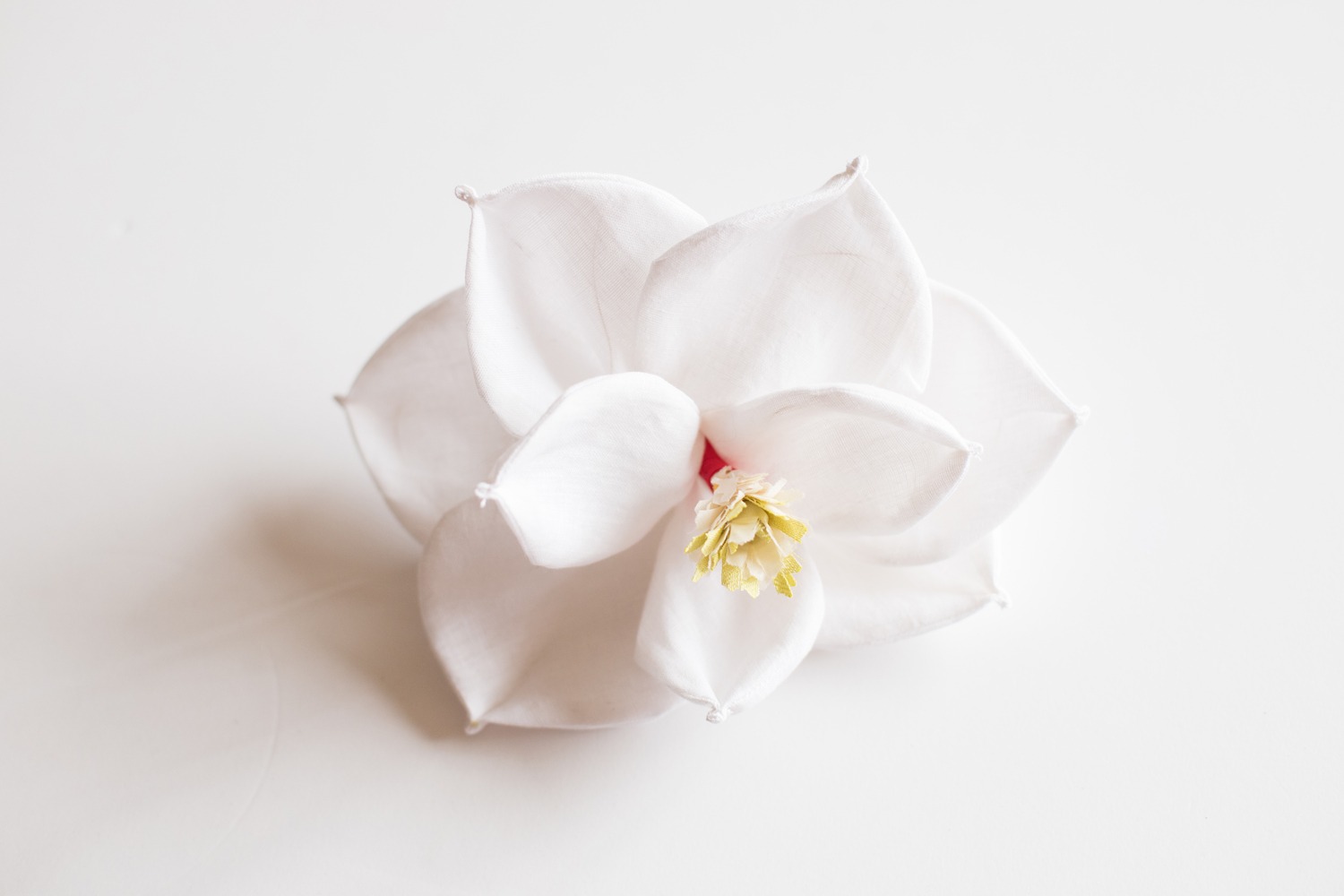
magnolia
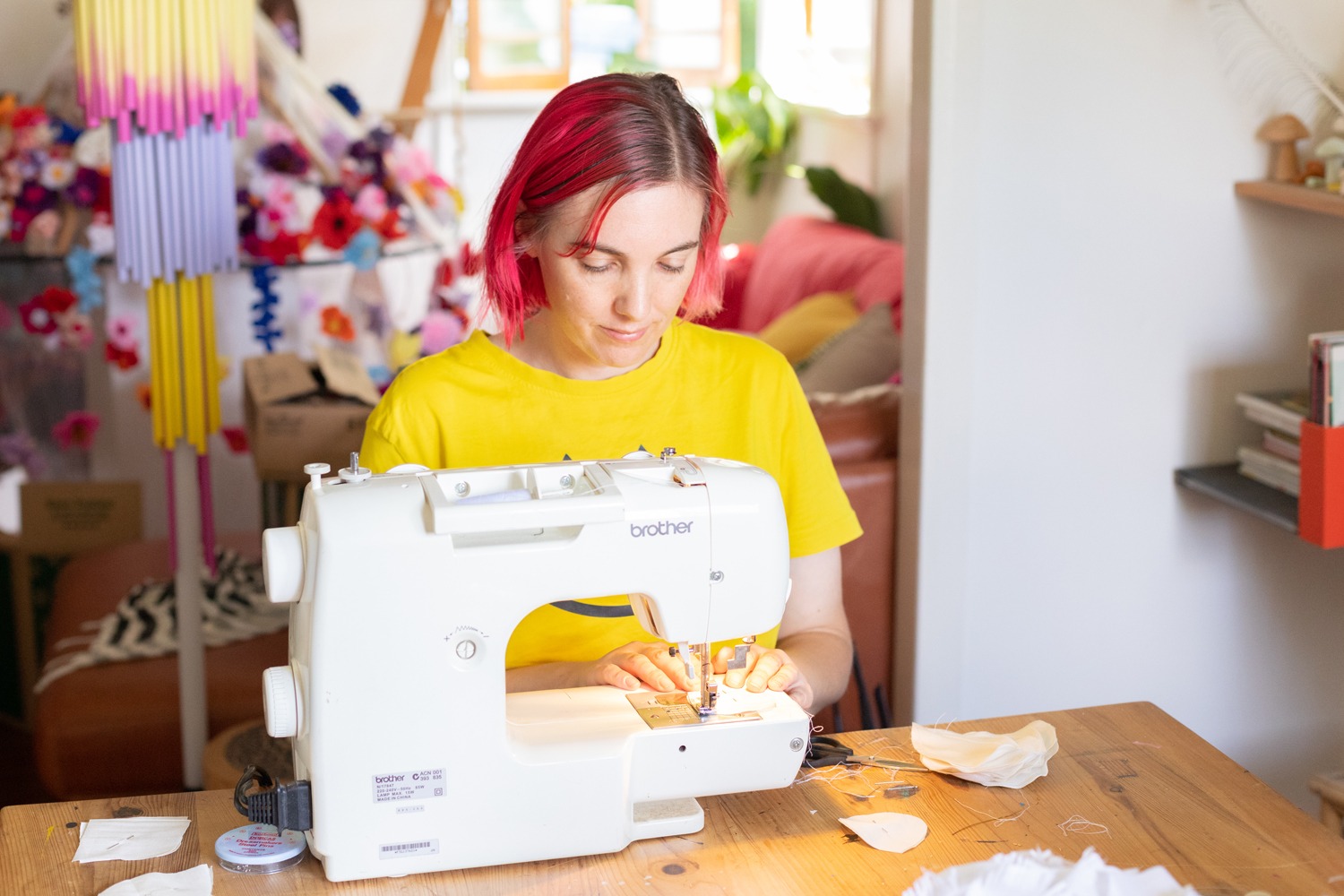
sewing petals
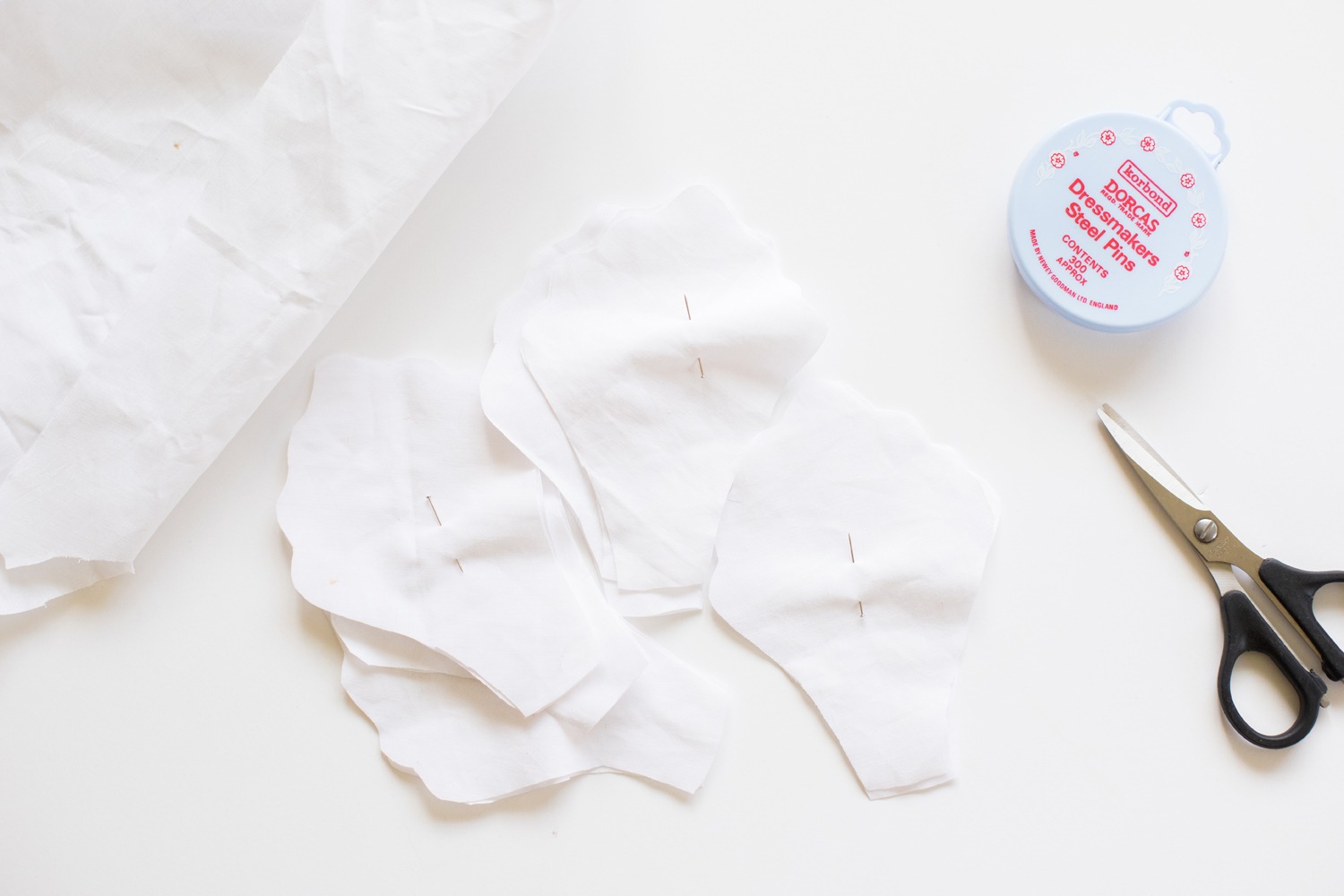
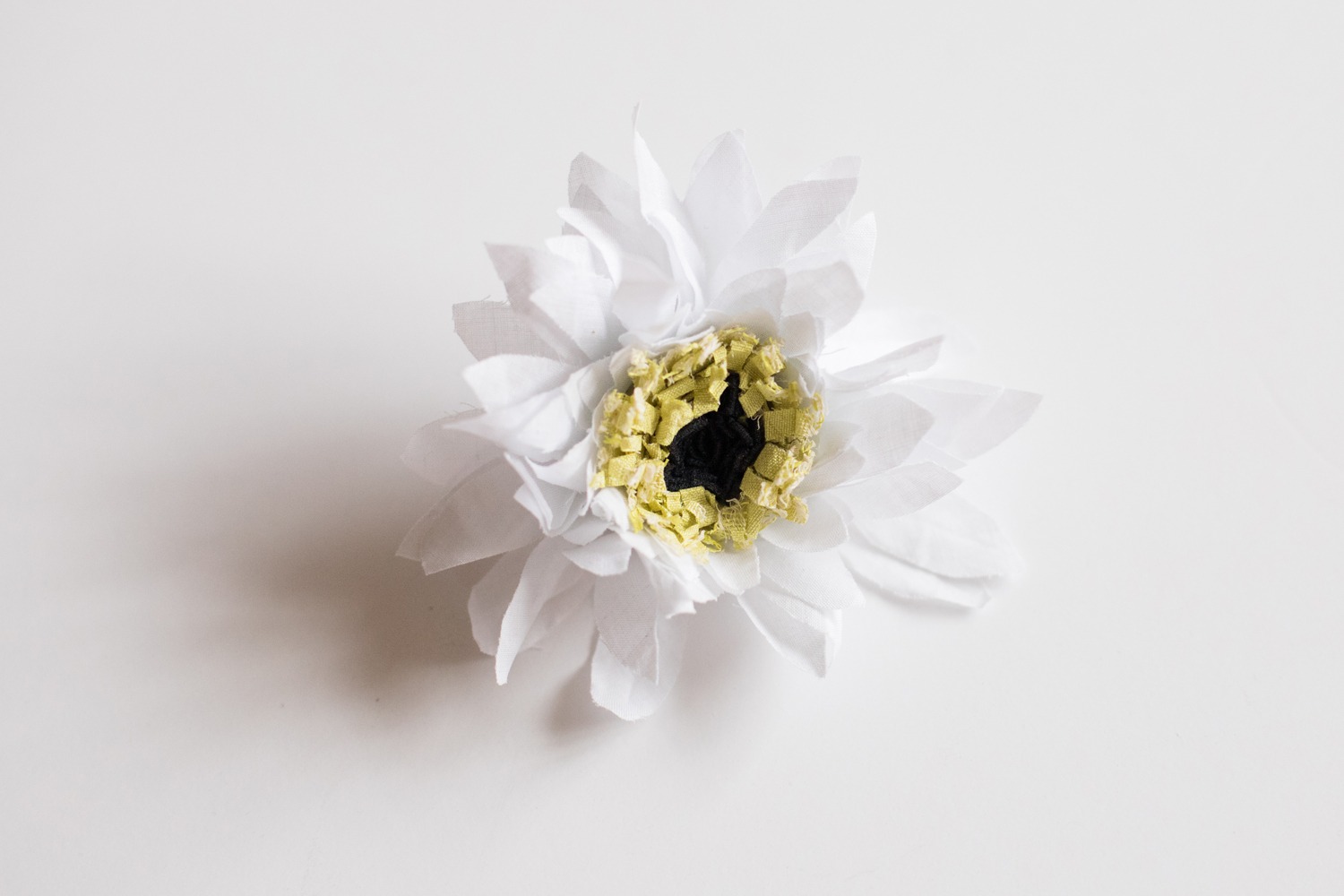
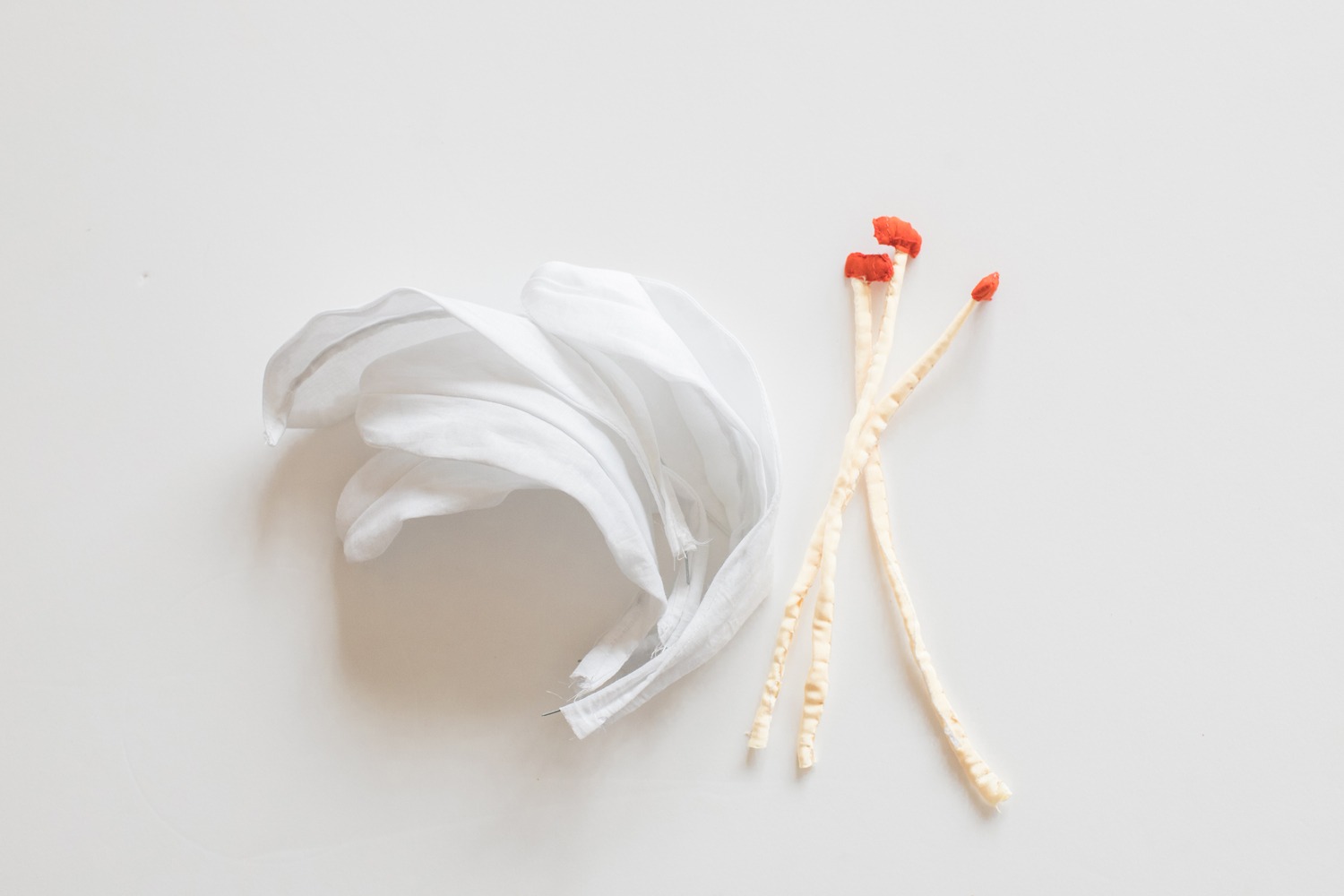
lily making of
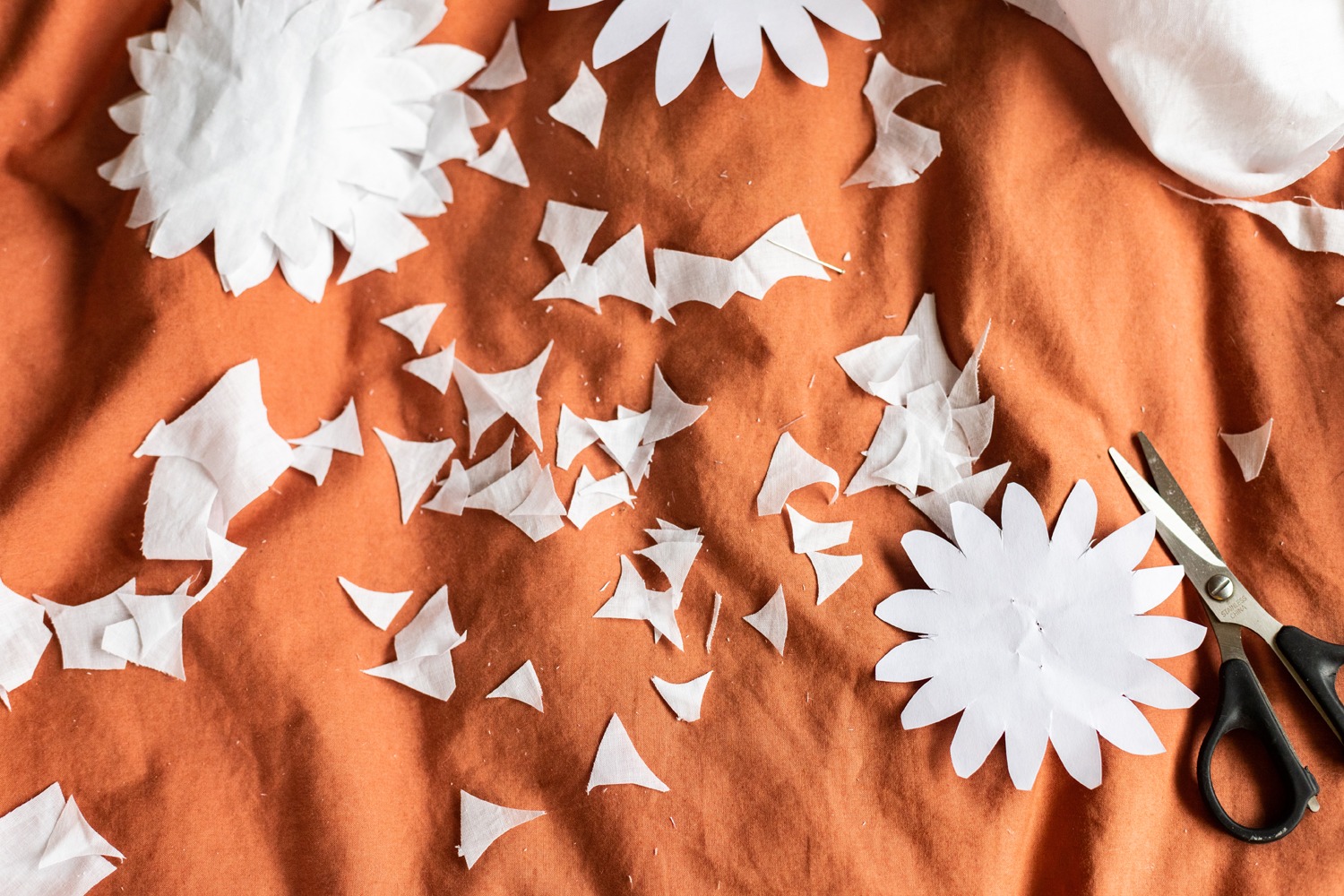
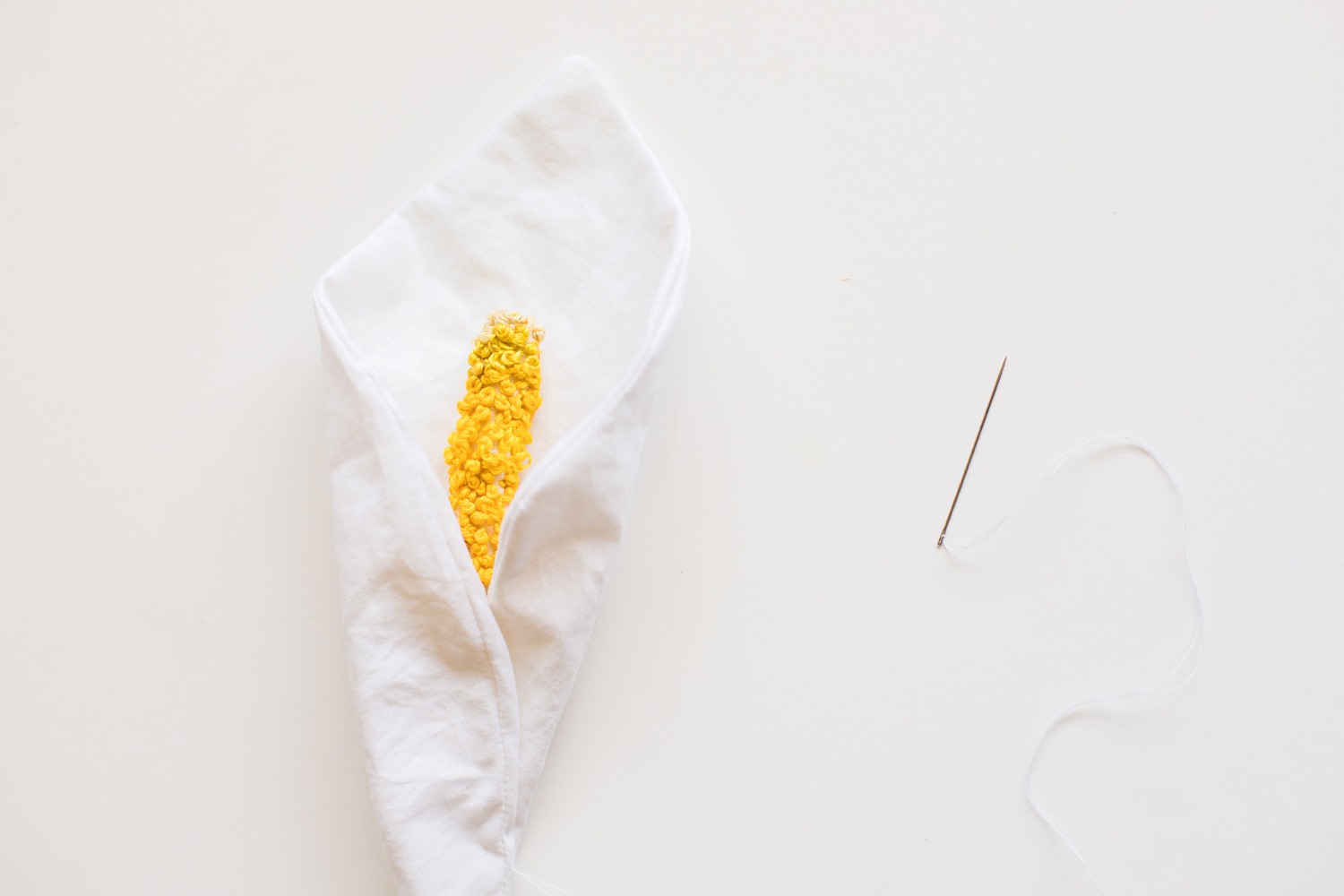
calla lily making of
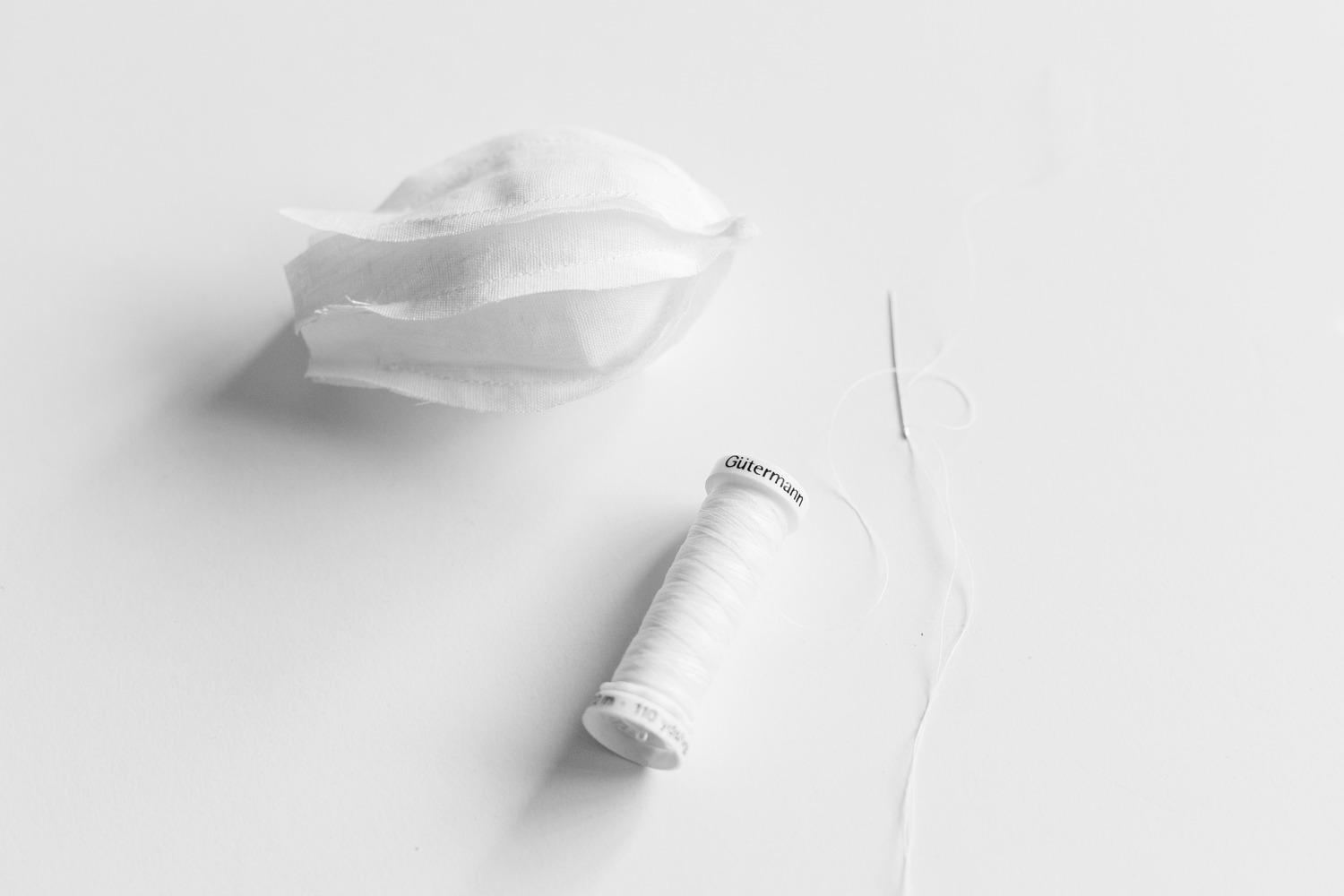
puff ball making of
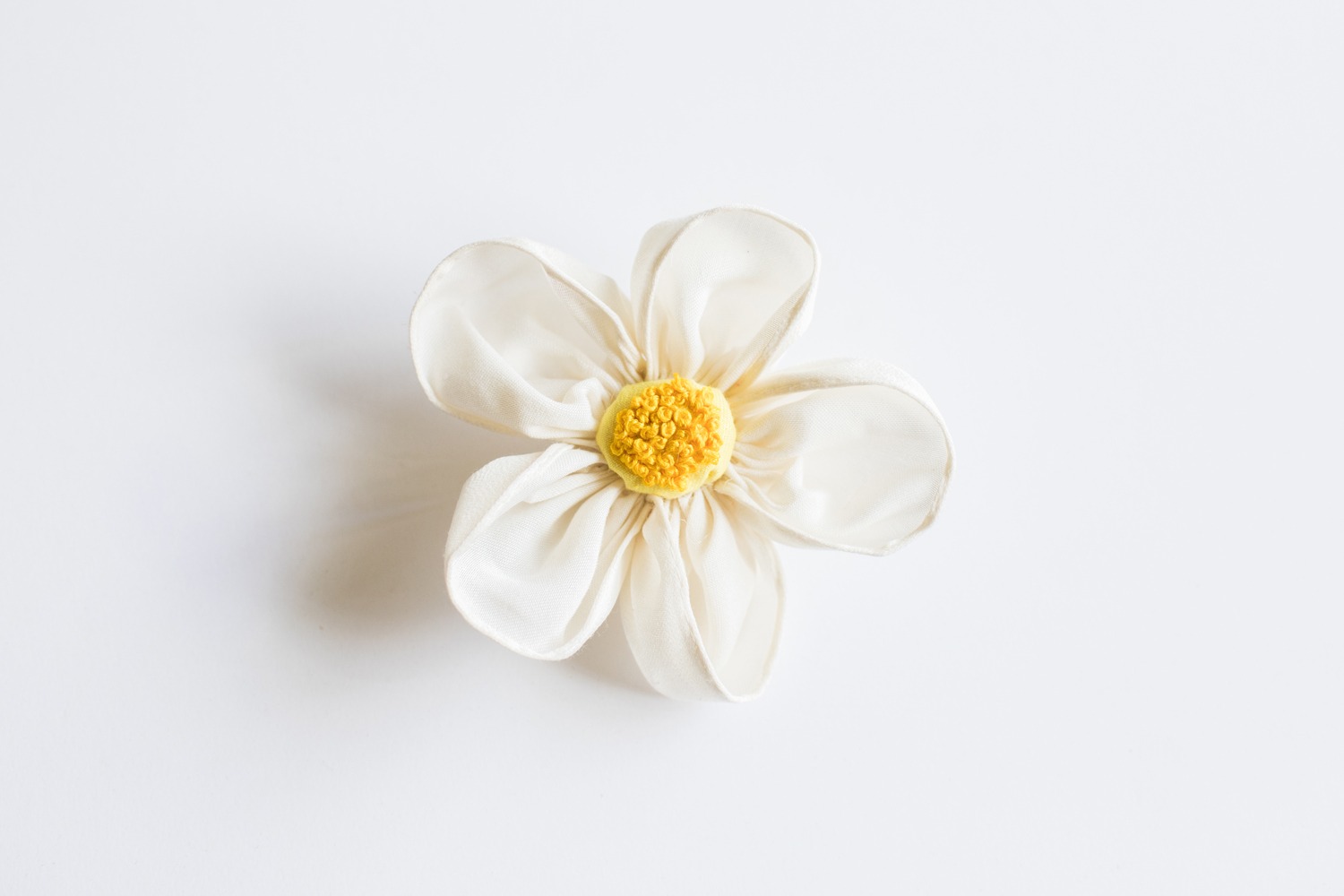
daisy with french knotted stamen
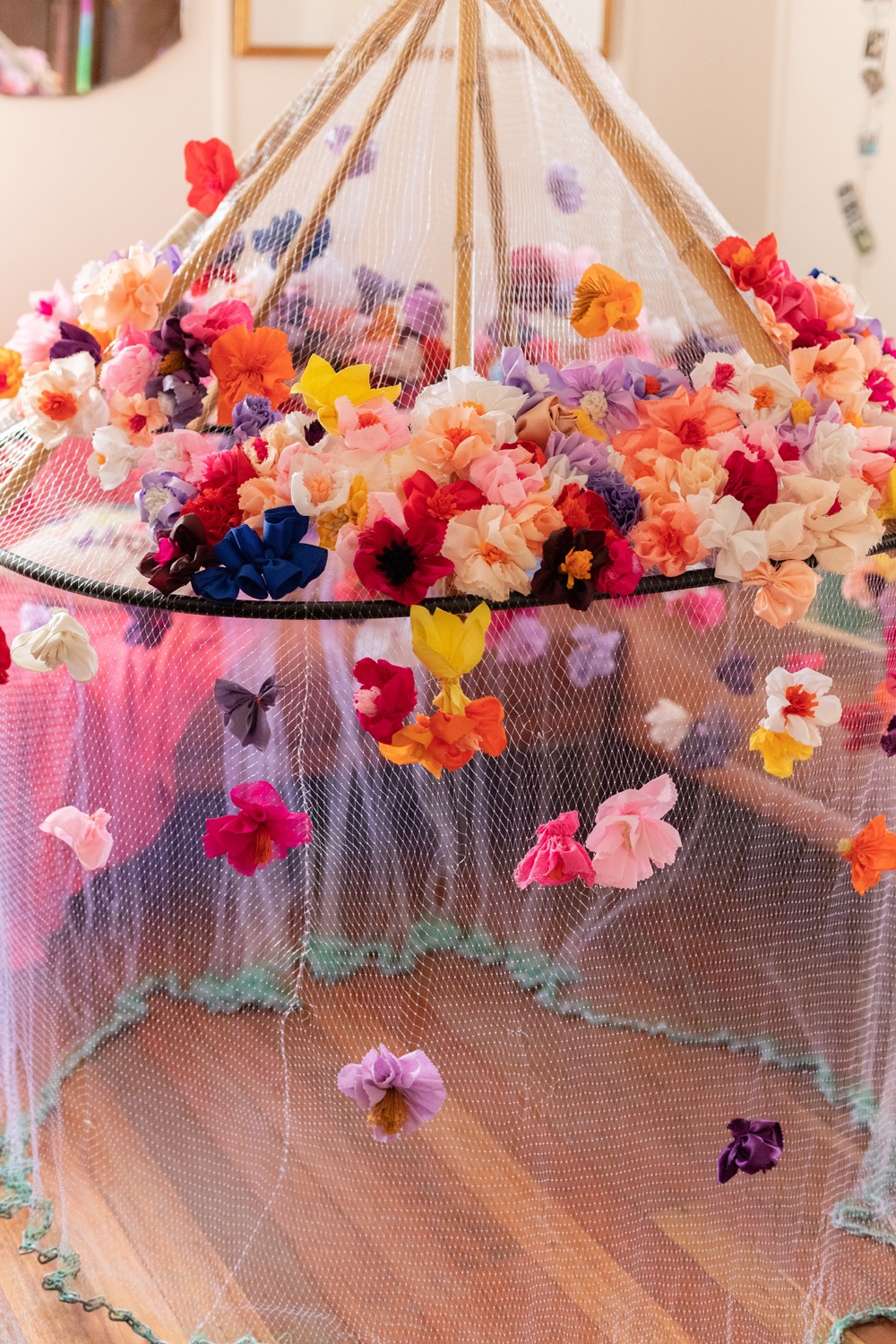
march progress
April 2024
/Finished making intricate flowers at the start of April and returned to making regular flowers.
/Exhibition and family commitments, including daily gallery visits and events, made it difficult to return to my previous fast-paced flower production.
/Ben’s brothers, Mick (an engineer) and Paul (a welder), helped me work through the metal support structure for the shelter and develop a plan.
/Friends came around and sewed a few flowers.
/My low flower count this month was also partly due to remaking the stamens on the first batches of flowers. Earlier experiments with wool, twine and other fabrics no longer fit the aesthetic of Flower Shelter.
TOTAL MONTH TIME: 48 hours (368.75)
FLOWER TOTAL: 93 (Ardleigh: 4 Leah: 4) (662 total)
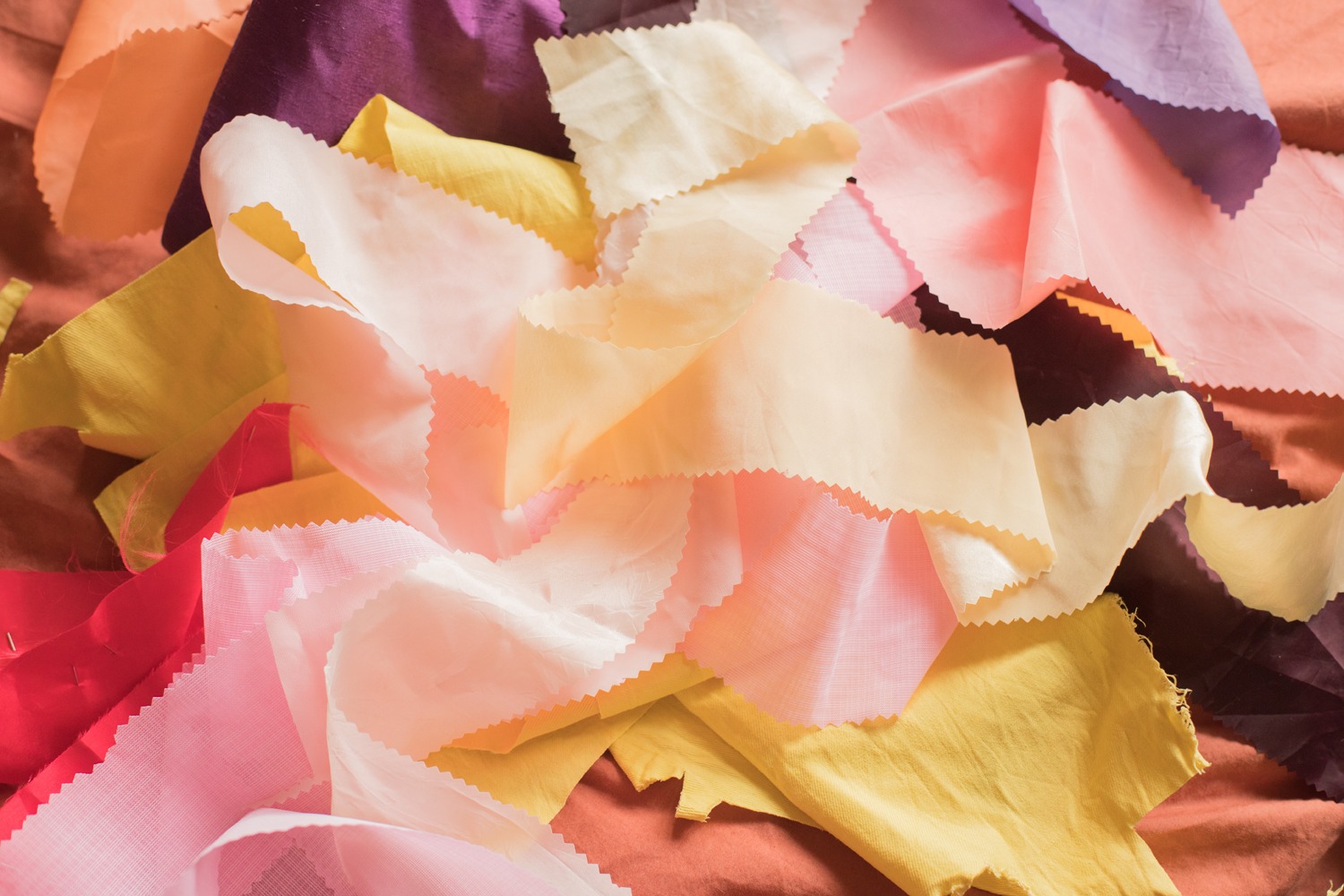
fabric strips
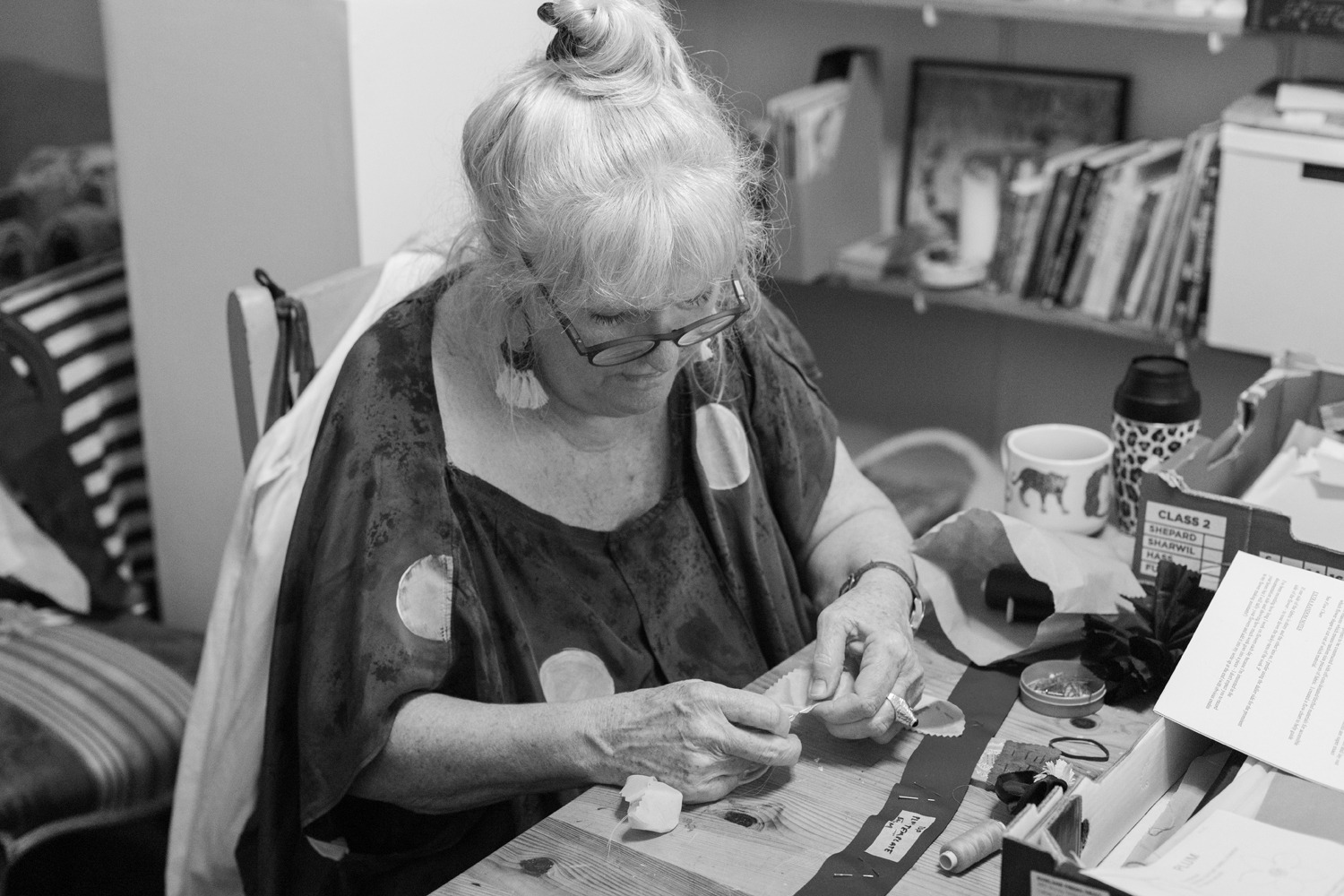
the lovely Ardleigh!
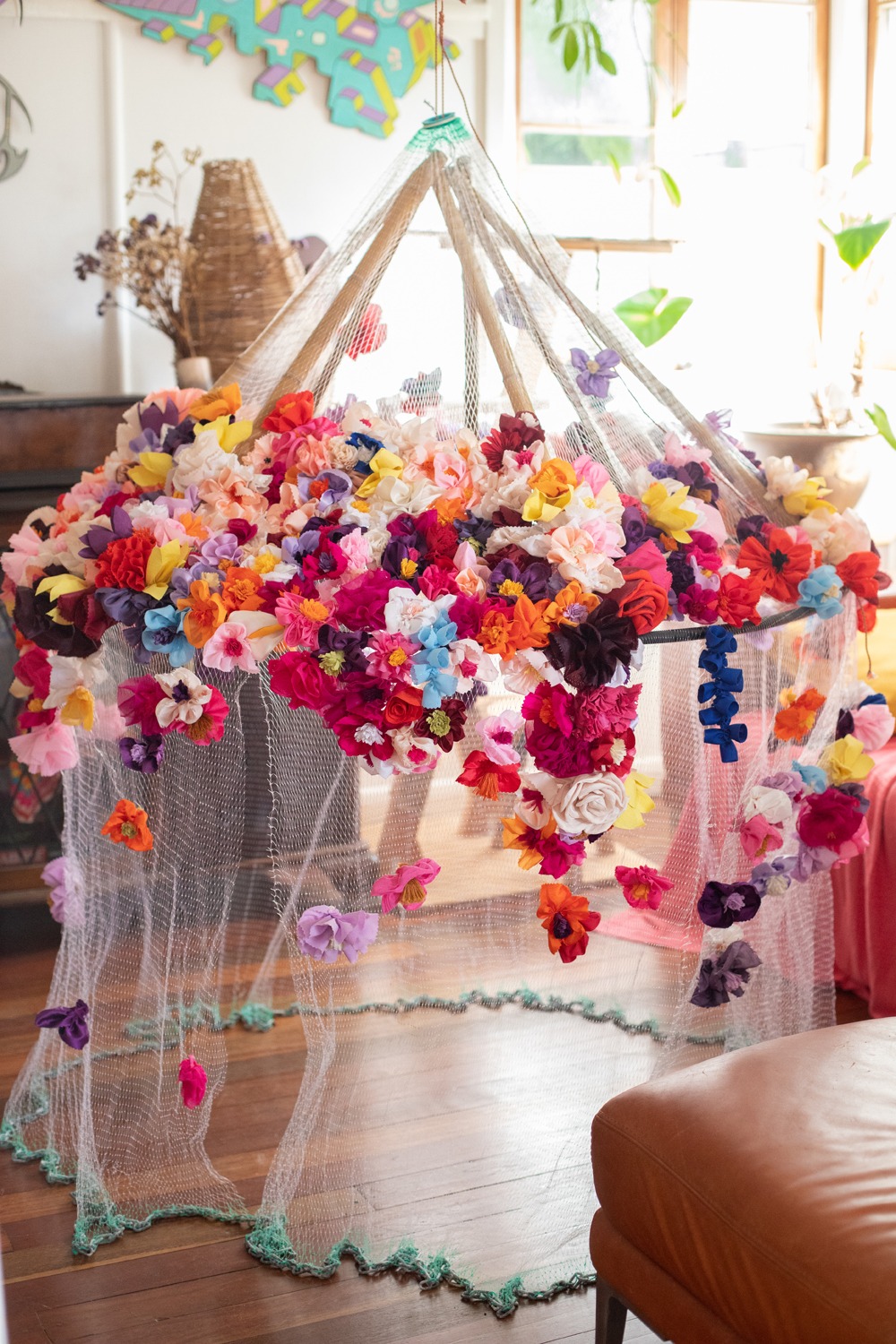
shelter progress – end of April
May 2024
/Continued the regular cycle of starching and cutting fabrics, sewing flowers, and attaching flowers to the shelter.
/As other art projects and opportunities have emerged, Flower Shelter has increasingly been pushed down the list of priorities.
This month included meetings with two different collectives, a collaboration, two separate small-sculpture prize submissions, and substantial preparation for an upcoming project in June.
TOTAL MONTH TIME: 32.75 hours (401.5 hours total)
FLOWER TOTAL: 127 (753 total)

colourful fabrics
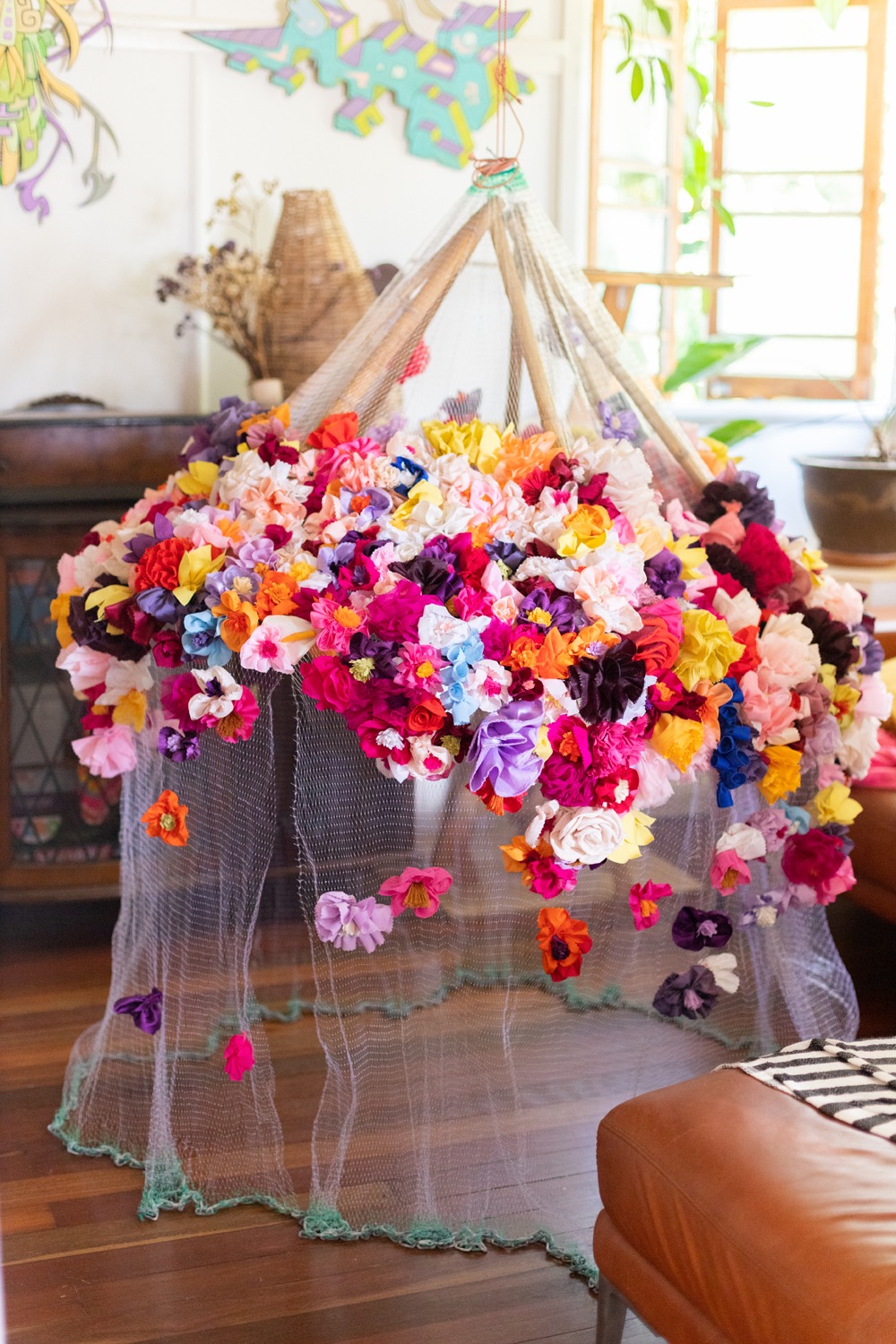
Shelter progress – end of May
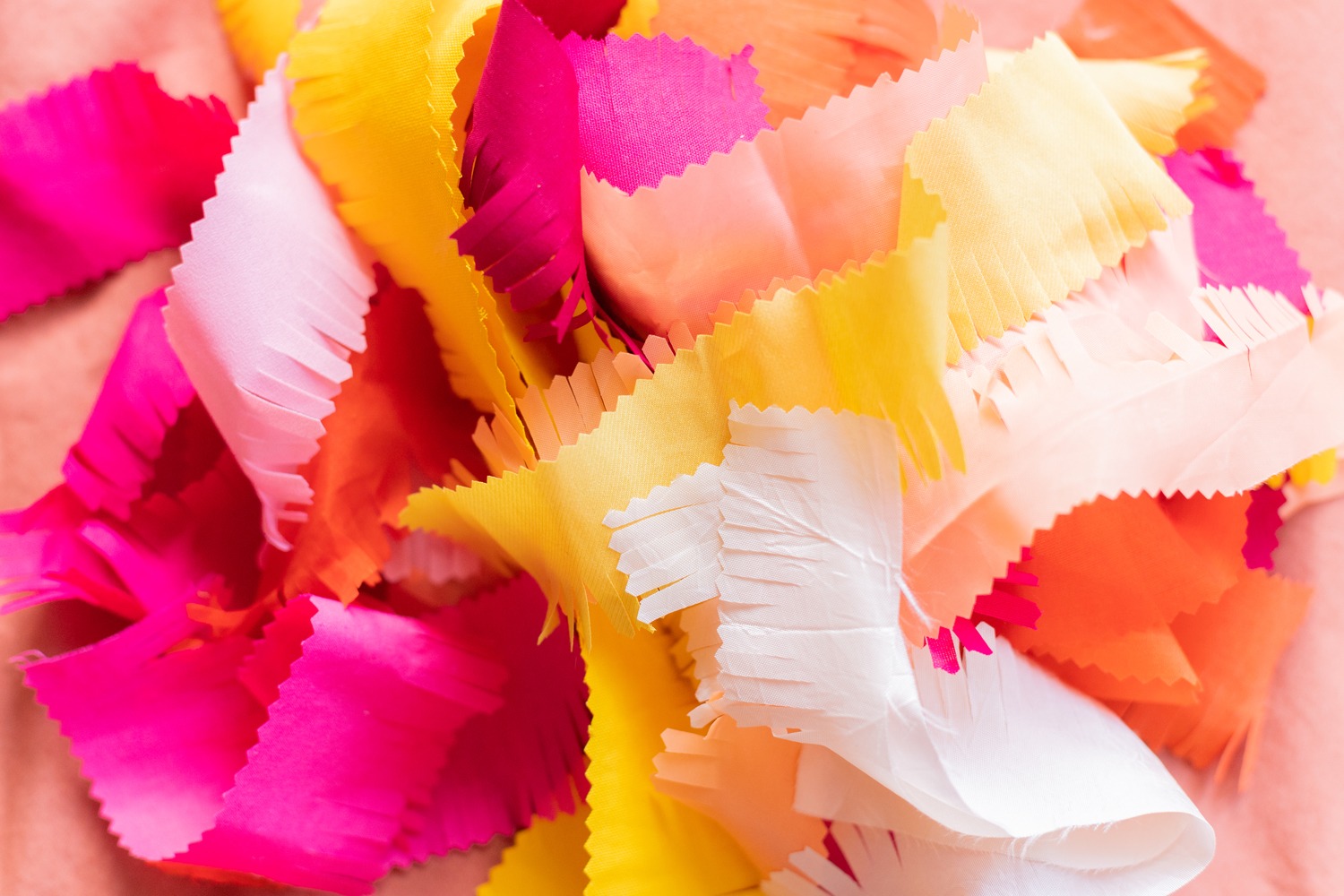
cut fabric strips
JUNE – JULY 2024
/June and July were largely a write-off; I only managed to sew 11 flowers in June between other art projects, including a social art project (24 June–14 July) that required substantial preparation.
/Started re-sewing on 18 July after the long break. It was challenging to get back into the rhythm of making, but I pushed through and finished the month with 60 flowers sewn.
/Continued scouting for fishing line to complete the shelter.
/Found free shade cloth on Facebook Marketplace and decided to remove all 700+ flowers previously sewn onto the fishing net, instead creating a series of individual shade-cloth panels.
/Sewed six triangular roof panels and six side panels using doubled-over shade cloth. The panels are sturdier, should make transportation and storage easier, and break the project into manageable sections rather than one overwhelming structure.
/Re-sewing the flowers onto the panels was tedious, taking a full day to transfer the flowers onto a single roof panel.
/The long break from flower-making meant I lost the callouses I had built up on my fingers and am currently going through a painful reinitiation process — typing this recap with band-aids on my fingers.
TOTAL MONTH TIME: 3.5 + 29 = 32.5 hours (434 hours total)
FLOWER TOTAL: 11 + 60 (824 total)
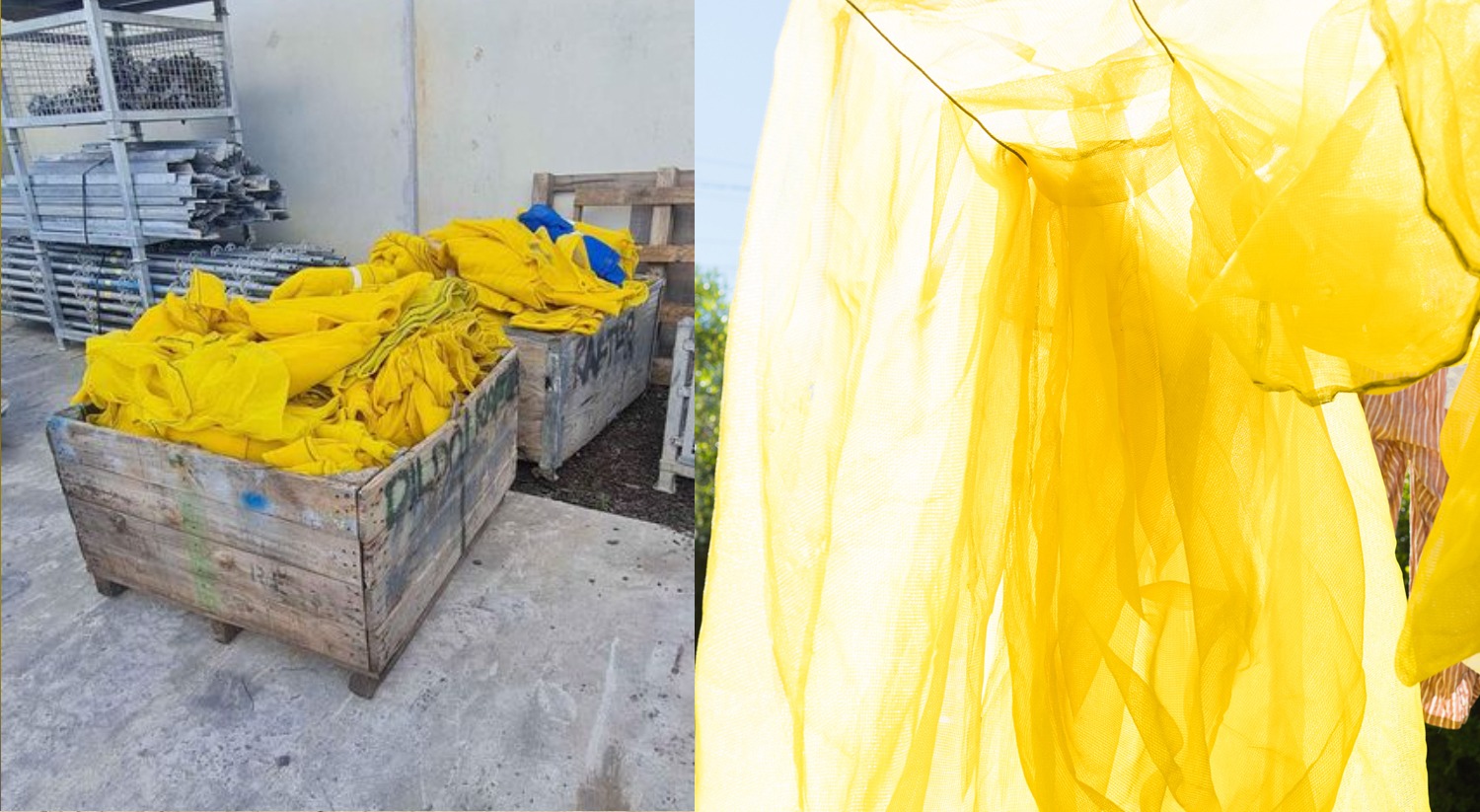
fb marketplace lisiting and the yellow shade cloth hung on the clothesline after being cleaned.
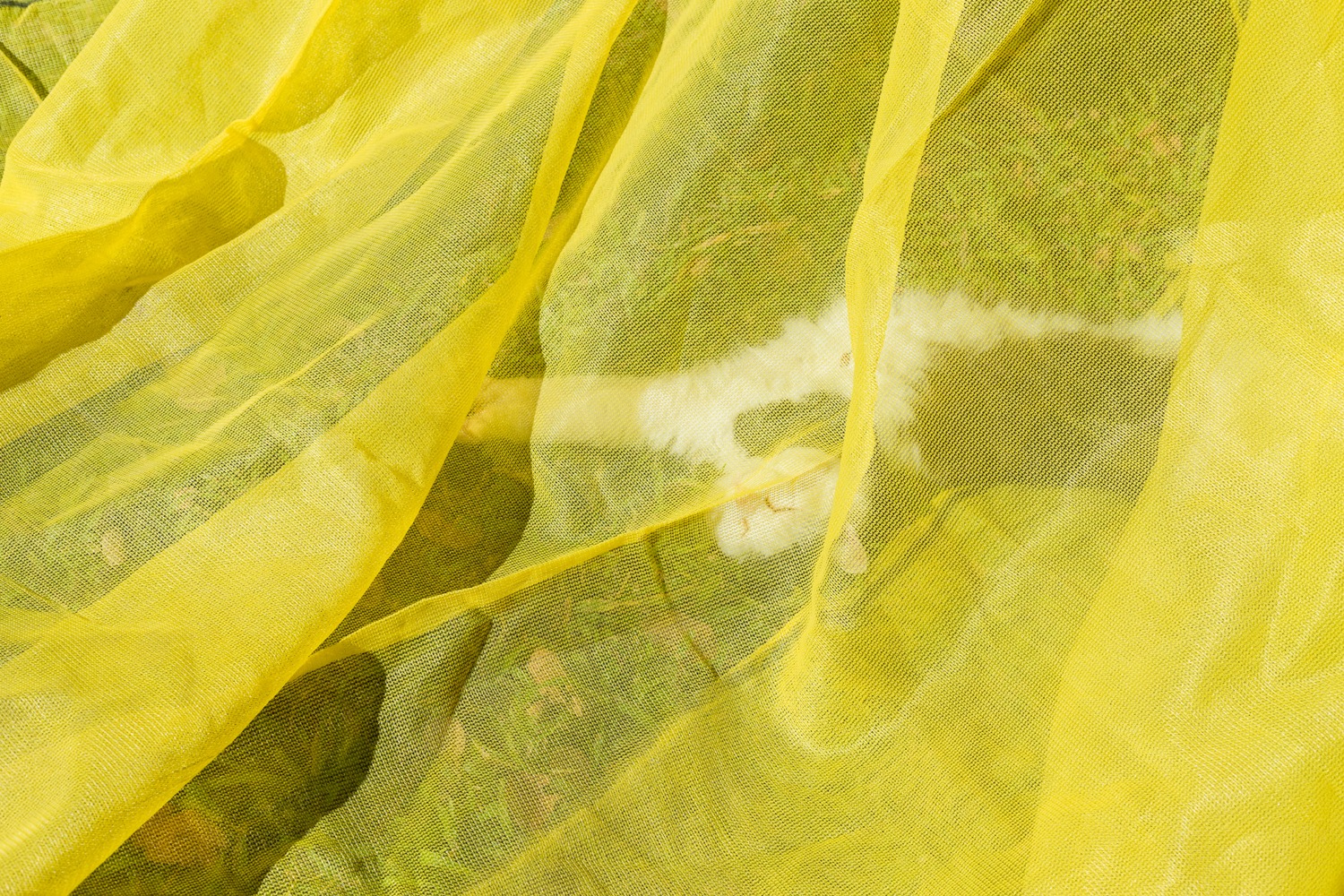
cats loving the shade cloth
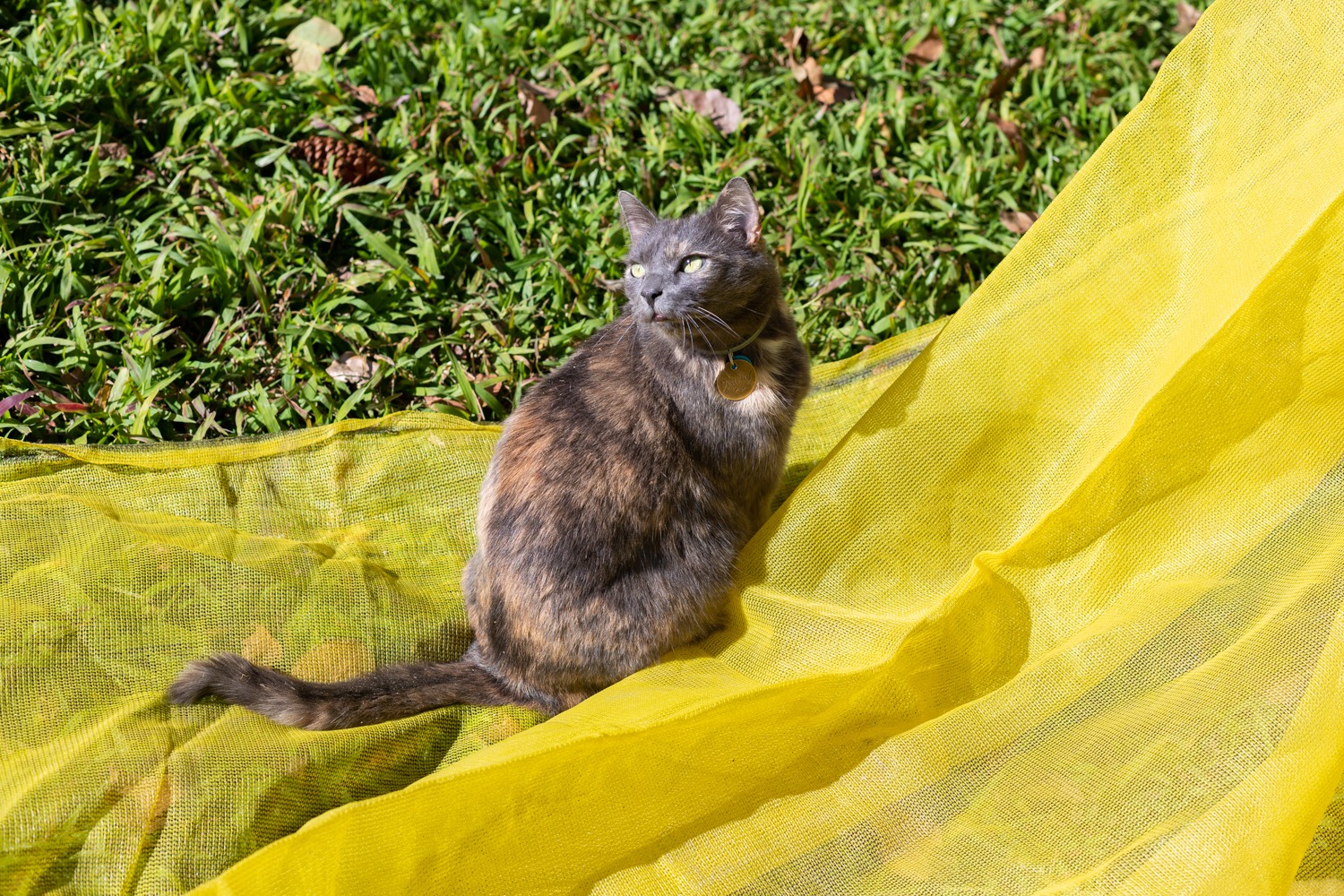
cats loving the shade cloth
back into flower production mode at the end of July
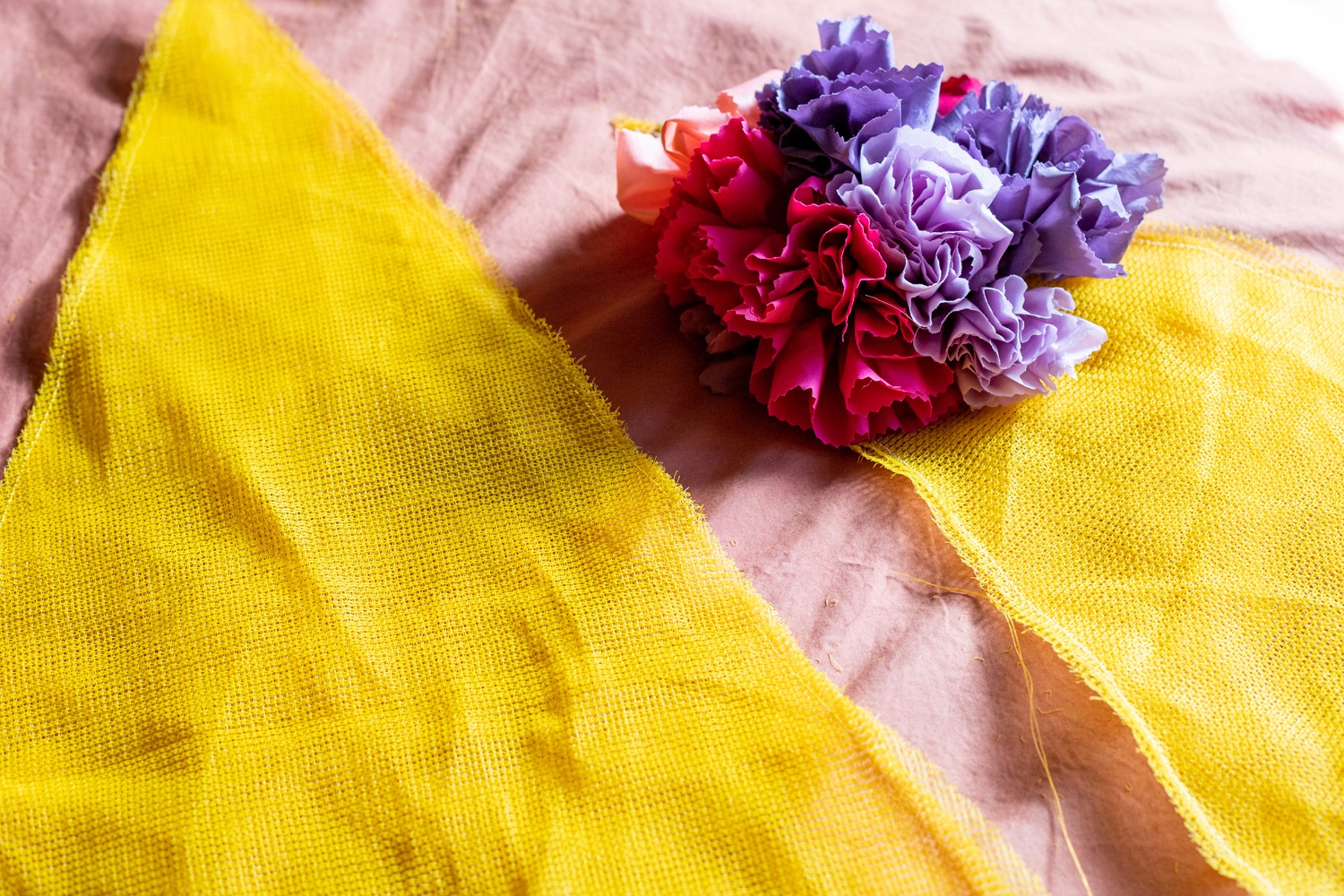
adding flowers to the cut and sewn roof panels
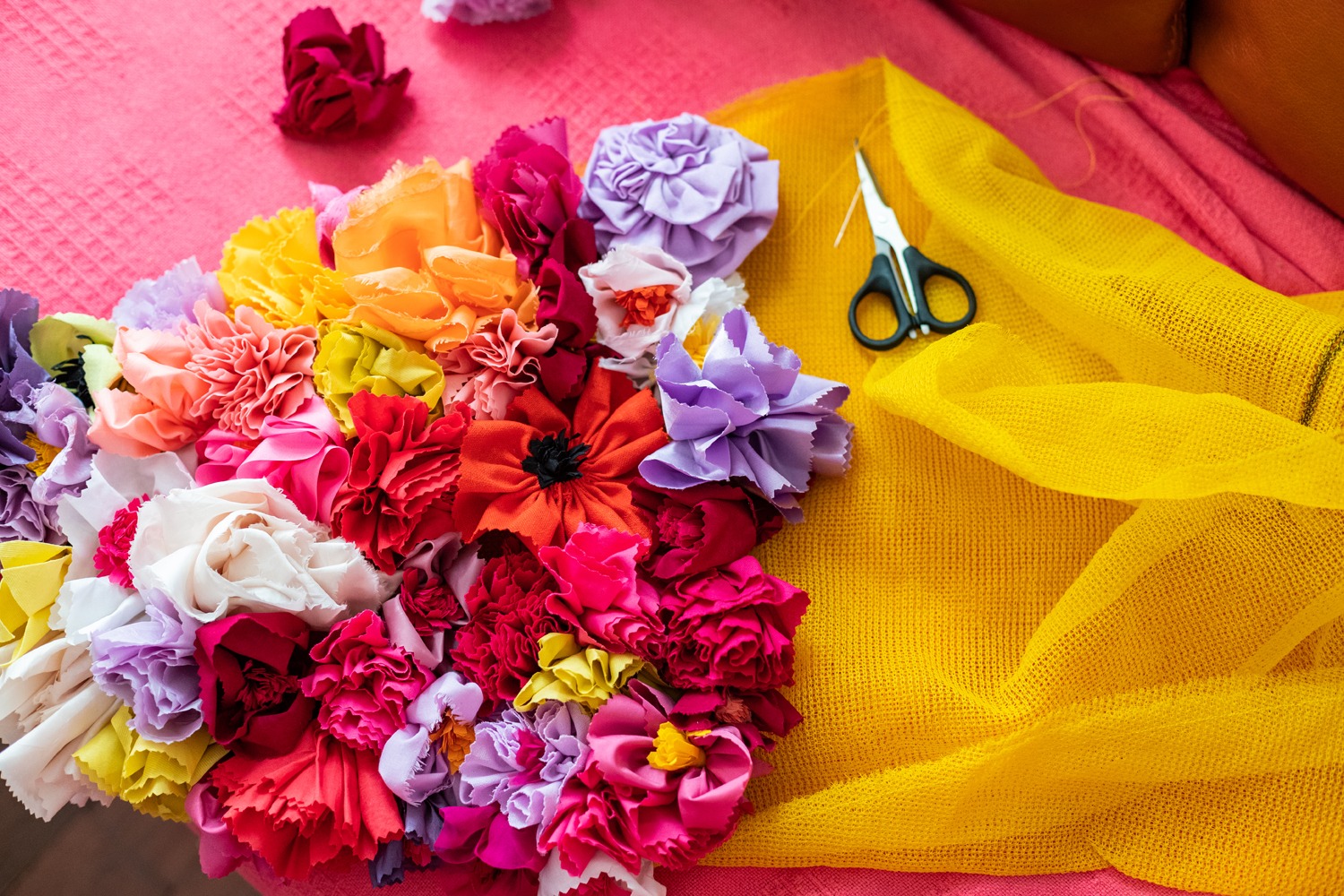
re-sewing past flowers onto the new shade cloth panels
AUGUST 2024
/Nearly completed all six roof panels, with only a small section remaining on panel six.
/Repaired sub-par flowers (during the transfer process from the fishing net to the shade cloth) by cleaning up frayed edges and replacing old tassels with the new stamens for aesthetic consistency.
/Took advantage of sunny weather for fabric starching and received a large donation of red fabric from Karen Lynch after she heard about the project.
/Made 81 flowers in one week, though the other weeks were less productive due to a week of mentoring and preparation for my end-of-year Artisan exhibition. Created textile leaves for Artisan which I may repurpose for Flower Shelter.
TOTAL MONTH TIME: 54.25 hours (488.25 total hours)
FLOWER TOTAL: 181 (1005 total)
resewing past flowers
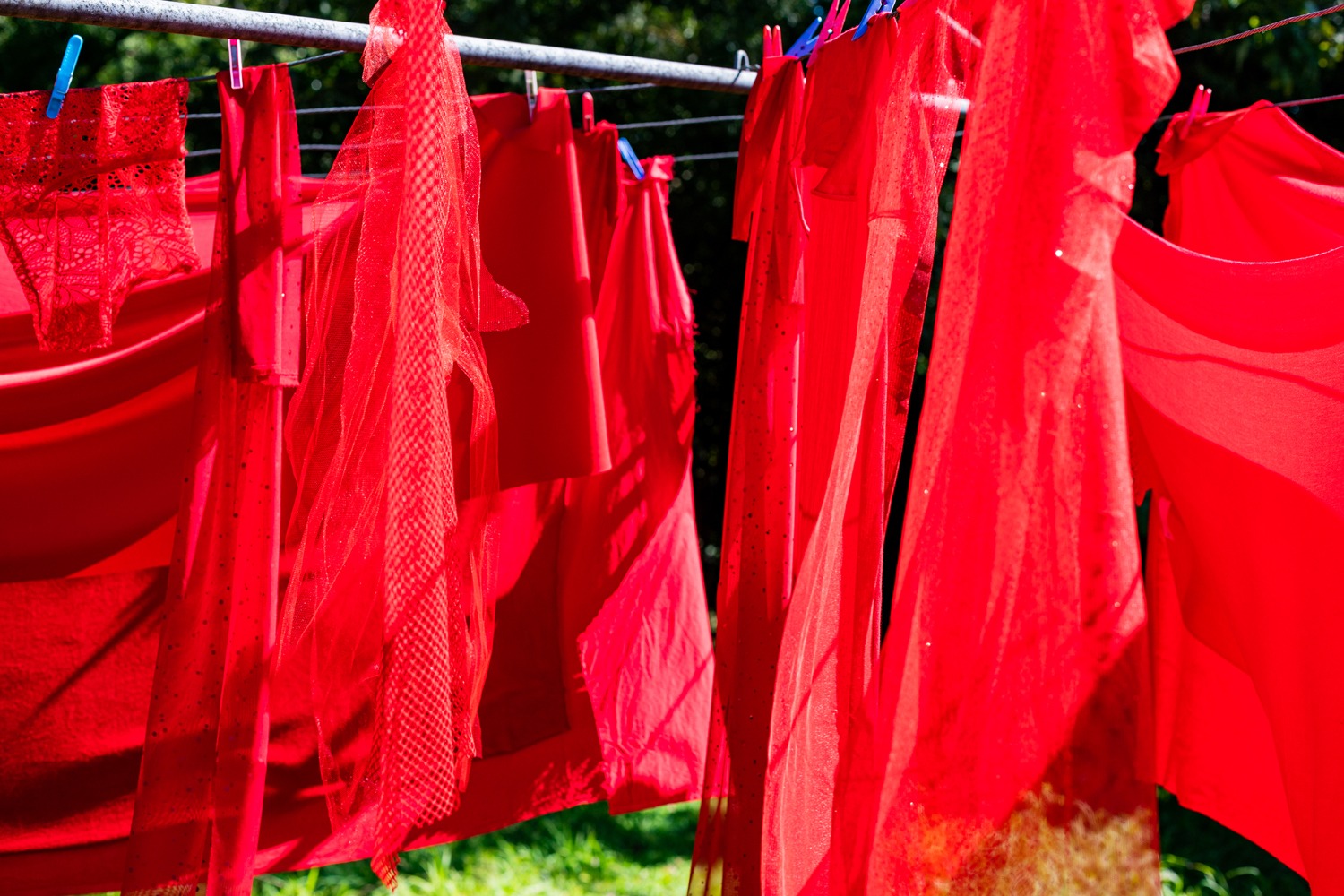
red fabrics from Karen
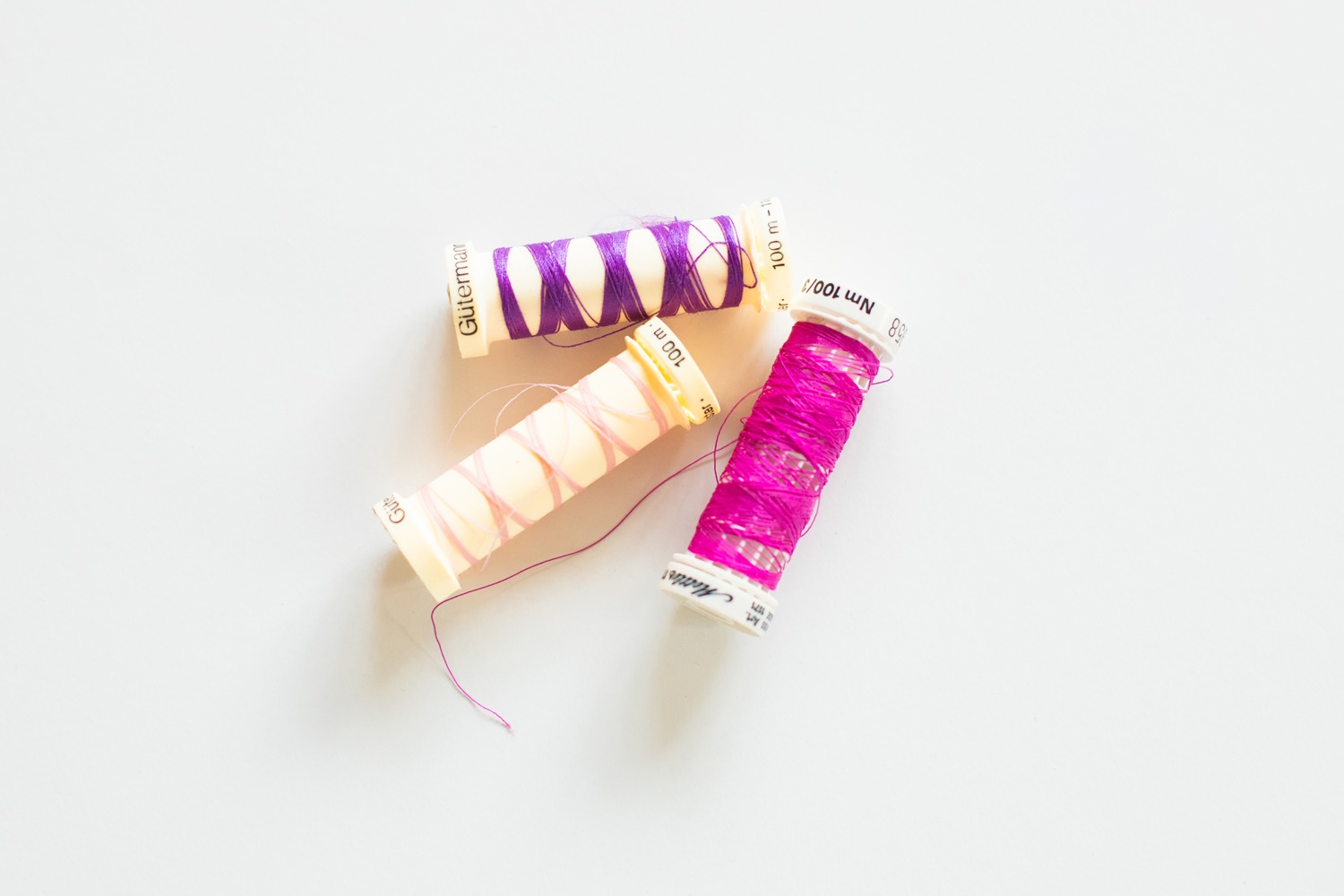
spools running low
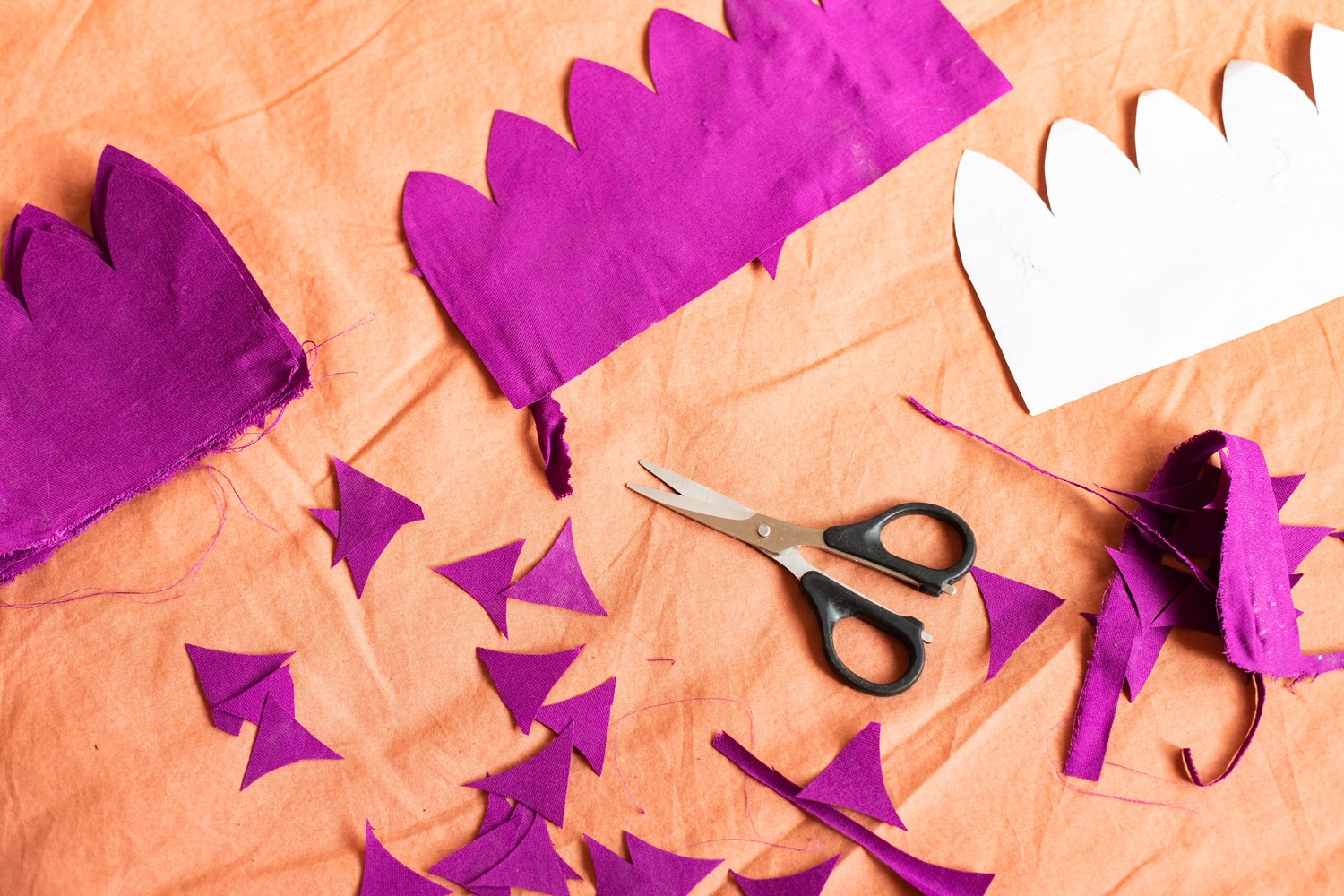
cutting out flowers
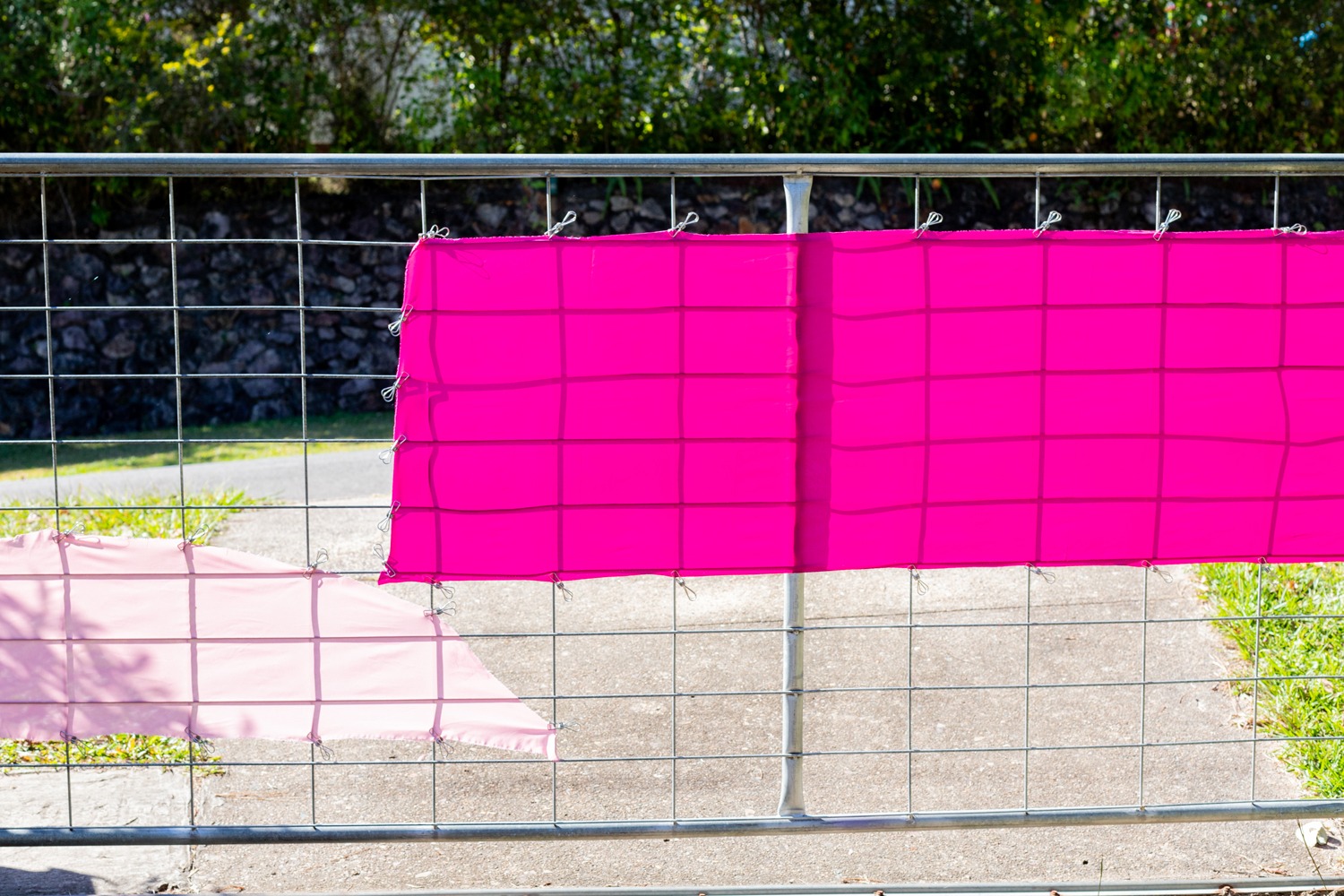
starching fabrics
SEPTEMBER 2024
/Finished the final roof panel, only to realise I didn’t want the roof covered in flowers. I now envision rows of flowers travelling up the metal support structures, so the roof panels will need to be stitched to the side panels.
/75% finished with the first side panel, with five more to go.
/Several visitors asked whether I would add fabric leaves to break up the density of the flowers, with one comment that it was becoming “too much of an old lady’s potpourri bowl.” I’ve had similar concerns, so the plan is to keep making, continue learning about floral arrangement, and observe flowers in nature before deciding whether to add leaves.
/Mid-month, made a record 102 flowers in one week.
/Reflected more deeply on the act of making. In August, my friend (and psychologist) Kirsty highlighted that repetitive daily work can act as a nervous-system regulator. I’ve always understood flower-making as meditative, but now see it as an important daily practice for my physical and emotional wellbeing.
/While making, I’m consciously trying to embed the energy I want people to feel when the work is complete. I’ve been experimenting with listening to 432 Hz music on YouTube as part of this process.
/Noticed how much physical energy and effort I’m putting into the project (quite literally) including blood when I poke my finger with a needle. The experience made me aware of how I am physically embedding myself into the work.
TOTAL MONTH TIME: 62.5 hours (550.75 hours total)
FLOWER TOTAL: 282 ( 1287 total)

starched fabrics
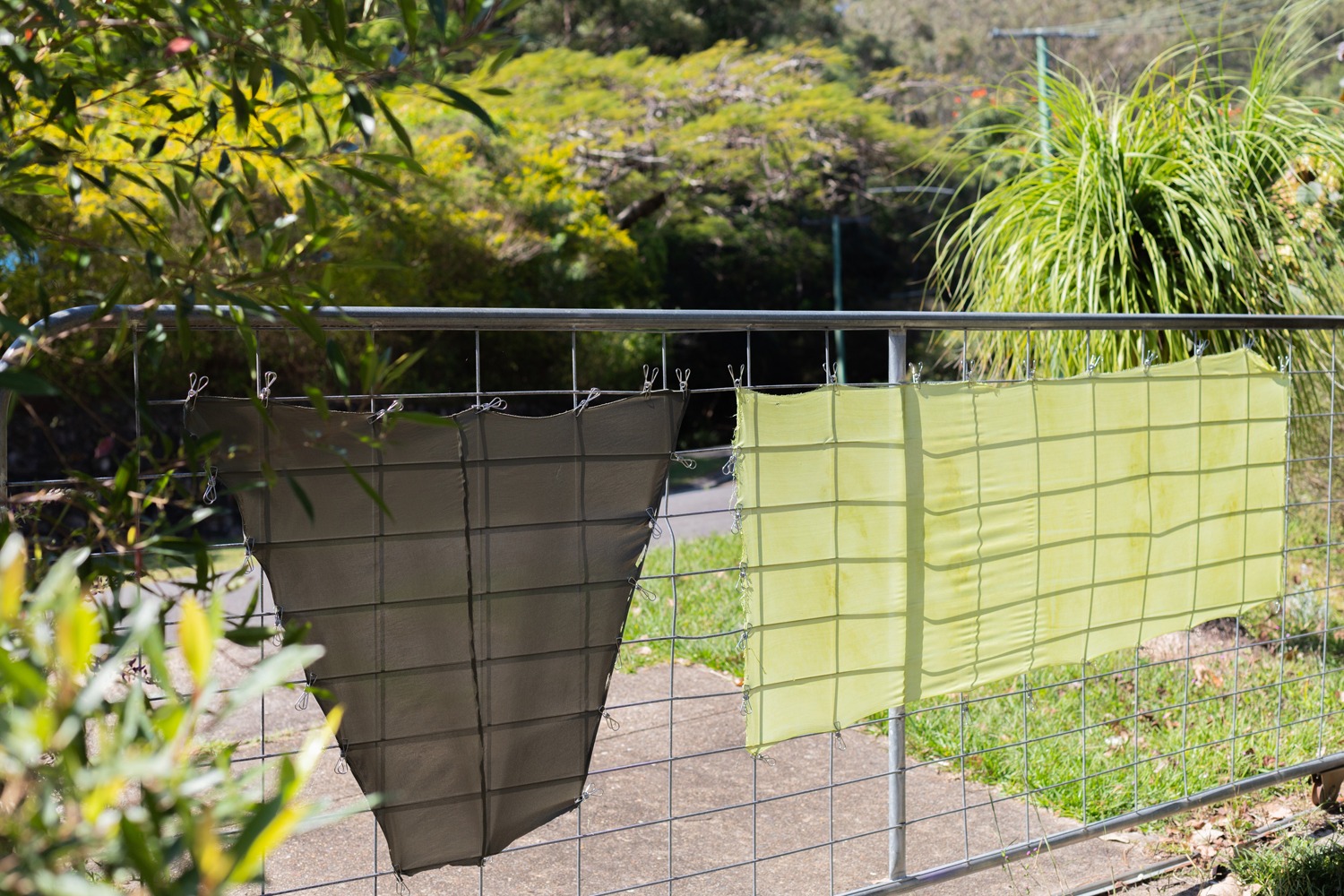
starched fabrics drying on fence
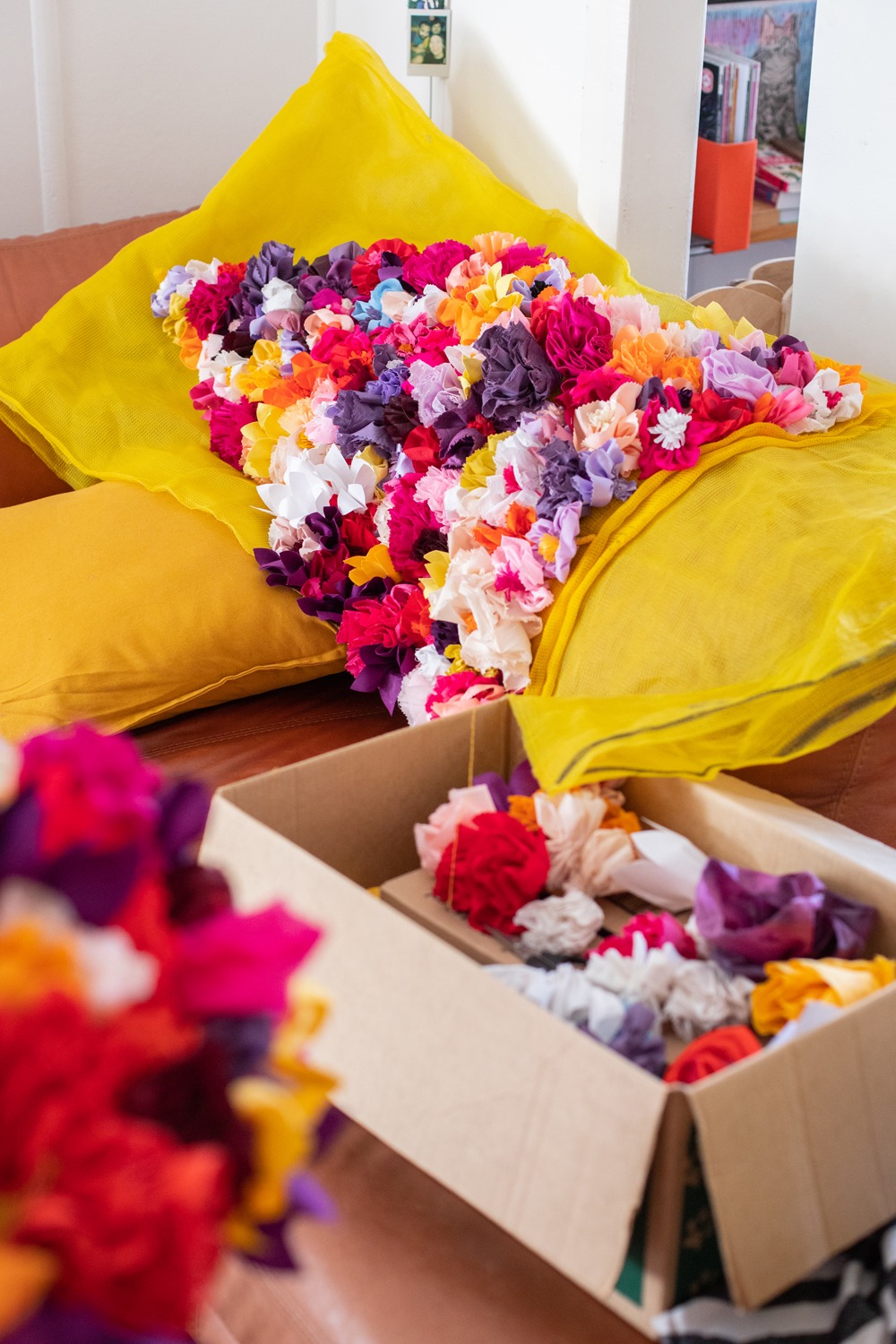
roof panel sewn onto side panel one
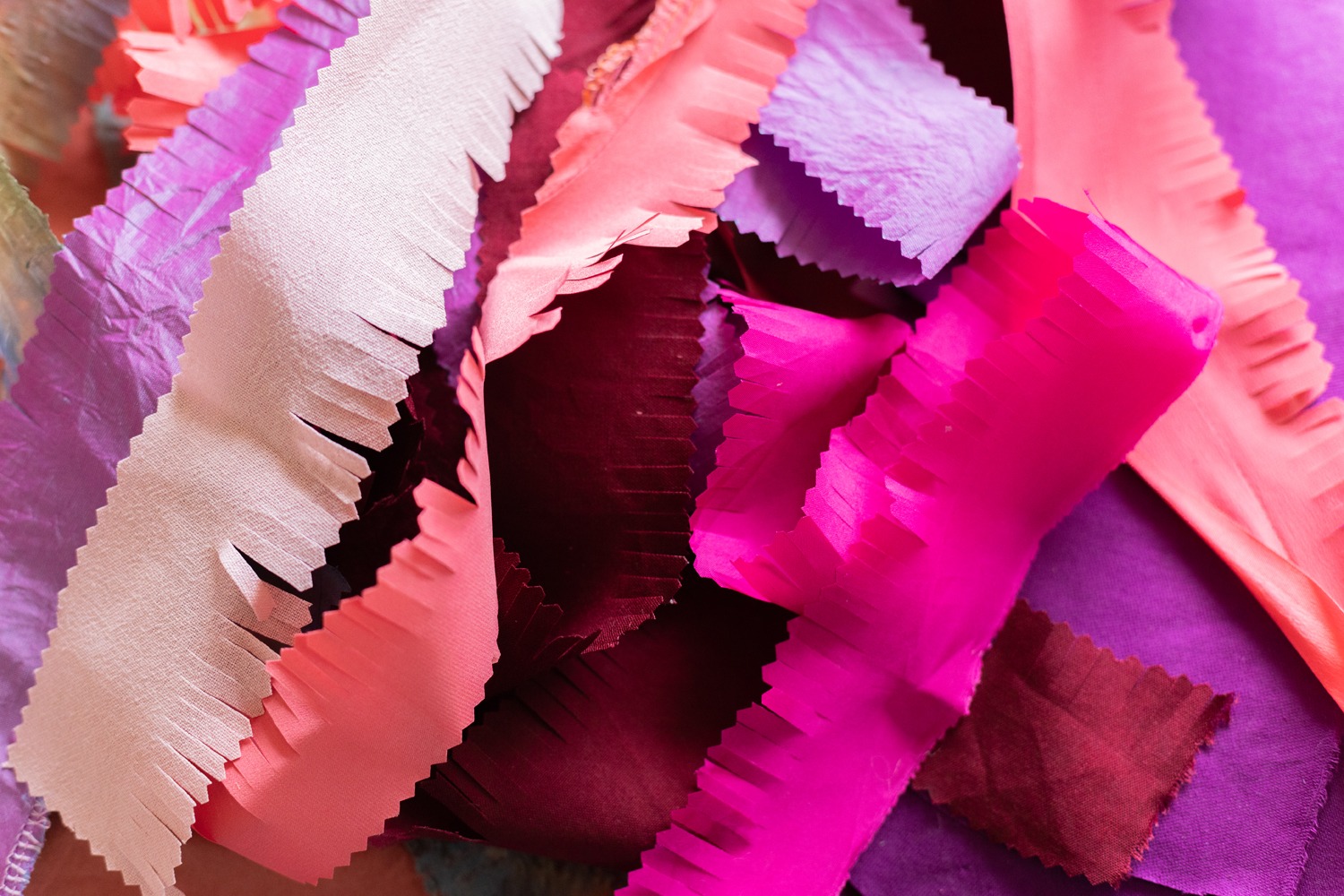
cut stamen strips of fabric
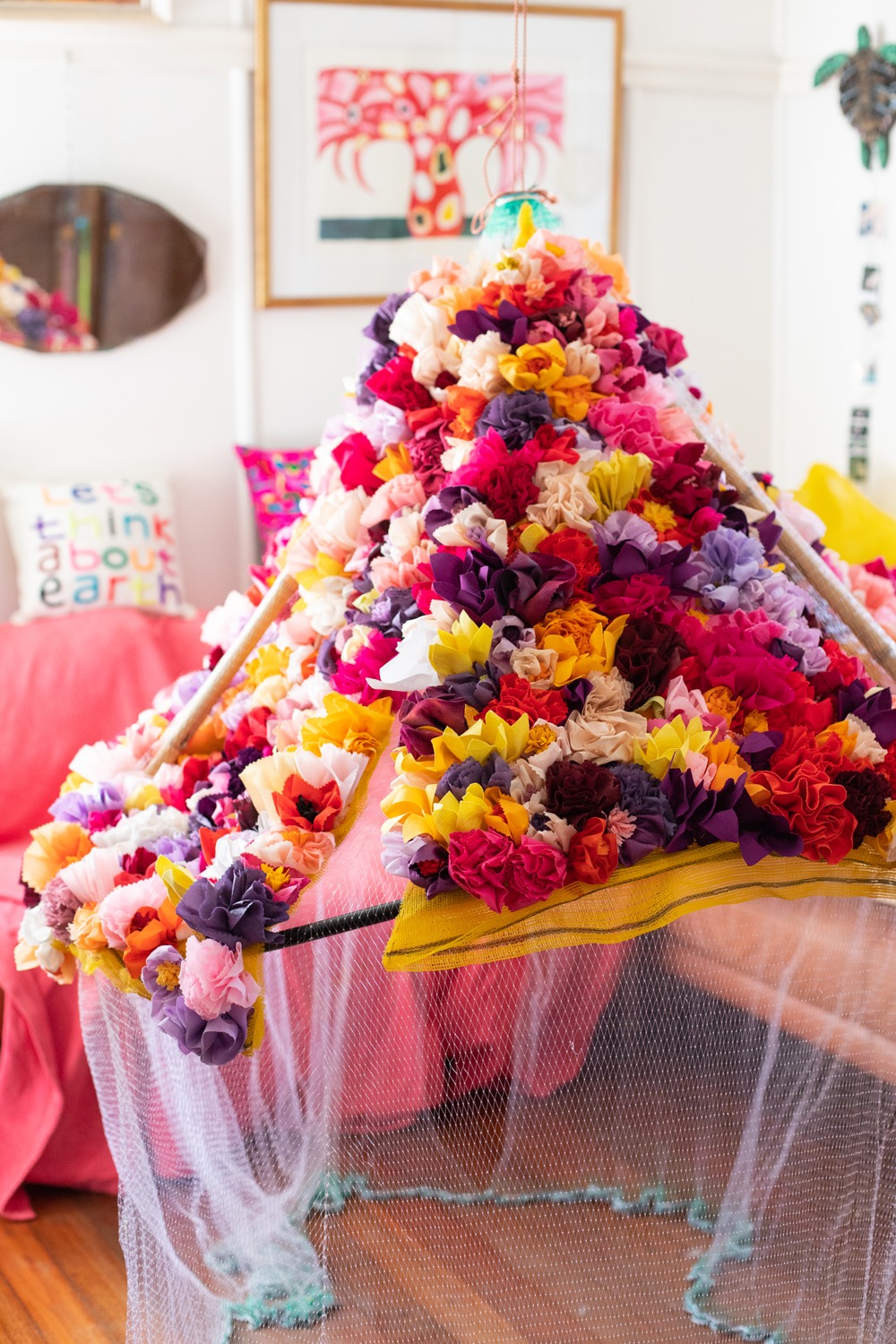
roof panels finished
OCTOBER – DECEMBER 2024
/Was on a roll in October until I realised I needed to put Flower Shelter on hold. With my mid-December Artisan exhibition requiring a large body of ceramic work, trying to work on both projects simultaneously became unsustainable.
/Stopped making flowers on 19 October and didn’t resume until 23 December.
/At the end of the year, disassembled the fishing net that had been hanging in the lounge and nailed the shade-cloth panels to the walls to keep them away from the cats. There is now a small patch where the flowers have been indented by a cat nap.
/Reached the one-year mark since starting the project. I had naively hoped Flower Shelter would be a one-year project.
TOTAL MONTH TIME: 35.5 (oct) = 9 (dec) = 44.5 hours (595.25 total hours)
FLOWER TOTAL: 172 (oct) = 51 (dec) = 223 (1510 total)
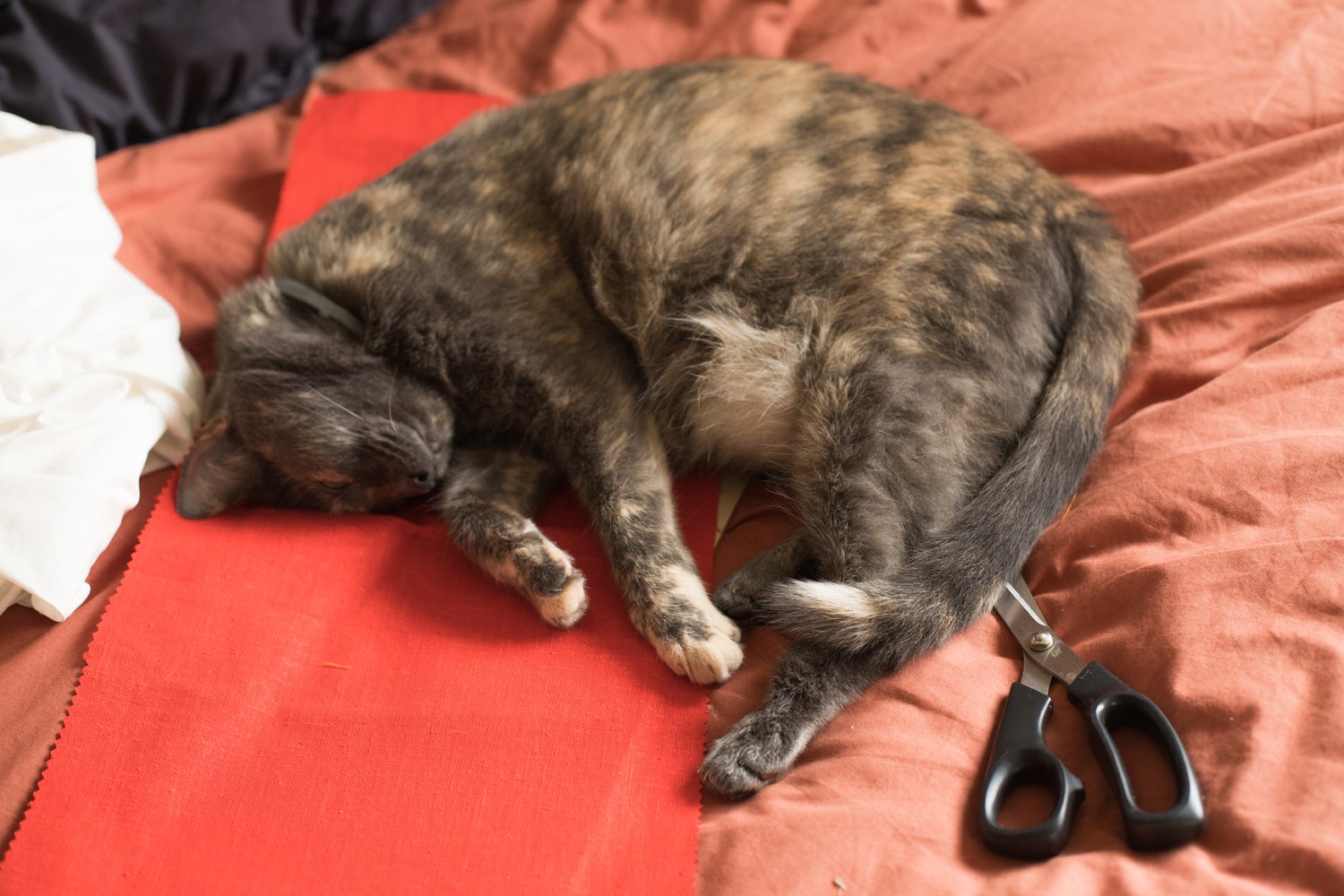
Peach the cat and her constant desire to be involved.
January 2025
/With a break from paid work over January, I was able to power through flower-making.
/Biggest achievement was finally completing panel one.
/Spent the month in a continuous cycle of buying, starching, cutting, and stitching fabrics, then sewing the flowers onto the shelter.
TOTAL MONTH TIME: 64.5 hours (659.75 total hours)
FLOWER TOTAL: 305 (1815 total)
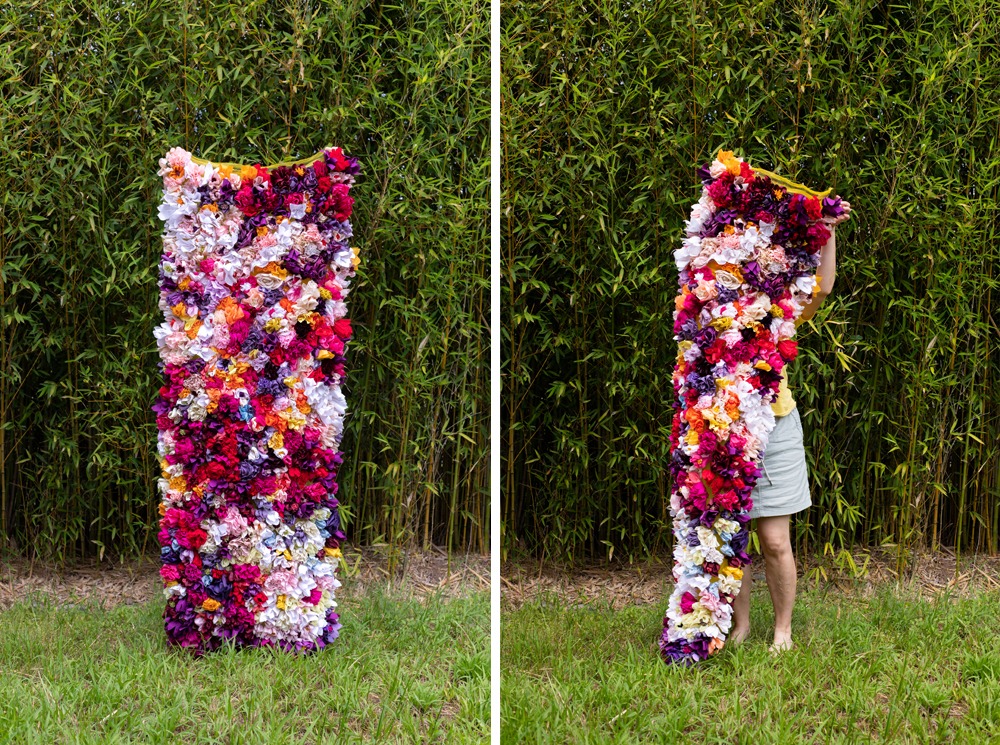
first panel completed
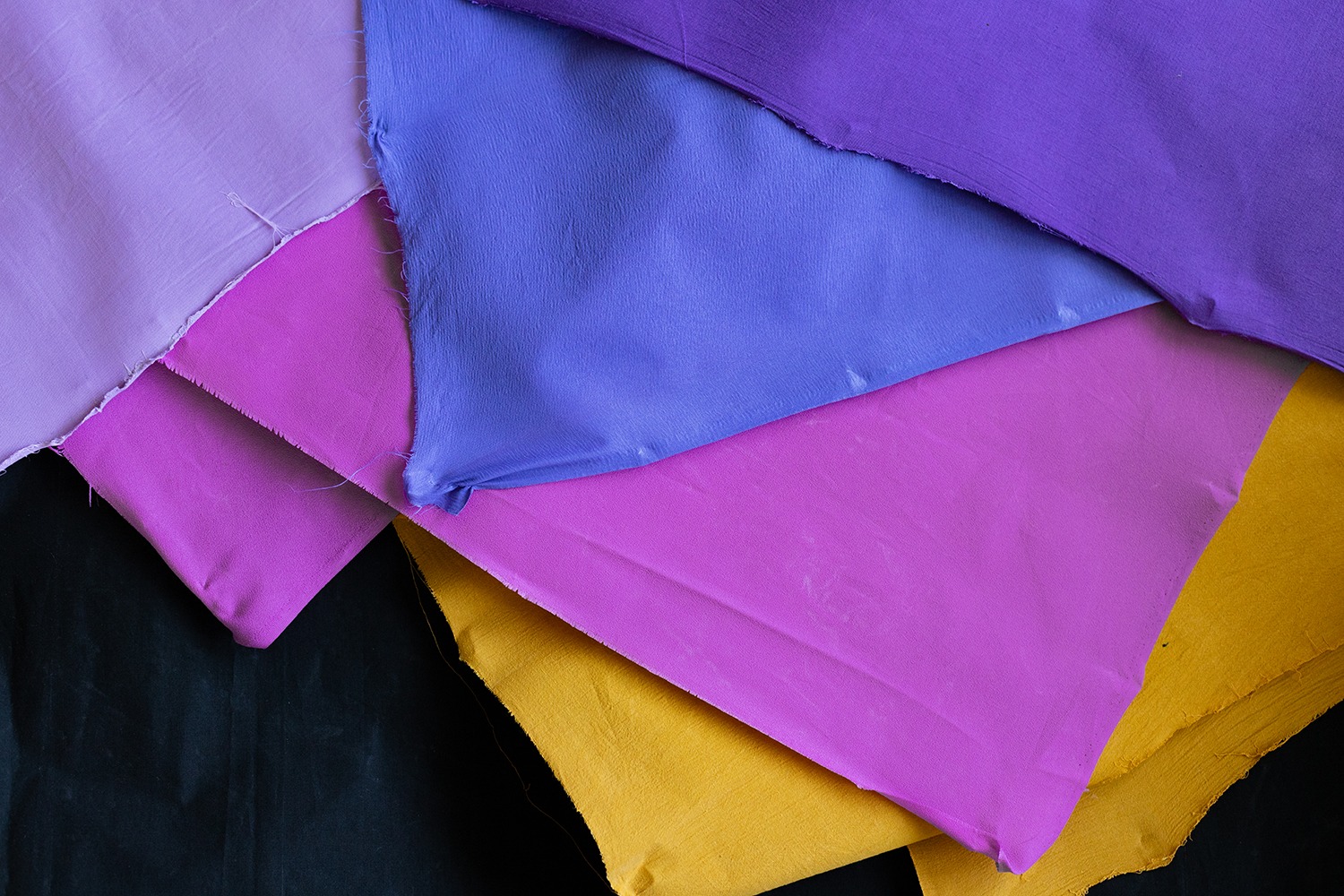
starched fabrics
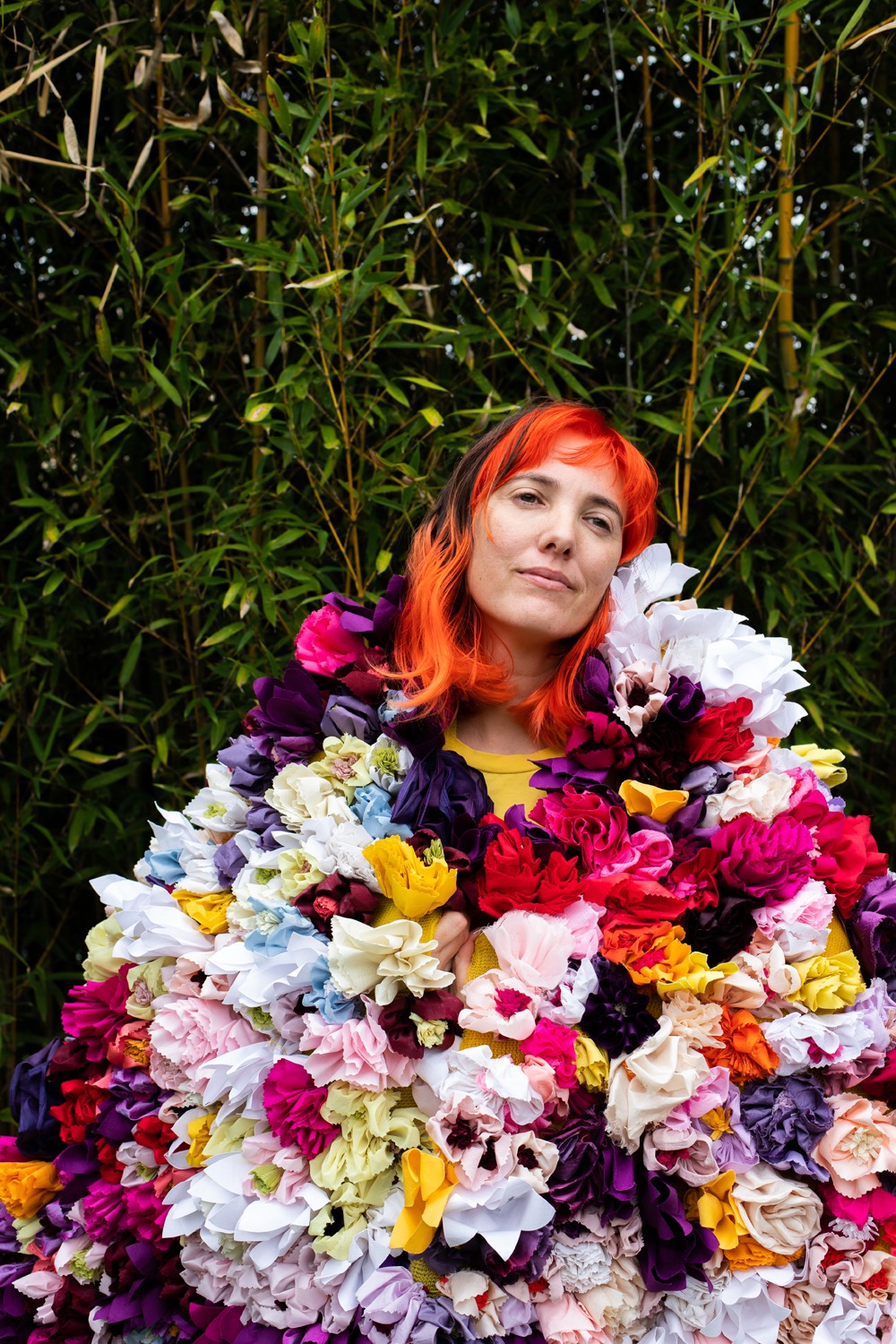
having fun wearing the first panel!
February 2025
/Despite the shorter month, maintained a good pace, including thrifting fabrics and fabric starching on sunny days.
/Reached 75% completion of panel two.
/Looking forward to maintaining this pace into March and completing panel two.
TOTAL MONTH TIME: 46.67 hours (706.42 total hours)
FLOWER TOTAL: 257 (2072 total)
having fun wearing the first panel!
March 2025
/Managed to finish panel two this month. Was on a roll!
TOTAL MONTH TIME: 48.83 hours (755.25 total hours)
FLOWER TOTAL: 303 (2375 total)
April – July 2025
/Continued the pace in April, beginning panel three.
/Then took a three-month hiatus from Flower Shelter due to commitments with Floating Land and Liminal.
TOTAL MONTH TIME: 21 + 2 = 23 hours (778.25 total hours)
FLOWER TOTAL: 103 (2478 total)
August 2025
/Returning to flower-making after a three-month break was mentally challenging, and my fingers needed to rebuild their callouses.
/Initially worried I had forgotten how to make the flowers, but the process came back effortlessly.
/After a few days of making, I was reminded how much I love this project and how relaxing and fulfilling it is to make flowers over and over again.
TOTAL MONTH TIME: 52.5 hours (830.75 total hours)
FLOWER TOTAL: 259 (2737 total)
Night Body filmed in artist backyard
September 2025
/Finished panel 3 on the 24th of this month and started panel 4
/Had other creative tasks (and general life commitments) pulling my attention this month.
TOTAL MONTH TIME: 26 hours (856.75 total hours)
FLOWER TOTAL: 146 (2883 total)
Night Body filmed in artist backyard
October 2025
/Prepped and dropped off Panel 3 for Wildflowering by Design exhibition at Caloundra gallery. Was a fun chance to get to a show a “work in progress” of flower shelter and recieve feedback.
/Fairly productive Flower Shelter month but as always life and other art projects stealing time!
TOTAL MONTH TIME: 36 hours (892.75 total hours)
FLOWER TOTAL: 173 (3056 total)
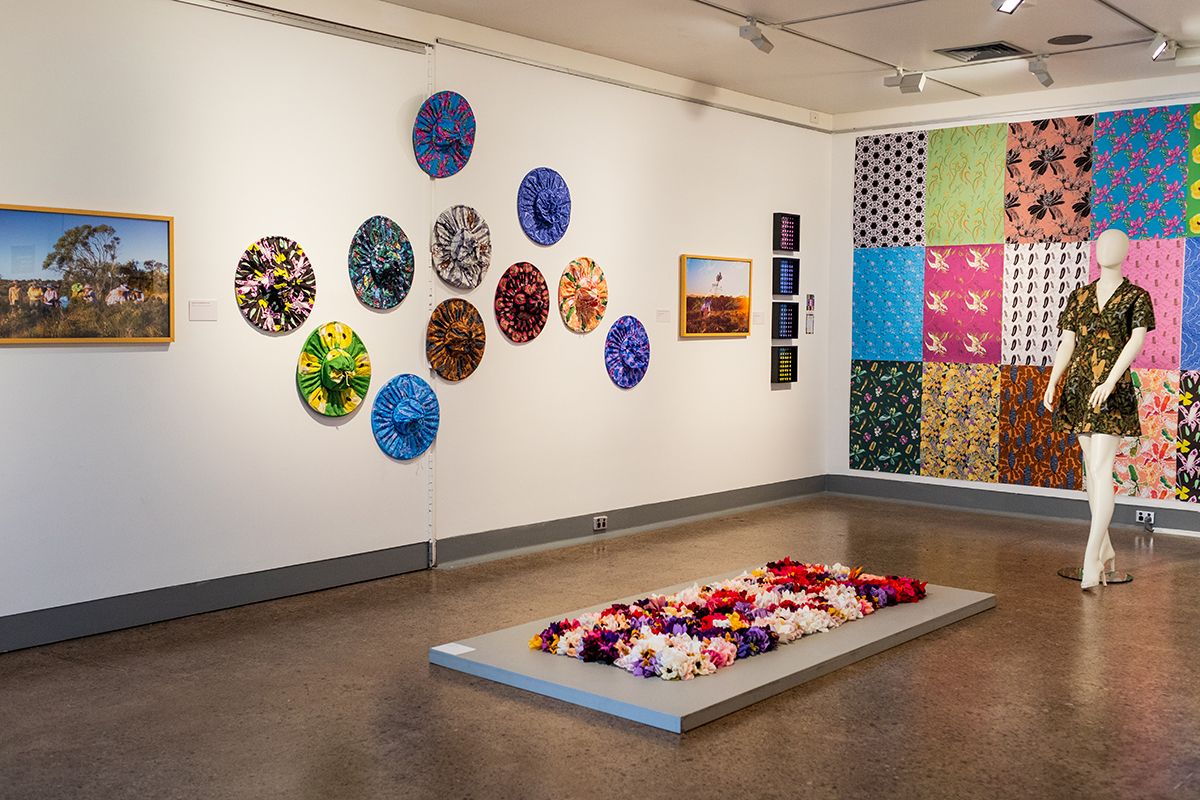
Wildflowering by Design Exhibition 2025 (Caloundra Regional Gallery)
November 2025
/Made over 200 flowers in November, which always feels good
/Experimented with making the plum flower template 1.5x larger and then 2x larger with the hope that it will bring project hours down and also add diveristy of flower size to the panels. So far so good, will keep using the original plum size template and scatter in some at 1.5x and 2x size.
TOTAL MONTH TIME: 35.5 hours (928.25 total hours)
FLOWER TOTAL: 203 (3259 total)
Wildflowering by Design Exhibition 2025 (Caloundra Regional Gallery)
Acknowledgments
Special thanks to Megan Williams, who through RADF, was able to provide mentoring for the project.
–
Want to see what else I do? Come peek over on my insta or grab a freebie when you sign up to my newsletter below 🙂 🙂